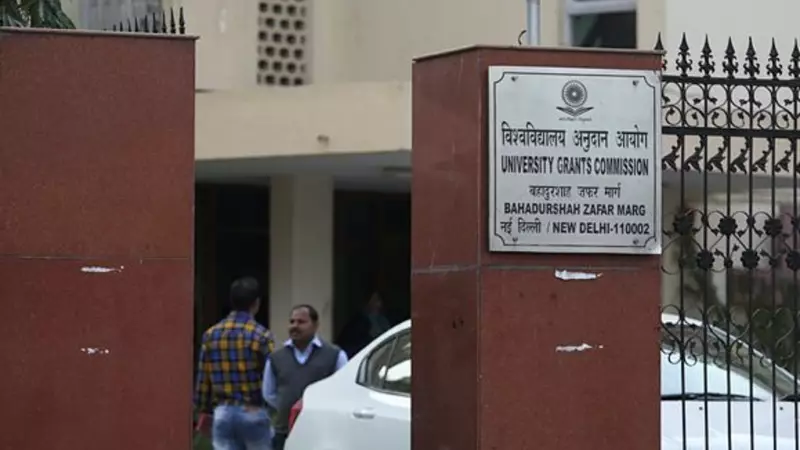
The University Grants Commission has taken a major step to address student mental health in colleges and universities across India. A UGC panel has released draft guidelines that propose a uniform mental health policy for all higher education institutions.
Standardised Counsellor Ratios Proposed
The draft guidelines recommend specific counsellor-to-student ratios for different types of institutions. Larger colleges and universities should have one counsellor for every 500 students. Smaller institutions need one counsellor for every 100 students.
This standardised approach aims to ensure that students receive adequate mental health support regardless of their institution's size. The recommendations come from a committee headed by Dr. Rajinder K Dhamija, director of Delhi's Institute of Human Behaviour and Allied Sciences.

Dedicated Mental Health Centres Required
Every higher education institution must establish a dedicated Mental Health & Well-being Centre under the proposed guidelines. These centres require proper physical infrastructure with private rooms for appointments and waiting areas.
The centres will maintain documentation of counselling sessions using coded or anonymised records. Clinical records may be destroyed one year after a student graduates, following institutional rules. However, data about service utilisation will be stored for analysis.
Contact information for these centres must be visibly displayed throughout campuses. The details should also appear on institutional websites for easy student access.
UGC's Central Monitoring Role
The UGC will play a central role in monitoring and supporting the implementation of this uniform mental health policy. The commission formed the committee following Supreme Court directions issued on 25 July 2025.
A dedicated portal called 'MANASSETU' will track progress across institutions. The UGC will collect annual reports and feedback through this portal. This system will help assess whether the policy objectives are being met effectively.
Key objectives include improving student well-being and reducing attrition or loss of life. The UGC will review policies annually to identify implementation challenges and ensure tangible outcomes.
Capacity Building and Collaboration
The UGC plans to support continuous capacity-building initiatives for mental health professionals. The commission will recognise evidence-based interventions that prove effective in supporting student mental health.
Collaboration with multiple organisations forms another crucial aspect of the proposed framework. The UGC will work with the National Research Foundation, ICMR, ICSSR, and WHO among others. These partnerships aim to develop effective strategies and interventions for student mental health.
Crisis Management Mechanisms
The draft guidelines urge higher education institutions to develop strong readiness and crisis management mechanisms. These systems will help safeguard student mental health during emergencies.
For suicide prevention infrastructure, the guidelines recommend training peers, faculty, and staff. Training should focus on recognising signs of distress in student behaviour and communication.
Warning signs include abrupt changes in interaction patterns, behaviour shifts, or irregular class attendance. Early identification of these signs could enable timely intervention and support.
Awareness Programmes and Implementation
Periodic awareness programmes on stress and anxiety form another key recommendation. These programmes aim to bolster student-support systems across campuses.
The UGC will ensure that mental health policies translate into practical implementation. Each institution must establish its Mental Health & Well-being Centre with appropriate infrastructure. These centres should provide private and accessible services to all students.
The draft guidelines represent a comprehensive approach to addressing mental health challenges in higher education. They combine standardised ratios, dedicated centres, monitoring mechanisms, and collaborative strategies to create a supportive environment for students across India's colleges and universities.