UPSC Mains Answer Practice: GS-3 Focus on Renewable Energy and Gig Economy
Are you preparing for the Civil Services Exam 2026? This week's answer writing practice brings you two essential questions from the GS Paper 3 syllabus. These topics cover both static and dynamic aspects crucial for your Mains preparation. Practice writing answers to enhance your skills and check your progress.
Question 1: Renewable Energy Integration Challenges in India
India has made impressive strides in solar and wind capacity installation. The country now boasts over 180 gigawatts of renewable energy generation. However, effectively integrating this clean power into the national grid presents significant hurdles. The real challenge lies not in creating capacity but in utilizing the green electrons already being produced.
Structural and institutional barriers constrain this integration. Distribution companies, or discoms, sit at the heart of India's energy transition. Their operational performance remains a critical concern. National aggregate technical and commercial losses hover around 16 percent. Many discoms continue to face financial stress despite government programs like UDAY and RDSS.

These programs focused on modernizing infrastructure and promoting smart metering. Yet, financial difficulties persist. The problem intensifies as renewable penetration increases. Variability grows, serving peak demand becomes costlier, and system balancing turns more complex. Discom incentives still largely revolve around selling more electricity rather than improving overall system efficiency.
Tariff structures create another major obstacle. In several states, discoms recover a substantial portion of their revenue from commercial and industrial consumers. These customers pay tariffs significantly above cost, effectively subsidizing households and agricultural users who pay below-cost rates. When high-paying consumers adopt energy efficiency measures, install rooftop solar, or opt for open access, discoms lose their most profitable sales. They must still serve subsidized customers, straining their finances further.
Discoms bear high fixed costs for network operations, maintenance, and capacity payments under long-term power purchase agreements. When consumption drops due to energy efficiency or behind-the-meter solar, these costs do not disappear. Rooftop solar particularly disrupts discom economics. Net metering often credits exported solar power at or near the retail tariff, which includes network costs and cross-subsidies. Consumers buy less power during sunny daytime hours but rely on the grid at night. Unless tariff designs change, discoms essentially become backup providers without proper compensation.
Wholesale market reform is essential to attract investment and reduce renewable curtailment. Improved scheduling and nationwide power trading can help. India's renewable challenge also has a geographical dimension. Renewable resources distribute unevenly across states, while demand concentrates in urban areas. Although the physical grid allows power transmission between regions, market design remains fragmented.
Tariff reform must combine with smart technologies. Automated demand response through smart thermostats, electric vehicle charging stations, and appliance controls can help. Without automation, expecting households to manage energy in real time proves unrealistic. India's energy transition requires more than chasing the sun and harnessing the wind; it demands systemic reforms in distribution and market design.
Question 2: Regulating Gig Workers in India's Digital Economy
The recent nationwide strike by gig workers highlighted pressing labor rights issues in the digital economy. Platform-based work has grown rapidly, yet regulating these workers under existing labor laws faces numerous challenges and limitations.
India's gig and platform workforce expands quickly, driven by young demographics, technology adoption, and rising urbanization. For the first time, the Code on Social Security, 2020 officially recognizes gig and platform workers, bringing them under social security and legal protection. However, significant gaps remain.

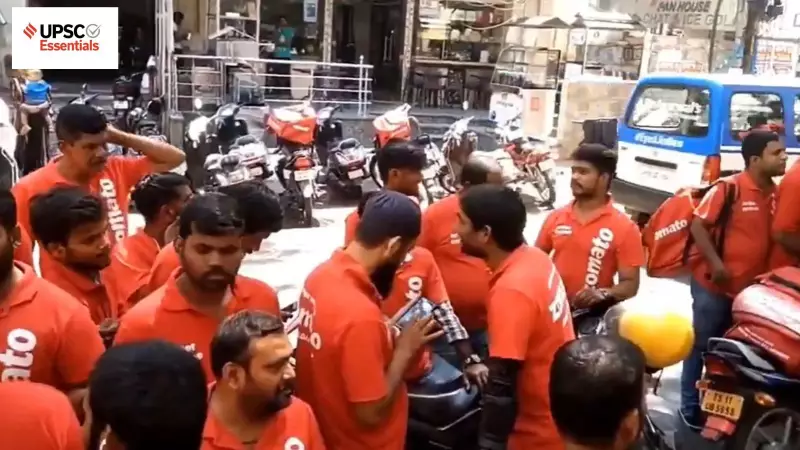
The lack of traditional labor status poses a fundamental challenge. Gig workers on platforms like Zomato, Blinkit, and Swiggy are classified as "delivery partners" or independent contractors, not employees. This classification denies them fundamental labor rights and social security benefits that regular employees enjoy automatically.
While new laws designate platform workers and establish welfare funds, implementation remains limited and unclear. These frameworks poorly suit the task-based, algorithm-mediated nature of gig work. Unpredictable hours and fluctuating incomes create protection gaps against arbitrary deactivation, income instability, and lack of guaranteed work.
Algorithmic control and technological opacity present another major limitation. Platform algorithms decide work distribution, rewards, and deactivation. Labor laws do not cover transparency in algorithmic management, leaving workers with no legal recourse to challenge decisions affecting their earnings or engagement.
The enhanced provisions in recent codes offer some safeguards. They provide legal recognition, portable social security benefits, dedicated welfare funds, and a national registration framework. These measures aim to empower gig workers with portable rights and transform informal work into secure, recognized livelihoods. Yet, effectively regulating the gig economy requires addressing the inherent tension between flexible, on-demand work models and traditional labor protections designed for stable employment relationships.
This question links the emerging digital economy with conventional labor law frameworks. It highlights critical gaps in social security, worker classification, and collective bargaining. Assessing policy readiness for regulating platform-based work becomes increasingly important amid rising informality and technological change.
Practice answering these questions to strengthen your GS-3 preparation. Focus on presenting clear arguments, incorporating relevant facts, and structuring your responses effectively. Regular answer writing practice serves as valuable preparation for the UPSC Mains examination.