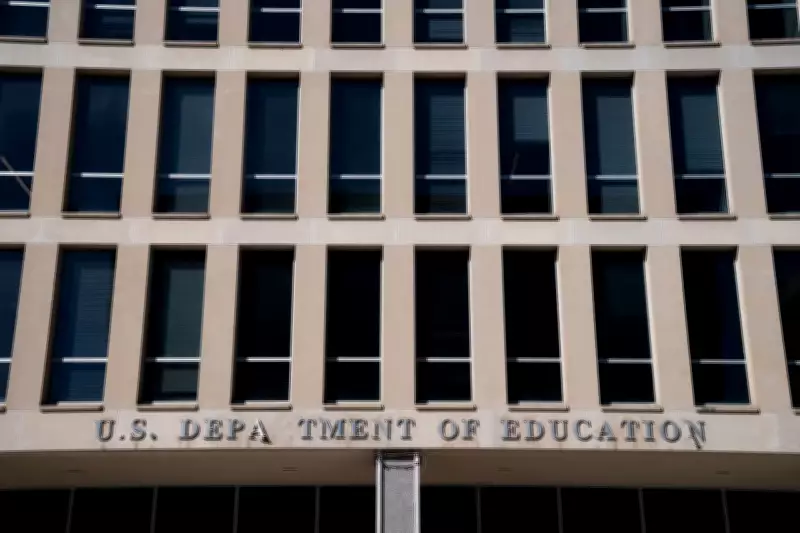
US Education Department Announces Sweeping Higher Education Policy Reforms
The United States Department of Education has released an official press statement that outlines substantial shifts in federal higher education policy under the current Trump administration. This comprehensive statement delivers a pointed critique of previous practices within American colleges and universities, specifically targeting diversity, equity, and inclusion (DEI) programs, admissions procedures, and overall student outcomes. The administration asserts it is actively working to redirect the focus of higher education toward academic rigor, graduate employability, and greater institutional accountability.
Critique of DEI Initiatives and Admissions Practices
According to the Department's detailed assessment, many institutions in recent years have disproportionately prioritized DEI initiatives over the fundamental mission of preparing students for successful careers. The statement raises specific concerns about institutional practices such as requiring mandatory DEI statements during faculty hiring processes and organizing separate graduation ceremonies for different student identity groups. The Department contends these trends have contributed to a measurable decline in academic standards and a movement away from traditional merit-based evaluation systems.
Renewed Focus on Merit, Skills, and Employment Outcomes
A central pillar of the new policy direction is a reinforced commitment to merit-based admissions and creating a stronger, more direct alignment between educational programs and employment opportunities. The administration argues forcefully that students must graduate with tangible, marketable skills that directly enhance their job prospects and career trajectories.

The statement also highlights the critical issue of escalating student debt, noting that many graduates leave college burdened with significant financial obligations while holding degrees that fail to lead to stable, well-paying employment. The stated policy goal is to ensure that higher education delivers substantially better value, both in terms of financial cost and long-term career outcomes for students.
Institutions are now being formally encouraged to conduct thorough reviews of their academic programs, strengthen curriculum relevance to industry needs, and concentrate on measurable indicators of student success, such as job placement rates and post-graduation earning potential. The overarching objective, as described in the Department's communication, is to restore public confidence in the American higher education system.
Policy Updates on Transgender Athlete Participation
The Department's statement further emphasizes significant policy updates concerning participation in women's collegiate sports. It notes that in February 2025, the National Collegiate Athletic Association (NCAA) updated its official guidelines, stating that only biologically female athletes are eligible to participate in women's sports competitions.
Following this NCAA update, several prominent universities have revised their own institutional policies. For instance, Harvard University has removed its previous policy regarding transgender athlete participation from its official handbook. Similarly, Trinity University has updated its policy for intercollegiate athletics, explicitly stating that only female individuals may participate in women's sports.
In addition, the University of Pennsylvania and Wagner College have entered into formal resolution agreements to ensure compliance with Title IX requirements. According to the Department's statement, these institutions also issued public apologies and took corrective steps to adjust past competition outcomes. The Department states these measures are designed to ensure competitive fairness in women's athletics and maintain equal opportunities for all female athletes.
Broader Institutional and Cultural Shifts
The statement concludes by asserting that these developments reflect a wider cultural and policy transformation occurring across higher education institutions in the United States. It indicates that colleges and universities are increasingly aligning their internal policies with federal priorities regarding admissions, athletics, and general campus governance.

The administration characterizes these changes as integral components of a larger, concerted effort to fundamentally reshape the American higher education system. This restructuring places a paramount emphasis on institutional accountability, competitive fairness, and securing long-term, meaningful success for all students.