The Viral Lunchbox Video: A Beacon of Kindness in a Digital Age
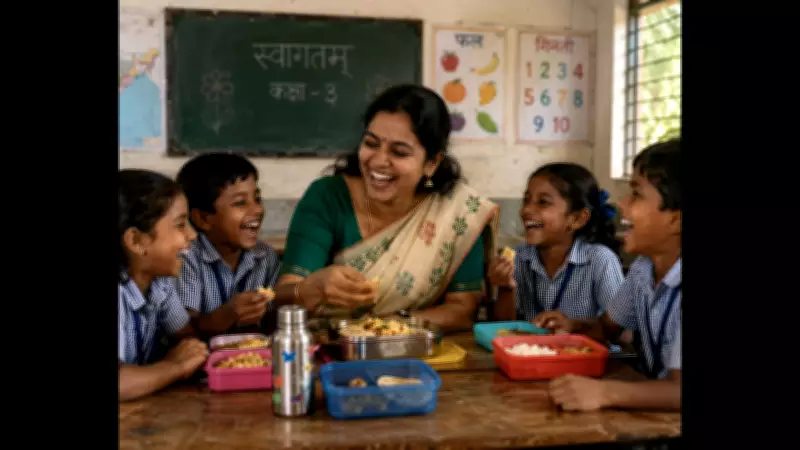
In recent days, a simple video has captured the hearts of millions across India, spreading rapidly across social media platforms. The footage shows a young child in a primary school opening his tiffin box during lunchtime, revealing a modest meal of roti-cheeni—bread with sugar. This humble lunch, likely all his family could afford, became the centerpiece of an unexpected moment of grace.
A Teacher's Empathetic Response
As the teacher walked around the classroom, she noticed the boy's simple food. Instead of ignoring it or, worse, turning it into a source of shame, she immediately responded with warmth. "What a beautiful lunch—roti-cheeni," she exclaimed, then asked the class, "Who else likes roti-cheeni?" The children enthusiastically replied, "Me! Me! Me!" creating a chorus of solidarity.
This Instagram video has amassed over 23,400 comments and continues to grow, with viewers expressing how it moved them to tears. In a world often dominated by negative content, this act of kindness stands out starkly. The teacher's quiet dignity transformed a potential moment of embarrassment into one of inclusion and respect.

Why This Video Went Viral
The viral success of this video can be attributed to its stark contrast with the usual fare on social media. Typically, algorithms favor outrage, division, and sensationalism—what some call "rage-clickbait"—because negativity holds attention and drives engagement. Research indicates that social media platforms are designed to amplify our worst impulses, leading to a phenomenon known as "doom-scrolling," where users consume a relentless stream of distressing news.
Psychologists refer to this as the "mean world syndrome," a cognitive bias where heavy exposure to media violence and bad news makes people perceive the world as more dangerous and hostile than it actually is. Coined by George Gerbner in the 1970s, it suggests that our view of reality is shaped more by mediated exposure than lived experience.
In this context, the lunchbox video serves as a rare glimmer of hope. It breaks through the noise not with spectacle or drama, but with restraint and empathy. The teacher's response refused to react in the expected way, avoiding moral grandstanding or performance. Instead, she simply protected the child's dignity, offering a balm to viewers weary of constant negativity.
Nostalgia and Cultural Reflections
The story has also triggered waves of nostalgia among viewers. Many recalled their own childhood tiffins, where simple meals like roti-cheeni were packed with care and love, not as symbols of lack but of comfort and familiarity. However, over time, food has often become a marker of social status, with lunchboxes curated, compared, and judged in a culture of comparison and excess.
By praising the roti-cheeni, the teacher quietly rejected this culture, reminding us that value isn't found in variety or display, but in empathy and connection. The video highlights how we often consume news in extremes—either outrage or inspiration—missing the everyday moments where most humanity resides.
The Lasting Impact of Small Acts
While this teacher's action won't change policies, solve poverty, or dismantle inequality, it did something immediate and tangible: it changed a child's experience, showing him that goodness exists in the world. In a Hindi saying, "Doobte to tinke ka sahara kaafi hai" (a drowning man will clutch at a straw), this video offers that straw of hope to many feeling overwhelmed by bad news.
Ultimately, the viral lunchbox video reveals more about us than those in the classroom. Our collective reaction shows a deep craving for kindness and hope, a reminder that even in a hostile world, simple acts of decency can resonate powerfully. It's a balance we didn't know we were seeking, proving that sometimes, the smallest gestures make the biggest waves.