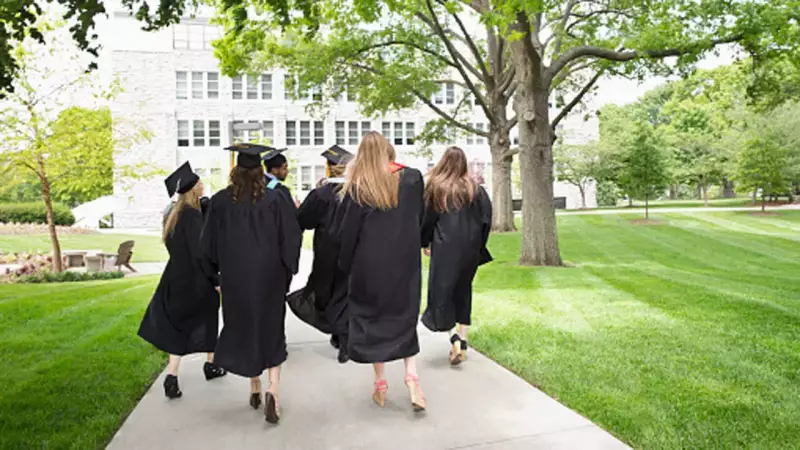
For countless students across India, the journey into a community college begins with a dream. They envision graduation day, a prized degree, and the launch of a promising career. About 83 percent of these students plan to eventually earn a four-year bachelor's degree. However, for a significant number, this path proves far more difficult than imagined. A startling trend shows that nearly 40 percent of students enrolled in two-year colleges do not return for their second year.
The Multifaceted Crisis: Why Students Leave
A revealing report from the Community College Research Center (CCRC), titled "Why Did They Leave? Learning From the Experiences of Former Community College Students," delves into this pressing issue. The research clearly indicates that dropping out is seldom a simple, one-time decision. Instead, students are pushed out by a complex web of personal hardships and institutional shortcomings.
Financial burdens emerge as the single biggest reason for departure, cited by 45 percent of former students. Juggling tuition fees with basic living expenses like rent and food becomes an unsustainable challenge. Closely following are academic struggles, which impact 39 percent of students. The demands of assignments, exams, and complex coursework overwhelm many. Furthermore, the immense stress of balancing education with work and family responsibilities contributes to the decision for 33 percent of learners.

On average, each student listed more than three distinct reasons for leaving. This underscores a critical finding: student attrition is typically the result of multiple, overlapping pressures, not a single isolated problem.
Institutional Gaps and the Critical Need for Guidance
The challenges are not solely on the student's side. Community colleges themselves often grapple with limited resources. A major shortfall is in the area of academic and career advising. Students frequently receive minimal guidance on selecting the right courses, understanding program requirements, or planning a career trajectory. These institutional gaps make navigating higher education successfully a daunting task.
Program choice is especially pivotal. While changing majors is common in higher education, at two-year colleges it can lead to lost time and increased costs. Students who begin in general or undecided streams often face weaker outcomes. Without clear, early direction, even highly motivated students can lose their way and struggle to complete their studies.
Building Pathways Through Early Exploration
The CCRC study highlights the vital importance of early and sustained career and program exploration. Students who cannot visualize a clear professional future are more likely to drop out. Initial conversations about career paths, degree requirements, and transfer options can have a profound impact on a student's journey.
Researchers stress that opportunities for exploration should be a standard part of every student's experience, not an optional extra. These opportunities allow students to develop their interests, build peer networks, and find mentors. Early goal-setting not only boosts motivation but also serves as a powerful tool for retention, helping students stay focused on degree completion.
The Road Ahead: Creating Holistic Support Systems
Improving retention rates requires a holistic approach that looks beyond academics. Institutions must develop systems that understand and address the financial, emotional, and career-related challenges students face. This can include robust financial planning workshops, accessible counselling services, dedicated academic support centres, and programs that foster a sense of community.
Community colleges are essential gateways to four-year degrees and better livelihoods for millions in India. Understanding the complex reasons behind student dropout is the crucial first step. By implementing targeted policies and building comprehensive support systems with adequate guidance, a far greater number of students can cross the graduation stage, realize their potential, and achieve the bright future they imagined on that very first day of class.