Why the Moon Appears to Change Shape: The Science Behind Lunar Phases
Most children gaze up at the night sky and notice that the Moon does not look the same every evening. Some nights it appears as a brilliant full circle, other nights as a perfect half, and sometimes as a delicate curved sliver. This observation naturally leads many to wonder: Is the Moon actually changing shape? The answer is a fascinating no. The Moon itself remains a spherical ball, but what we see from Earth changes due to the interplay of sunlight and the Moon's position.
The Moon Does Not Really Change Shape
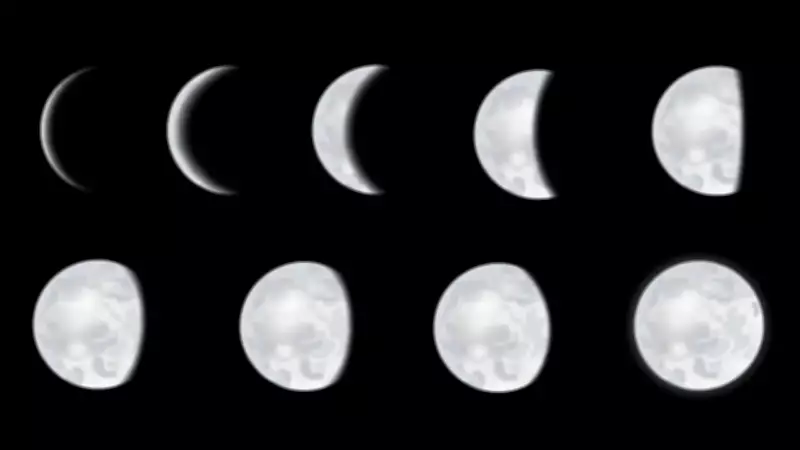
The Moon is always a round, ball-like object in space. Its apparent transformation is an optical illusion caused by the varying amounts of sunlight that reflect off its surface and reach our eyes on Earth. The Moon has no light of its own; it merely reflects the Sun's light. As the Moon orbits our planet, different portions of its sunlit side become visible, creating the illusion of changing shapes. This captivating process is scientifically known as the Phases of the Moon.
The Moon's Orbit Around Earth
The Moon revolves around Earth in a nearly circular path called an orbit. It completes one full revolution approximately every 27 days. During this journey, the relative positions of the Sun, Earth, and Moon continuously shift. This dynamic alignment is what causes the Moon's appearance to evolve daily, presenting us with views ranging from a fully illuminated disk to a barely visible crescent.

Understanding Different Moon Phases
The changing appearance of the Moon is categorized into distinct phases. Key phases include:
- New Moon: Occurs when the Moon is positioned between the Sun and Earth, making its sunlit side invisible from our perspective.
- Crescent Moon: A slim, curved shape visible as sunlight begins to illuminate a small part of the Moon.
- Half Moon (First Quarter or Last Quarter): When half of the Moon's visible side is lit by the Sun.
- Full Moon: Happens when Earth is between the Sun and the Moon, allowing us to see the entire sunlit face.
A Full Moon is a monthly event that captivates skywatchers worldwide.
The Monthly Lunar Cycle
The complete cycle of lunar phases repeats every 29.5 days, which is slightly longer than the orbital period due to Earth's own movement around the Sun. This regular cycle is why we experience a Full Moon each month. Historically, civilizations used these predictable phases to track time, leading to the development of lunar calendars. Even today, farmers, sailors, and travelers often rely on Moon phases to plan nighttime activities, from planting crops to navigating seas.
Fun Facts About Earth's Natural Satellite
The Moon is Earth's only natural satellite and plays a crucial role in our planet's systems. It significantly influences ocean tides through gravitational pull. Without the Moon, Earth's environment and life would be vastly different. Scientists who study the Moon, stars, planets, and the universe are called astronomers, a field known as astronomy. Their research continues to unveil mysteries of our cosmic neighborhood.
Disclaimer: This educational article is designed to simplify complex space concepts for young learners and general audiences. It serves as a starting point to spark curiosity about astronomy and is not a substitute for in-depth scientific study. Parents and educators are encouraged to use this information to foster interest in the wonders of the universe.