

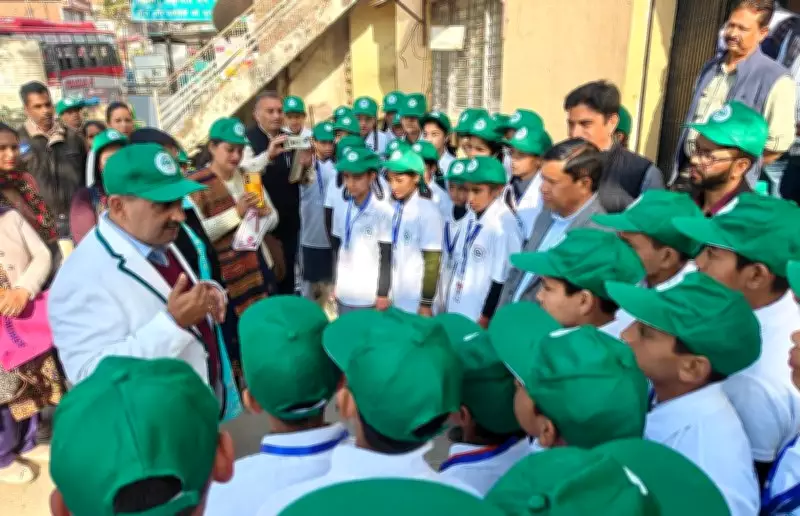
300 Students from Kangra and Chamba Districts Participate in Educational Nature Camping Initiative
The Appropriate Technology Centre (ATC) located in Shahpur, within the Kangra district, has successfully wrapped up six National Nature Camping Programmes for the 2025-26 academic session. This engaging initiative involved approximately 300 students and teachers hailing from 20 education blocks across the Kangra and Chamba districts of Himachal Pradesh.
Exploring Science and Nature Through Hands-On Activities
Sponsored by the Union Ministry of Environment, Forest and Climate Change, the programme was designed as a dynamic "classroom without walls", providing an immersive learning experience beyond traditional settings. Participants had the opportunity to visit and explore several key sites, including:
- The Kareri Weather Station, where they learned about meteorological processes and climate monitoring.
- ITI-Shahpur, gaining insights into technical education and vocational training.
- The Science Centre in Palampur, which offered interactive exhibits and demonstrations.
Additionally, students embarked on biodiversity tours to the Gopalpur Zoo and the Tulip Garden, enhancing their understanding of local flora and fauna. The programme also featured hands-on physics demonstrations conducted by Dinesh Kumar, making complex scientific concepts accessible and engaging for young minds.

Fostering Scientific Curiosity and Environmental Responsibility
According to Sunanda Pathania, the in-charge of ATC, the nature camping programme has been instrumental in nurturing scientific curiosity and instilling a sense of environmental responsibility among the participants. "This initiative successfully bridges the gap between theoretical knowledge and practical experience, encouraging students to become more aware of their natural surroundings," Pathania stated.
The programme aligns with broader educational goals by promoting experiential learning, which is crucial for developing critical thinking and problem-solving skills in students. By engaging with real-world environments and scientific tools, the young learners from Kangra and Chamba have gained valuable insights that complement their formal education.
This nature camping effort underscores the importance of outdoor and environmental education in shaping future generations who are not only academically proficient but also environmentally conscious. The success of the 2025-26 session highlights the potential for similar programmes to be expanded across other regions, contributing to a more sustainable and scientifically literate society.

