Maharashtra Agriculture Admissions Climb as Institute Numbers Fall
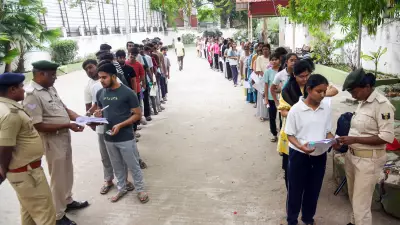
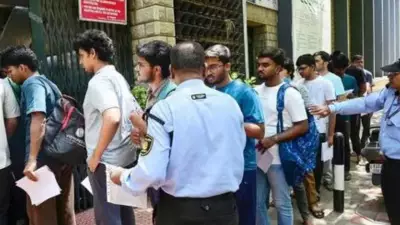
Admissions to agricultural and allied courses in Maharashtra have experienced a notable upswing in the academic year 2025–26, even as the total count of institutes offering these programs has decreased. This trend highlights a wave of closures predominantly affecting privately managed colleges, according to recent data from the Maharashtra Common Entrance Test Cell.
Admission Growth and Institute Decline
Data reveals that 13,897 candidates confirmed admissions to agricultural courses in 2025–26, marking a sharp increase from 11,670 in 2023–24. This represents a growth of approximately 19% over the two-year period. However, the number of institutes offering these courses has dropped to 198 this year, down from 207 in 2024–25 and 201 in 2023–24.
Experts in agricultural education attribute the closures to inadequate admissions over a sustained period, with most shuttered institutes being privately operated. A senior official from one of Maharashtra's four agricultural universities explained, "The recent growth in admissions shows improvement in the past three years. But traditional courses like B.Sc. in Agriculture and B.Sc. in Horticulture continue to attract more students than newer allied courses such as B. Tech. in Agriculture, B. Tech. in Food Technology, and B.Sc. in Agri-business Management." These newer courses gained popularity over a decade ago, leading to a surge in private institutes that are now facing challenges.

University Performance and Regional Factors
The four state agricultural universities are Mahatma Phule Krushi Vidyapeeth in Rahuri (MPKV), Punjabrao Deshmukh Krushi Vidyapeeth in Akola (PDKV), Vasantrao Naik Marathwada Krushi Vidyapeeth in Parbhani, and Dr Balasaheb Sawant Konkan Krushi Vidyapeeth in Dapoli (DBSKKV). These universities operate their own constituent colleges and also have affiliated private colleges.
- MPKV has the highest intake capacity and recorded over 96% admissions.
- PDKV emerged with the highest admission rate among the universities.
- Three universities showed steady growth in admissions over the past three years, while DBSKKV saw a decline and recorded the lowest admission rate in the current academic year.
An official from DBSKKV cited reasons for its struggles: "Ours is a smaller university compared to the other three, so intake is low. Yet seats remain vacant due to low student demand. The university's location in a rural area, unlike others with colleges in nearby cities, makes it less attractive. Additionally, districts covered by DBSKKV, such as Sindhudurg, Ratnagiri, Raigad, Thane, Palghar, and Mumbai, have few students pursuing agriculture careers."
As per CET Cell data, five institutes affiliated with DBSKKV have shut down compared to last year.
Changing Career Preferences and Response Initiatives
A senior faculty member noted that shifting career preferences are influencing enrollment trends. "With most government recruitment processes halted, students are opting for more job-oriented courses like engineering and pharmacy, which they can pursue with similar scores in the MHT CET entrance test that determines admissions to all these courses, including agriculture," the official said.
In response, the CET Cell has initiated outreach programs to raise awareness about undergraduate agricultural courses. Universities have launched initiatives such as school connect programs. A university official stated, "These initiatives help universities connect with school students from classes 9 to 12 and educate them on agricultural courses and career opportunities. They have resulted in a slight improvement in admissions this year compared to the past two years."