Andhra Minister Lokesh Blames YSRCP's GO 117 for Poor Children Leaving Government Schools
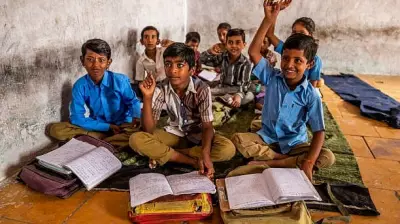
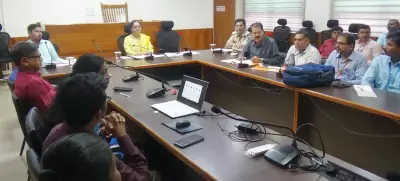
In a significant assembly session on Tuesday, IT and HRD Minister Nara Lokesh delivered a sharp critique of the previous YSRCP government's education policies. He asserted that GO 117, issued between 2019 and 2024, had the detrimental effect of pushing poor children away from government schools.
Response to Allegations and Revocation of GO 117
Lokesh was responding to a question from Palasa MLA Gouthu Sireesha, who raised concerns about irregularities in the Nadu-Nedu program and urged for the early completion of unfinished school buildings and classrooms. The minister clarified that the current NDA government had revoked GO 117 upon assuming power, fulfilling a pre-election promise.
"We took immediate action to reverse this harmful order, as we had committed to the people during our campaign," Lokesh stated emphatically.

School Closures and Teacher System Improvements
Providing detailed insights, Lokesh informed the assembly that 233 schools were closed even after the launch of the Nadu-Nedu program earlier. He emphasized the critical importance of a one-class-one-teacher system for enhancing learning outcomes in government schools.
"Only 3% of schools previously had this system in place. Through our efforts, we have increased this proportion to 33%, marking a substantial improvement," he explained.
Infrastructure Priorities and Star Rating Targets
The minister outlined five key priority areas for school infrastructure development:
- Leak-proof buildings
- Painting
- Benches
- Toilets
- Drinking water facilities
Lokesh highlighted that nearly 40% of government schools currently fall into the 1-star or 2-star categories. The government's ambitious target is to elevate all schools to 3-star or 4-star levels, ensuring better learning environments for students.
Financial Allocation for School Infrastructure
Regarding funding, Lokesh disclosed that ₹200 crore is available in School Management Committee (SMC) accounts. Additionally, the budget has allocated an extra ₹800 crore, enabling a total of nearly ₹1,000 crore to be spent on school infrastructure in the coming year.
He also assured that steps will be taken to clear pending bills related to works executed between 2014 and 2019, addressing long-standing financial concerns.
Energy Minister's Response on Electricity Subsidy
In a related development, Energy Minister Gottipati Ravi Kumar addressed a question from former minister Somireddy Chandramohan Reddy regarding the demand for a uniform electricity subsidy. Kumar explained that the coalition government is supplying power to aqua farmers at Rs 1.5 per unit, significantly lower than the Rs 3.85 per unit tariff set by the Andhra Pradesh Electricity Regulatory Commission (APERC).
"The government is bearing a cost of Rs 2.35 per unit to support our aqua farmers," Kumar noted, adding that the previous 10-acre limit under the earlier aquaculture zone policy has been removed to extend benefits to more farmers.
Additional Connections and Safety Measures
Answering another question from Jana Sena MLA Lokam Naga Madhavi, Ravi Kumar informed the House that the NDA government has sanctioned 50,000 additional electricity connections. This initiative raises the total number of beneficiaries to an impressive 5.21 lakh.
He also highlighted safety measures, stating, "The government has sanctioned Rs 1 crore for each district under APEPDCL to implement necessary steps to prevent electrical accidents." Kumar urged local bodies to refrain from granting permission for house construction in areas where electrical lines pass through, noting that most safety risks arise from houses built after power lines were erected.
The minister emphasized the government's priority in preventing electrical accidents, pointing out that incidents have also occurred during harvesting in palm-oil plantations, underscoring the need for comprehensive safety protocols.