Bhopal Parents Allege Systematic Exploitation by 'Book Mafia' in Private CBSE Schools
Parents in Bhopal have come forward with serious allegations of being systematically exploited by what they describe as a "book mafia" operating through certain private CBSE schools. These claims were made public on Monday by the Madhya Pradesh Parents Association, former principal of a CBSE private school Fr. O. Jose, and a coalition of independent bookstores.
Exclusive Textbook Arrangements and Inflated Prices
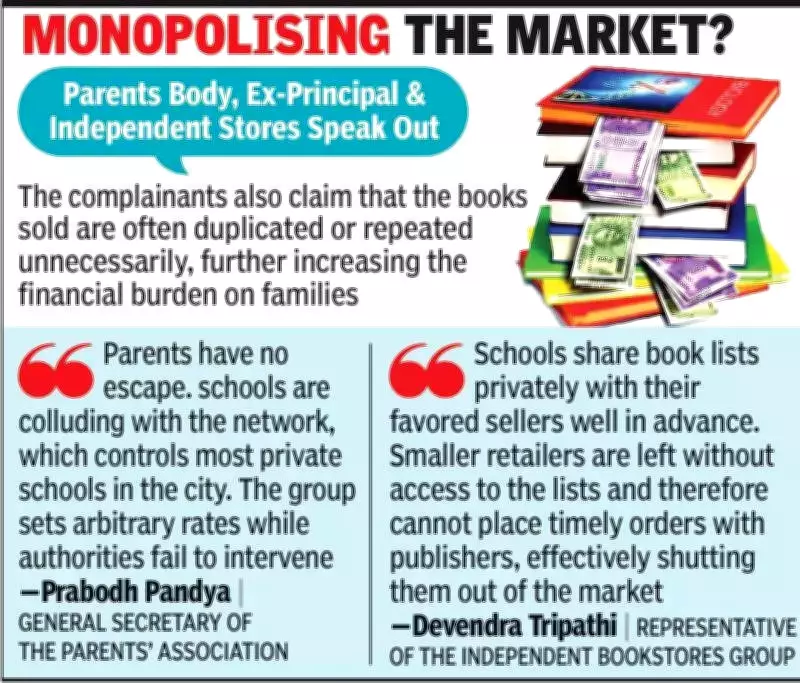
The complainants assert that some schools have awarded exclusive textbook supply arrangements to a small network of just five preferred bookshops. This practice effectively forces parents to purchase books solely from these outlets, leaving them with no alternative but to pay significantly inflated prices. Parents have no escape from this organized profiteering, stated Prabodh Pandya, general secretary of the parents' association. He emphasized that the group sets arbitrary rates while authorities fail to intervene, exacerbating the financial burden on families.
Furthermore, the group highlighted that the books sold are often duplicated or repeated unnecessarily, adding to the costs. Devendra Tiwari, representing the independent bookstores group, provided a stark example: fifth-grade textbooks from a private publisher, which can be obtained at wholesale discounts of 75% to 82%, are allegedly being illegally duplicated by another private firm. These duplicated books are then sold at prices up to Rs 180—roughly double what parents should be paying.

Administrative Delays and Market Manipulation
The complainants also pointed to deliberate administrative delays that worsen the situation. According to them, an earlier order required schools to display book lists by December 31, allowing parents and retailers ample time to prepare. However, this year, the deadline was shifted to February 15, even though the new academic session begins around March 15. This last-minute change forces parents into a rushed buying frenzy and prevents independent bookstores from arranging stock in time, effectively shutting them out of the market.
Tiwari alleged that schools share book lists privately with their favored sellers well in advance, enabling those shops to secure inventory early. In contrast, smaller retailers are left without access to these lists, making it impossible for them to place timely orders with publishers. This creates an unfair advantage for the preferred bookshops and stifles competition.
Calls for Action and Enforcement
The group referenced a previous crackdown by the Jabalpur collector as evidence that enforcement can be effective in curbing such practices. They urged authorities to take immediate steps to address these issues, including:
- Ensuring transparency in textbook procurement processes.
- Enforcing deadlines for book list disclosures to benefit all stakeholders.
- Investigating allegations of illegal duplication and price gouging.
- Promoting fair competition among book retailers to protect parents' interests.
The allegations underscore a growing concern over exploitation in the education sector, with parents calling for swift intervention to uphold fairness and affordability in school textbook supplies.