The Transformative Power of Simple Brain Teasers in Child Development
In the realm of childhood education, sometimes the smallest questions can unlock the most significant cognitive doors. Brain teasers serve as perfect examples of this phenomenon—seemingly straightforward at first glance, yet quietly challenging the fundamental ways children process information and approach problems.
The 'Teapot' Puzzle: More Than Meets the Eye
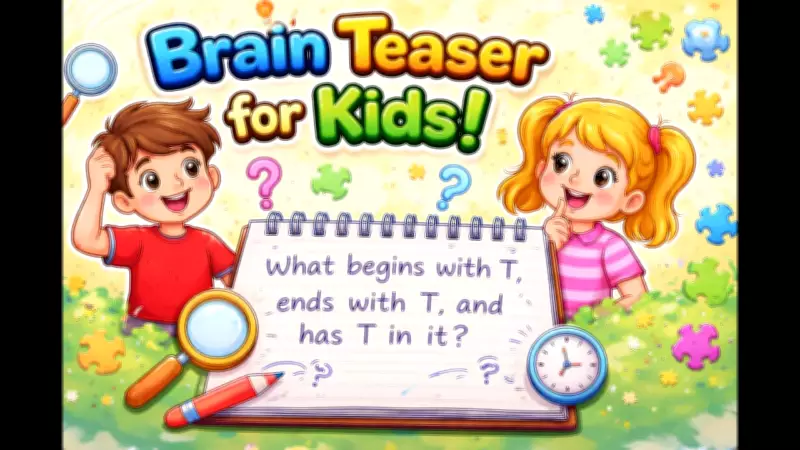
The classic puzzle that asks "What begins with T, ends with T, and has T in it?" initially appears to be a simple spelling exercise. Most children instinctively search for words fitting this letter pattern, suggesting possibilities like "tent," "tart," or similar terms. However, the true answer—"teapot"—reveals a deeper layer of linguistic playfulness that most young minds don't anticipate.
This moment of surprise represents where genuine learning begins. When children discover that the solution involves both letter positioning and semantic content ("tea" within "teapot"), they experience a cognitive shift that encourages more flexible thinking patterns.

Why Pausing Matters in Cognitive Development
Children naturally tend to rush toward quick answers, but brain teasers like this one gently teach the value of patience and careful consideration. The puzzle demonstrates that not every solution rests on the surface—sometimes the brain needs to slow down, re-examine the question, and consider alternative interpretations.
This deliberate pause serves multiple developmental purposes:
- Enhanced Focus: Children learn to concentrate more deeply on problem elements
- Pattern Recognition: They begin identifying linguistic patterns and wordplay structures
- Problem-Solving Resilience: Young minds develop patience when solutions aren't immediately apparent
- Confidence Building: Successfully solving puzzles boosts self-assurance in cognitive abilities
The Broader Impact on Learning Approaches
These seemingly simple teasers accomplish far more than momentary entertainment. They quietly sharpen critical thinking skills that gradually shape how children approach academic studies, social conversations, and everyday decision-making. The skills developed through regular puzzle engagement include:
- Looking beyond surface-level information to discover deeper meanings
- Understanding linguistic nuances and wordplay mechanisms
- Developing systematic problem-solving approaches rather than guessing randomly
- Building cognitive flexibility to consider multiple solution pathways
Creating Meaningful Family Learning Moments
Parents can transform these puzzles into valuable bonding experiences by incorporating them into daily routines. Asking the "teapot" question during car rides, meal times, or casual conversations creates natural learning opportunities. The key lies in allowing children adequate thinking time and encouraging free guessing without immediate correction.
When the solution is eventually revealed, it becomes a shared moment of discovery and laughter. These small interactions strengthen family connections while demonstrating that meaningful learning can occur outside traditional educational settings—without books, screens, or formal instruction.
The Lasting Lessons Within Simple Puzzles
The "teapot" puzzle carries subtle but important messages about problem-solving approaches. It teaches children that not every challenge requires speed—some demand curiosity, careful observation, and willingness to reconsider initial assumptions.
Children who internalize these lessons early develop into more thoughtful individuals who naturally question assumptions, explore multiple perspectives, and demonstrate deeper understanding across various domains. Remarkably, all these cognitive benefits can originate from something as simple as a single word puzzle.

Brain teasers represent more than just childhood amusement—they serve as foundational tools for developing the critical thinking patterns that support lifelong learning and intellectual growth. The "teapot" puzzle exemplifies how seemingly trivial questions can plant seeds for sophisticated cognitive development, proving that sometimes the smallest mental challenges yield the most substantial educational rewards.