CBSE Class 12 Chemistry 2026 Exam: A Comprehensive Analysis
The Central Board of Secondary Education (CBSE) conducted the Class 12 Chemistry examination for the academic year 2025-26, and the event has sparked widespread discussion among students, educators, and academic experts. This analysis delves into the intricacies of the question paper, capturing real-time reactions from those directly involved in the process.
Exam Pattern and Question Paper Structure
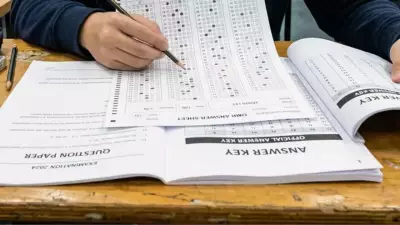
The Chemistry paper adhered to the CBSE's prescribed syllabus and marking scheme, comprising a mix of theoretical and numerical questions. Students reported that the paper was well-balanced, with sections covering organic, inorganic, and physical chemistry. The distribution of marks across different units was in line with expectations, though some topics required deeper conceptual understanding.
Key observations from the question paper include:

- A focus on application-based questions rather than rote memorization.
- Numerical problems that tested practical knowledge of chemical reactions.
- Diagram-based questions to assess visual and analytical skills.
Student Reactions: Mixed Responses to Difficulty Level
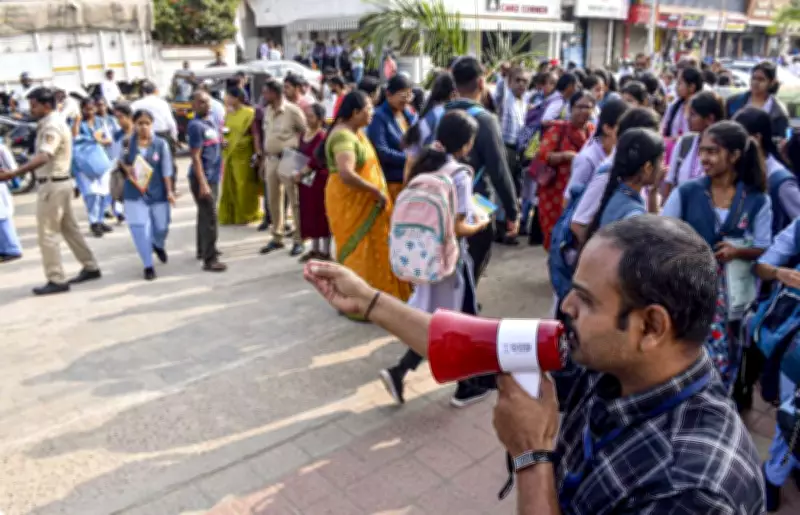
Students who appeared for the exam expressed a range of emotions, from relief to anxiety. Many found the paper to be moderately challenging, with specific sections posing greater difficulty.
"The organic chemistry part was tricky, but overall, it was manageable if you had prepared thoroughly," shared one student from Delhi. Another from Mumbai noted, "I expected more direct questions, but the paper required critical thinking, which was a bit surprising."
Common concerns among students included time management during the exam and the complexity of certain numerical problems. However, most agreed that consistent study and practice could have alleviated these issues.
Teacher Feedback: Insights from Educators
Chemistry teachers across the country provided valuable insights into the exam's alignment with the curriculum and its educational value. Many praised the paper for promoting higher-order thinking skills.
According to educators:
- The paper effectively tested conceptual clarity over memorization.
- It encouraged students to apply theoretical knowledge to real-world scenarios.
- The difficulty level was appropriate for assessing a student's grasp of the subject.
One teacher from Kolkata remarked, "This paper sets a good precedent for future exams, emphasizing understanding rather than just recall. It challenges students to think beyond the textbook."
Overall Assessment and Implications
The CBSE Class 12 Chemistry exam 2026 has been deemed a fair assessment tool by many stakeholders. Its design reflects a shift towards competency-based education, which is in line with global educational trends.
For students, this analysis serves as a reminder of the importance of comprehensive preparation, including solving previous years' papers and focusing on weak areas. Teachers are encouraged to incorporate more application-based teaching methods in their classrooms.
As the CBSE continues to refine its examination patterns, such feedback from students and teachers will be crucial in shaping future assessments. The 2026 Chemistry paper, with its balanced approach, is likely to influence upcoming board exams and study strategies nationwide.