CBSE Class 10 Science Exam 2026 Concludes with Mixed Student Reactions
The highly anticipated Central Board of Secondary Education (CBSE) Class 10 Science examination for the academic year 2026 was successfully conducted today, February 25, across the nation. The exam commenced at 10:30 AM and concluded at 1:30 PM, providing students with a comprehensive three-hour window to demonstrate their understanding of Physics, Chemistry, and Biology concepts.
Massive Scale of Examination Across India
This year's Science exam witnessed participation from an impressive total of 2,508,319 registered candidates, distributed strategically across 8,075 examination centers throughout the country. The gender distribution reveals 1,408,546 male students and 1,099,773 female students registered for this crucial assessment. While not all candidates appeared on the same day due to logistical arrangements, these figures underscore the monumental scale of India's educational evaluation system. The next significant examination for Class 10 students is scheduled for March 2, 2026, focusing on the Hindi subject.
Paper Structure and Sectional Challenges
The Science question paper was thoughtfully divided into multiple sections, with Section C particularly designed to challenge students' analytical capabilities and higher-order thinking skills. Students reported that effective time management emerged as the critical factor for success, especially when tackling Physics numerical problems and intricate diagrams. Chemistry and Biology sections were largely rooted in fundamental concepts and NCERT textbook content, providing comfort to well-prepared students. However, Physics demanded both exceptional speed and meticulous precision, keeping examinees thoroughly engaged throughout the examination duration.

Student Reactions from Examination Centers
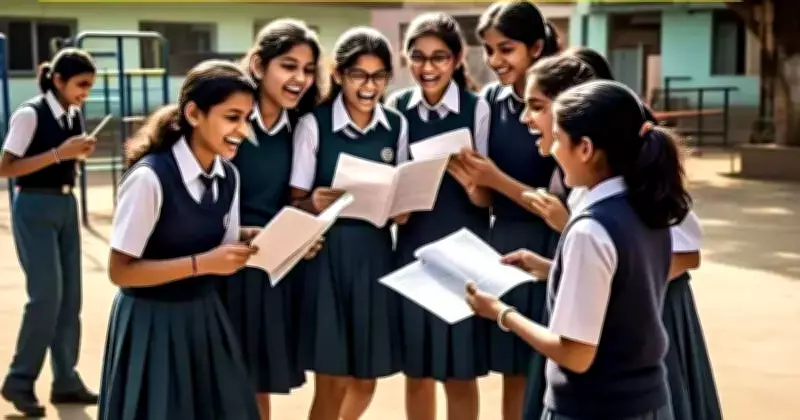
At Sarvodaya Kanya Vidyalaya in Shree Ram Colony and GGSSS Sonia Vihar, students shared their immediate post-exam impressions. Soni, a student, remarked, "Chemistry and Biology sections were relatively straightforward and manageable." Her classmate Harshita added, "The overall paper length was considerable, particularly Section C which required careful time allocation." Both students emphasized that Section C necessitated enhanced analytical thinking and strategic time management approaches.
Detailed Subject-Wise Analysis
Physics: The Most Time-Consuming Section
Physics emerged as the most demanding section according to student feedback. Soni explained, "Solving numerical problems consumed substantial time, and the diagrams along with electric circuit questions required advanced cognitive processing." Harshita observed, "Physics demanded intense concentration throughout, though with adequate preparation it remained manageable for diligent students."
Chemistry: Straightforward and Concept-Based
Chemistry was generally perceived as the more accessible section. Soni elaborated, "Questions involving chemical equation balancing were particularly straightforward." Students expressed that thorough study of NCERT textbooks and consistent practice of chemical reactions significantly contributed to their confidence in tackling this section comfortably.
Biology: NCERT-Centric and Most Approachable
Biology consistently emerged as the most approachable component of the Science paper. According to Soni, "Several Biology questions were directly derived from NCERT textbook content, making this the easiest section where I anticipate securing full marks." Harshita reinforced this perspective, stating, "I could attempt all Biology questions with confidence since most concepts were familiar from regular classroom instruction and study materials."
Overall Assessment and Future Implications
Collectively, students characterized the Science paper as "easy to moderate" in difficulty level. Soni summarized, "The paper was fundamentally doable, though Section C effectively tested our analytical capabilities and application skills." Harshita concluded, "Despite the paper's considerable length, I remain optimistic about achieving favorable marks provided time was managed effectively during the examination."

The CBSE Class 10 Science examination continues to serve as a critical milestone in India's educational landscape, assessing millions of students' comprehension of scientific principles while preparing them for advanced academic pursuits. The balanced approach between conceptual understanding and application-based questions reflects the evolving nature of science education assessment methodologies.