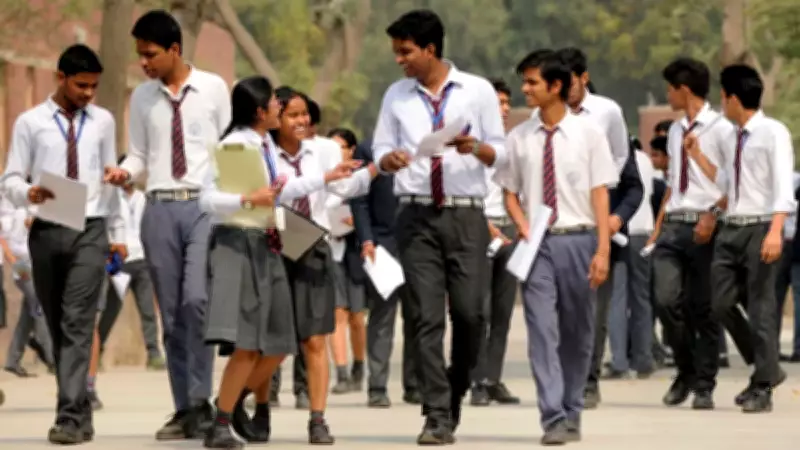
CBSE Announces Sweeping Curriculum Reforms for 2026-27 Academic Year
The Central Board of Secondary Education (CBSE) has rolled out a comprehensive new curriculum framework, marking a significant shift in India's school education landscape. These changes, set to be implemented from the academic session 2026-27, aim to enhance learning outcomes and provide greater flexibility to students.
Three-Language Formula from Class 6
One of the most notable changes is the introduction of a mandatory three-language formula starting from Class 6. Under this policy, students will be required to study three languages, with an emphasis on promoting linguistic diversity and proficiency. This move aligns with the National Education Policy (NEP) 2020 recommendations and is designed to foster multilingualism among young learners.
The board has specified that the three languages will include the mother tongue or regional language, Hindi, and English. However, schools in non-Hindi speaking states may offer alternative language options to accommodate local preferences. This initiative seeks to bridge communication gaps and prepare students for a globally connected world.

Two-Level Mathematics and Science for Class 9
In another groundbreaking development, CBSE will introduce two levels of Mathematics and Science for students in Class 9. This stratification allows learners to choose between standard and advanced levels based on their aptitude and career aspirations.
Standard Level: This option is tailored for students who require a foundational understanding of Mathematics and Science, focusing on core concepts and practical applications.
Advanced Level: Designed for those pursuing careers in STEM fields, this level offers a more rigorous curriculum with in-depth theoretical knowledge and problem-solving skills.
This bifurcation is expected to reduce academic pressure and enable personalized learning pathways, ensuring that no student is left behind due to the one-size-fits-all approach.
Implementation Timeline and Stakeholder Response
The new curriculum will be phased in gradually, with full implementation targeted for the 2026-27 academic year. CBSE has assured that adequate training and resources will be provided to teachers to facilitate a smooth transition.
Education experts have welcomed these reforms, highlighting their potential to modernize the Indian education system. "The introduction of a three-language formula and two-level subjects reflects a student-centric approach," said Dr. Anjali Sharma, an education policy analyst. "It acknowledges diverse learning needs and promotes holistic development."
Parents and students have expressed mixed reactions, with some praising the flexibility while others raise concerns about increased workload. However, CBSE officials emphasize that the changes are backed by extensive research and aim to foster critical thinking and creativity.
Broader Implications for Indian Education
These curriculum revisions are part of a larger effort to align Indian education with global standards and the NEP 2020 vision. Key objectives include:
- Enhancing linguistic and cognitive skills through multilingual education.
- Reducing dropout rates by offering subject-level choices that cater to individual interests.
- Preparing students for competitive exams and higher education with a more structured approach.
- Promoting inclusivity by accommodating regional language preferences.
As the 2026-27 deadline approaches, schools across the country are expected to undergo significant adjustments in teaching methodologies and infrastructure. The success of these reforms will largely depend on effective implementation and continuous feedback from all stakeholders.