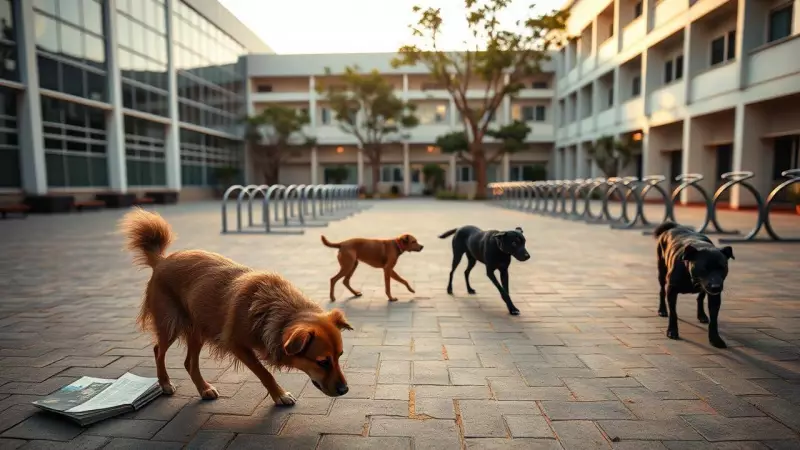
The Central Board of Secondary Education (CBSE) has issued a crucial directive to all its affiliated schools across India, mandating the immediate implementation of stringent measures to prevent dog-bite incidents and control the presence of stray dogs within school premises. This advisory comes in direct response to recent guidelines from the Supreme Court of India, which underscored the paramount importance of safety, security, and well-being for children in educational institutions.
Core Directives: Awareness and Immediate Action
The board's communication is based on a detailed Standard Operating Procedure (SOP) formulated by the Department of Animal Husbandry and Dairying under the Ministry of Fisheries, Animal Husbandry and Dairying. CBSE has instructed schools to treat this matter with utmost seriousness and ensure that stray dogs do not pose any threat to students, staff, and the wider school community.
As a primary step, schools must conduct comprehensive awareness programs for students, teaching staff, and non-teaching employees. These programs should educate participants on animal safety, first-aid measures for dog bites, and clear protocols for reporting the presence of stray animals on campus. The goal is to equip every individual with the knowledge to respond calmly and effectively to prevent accidents and injuries.

Infrastructure and Coordination for Safe Premises
CBSE has laid out specific physical and administrative actions schools must take. Institutions are required to identify and secure areas vulnerable to the entry or sheltering of stray dogs. Any stray dog found inside the school campus must be removed promptly in coordination with local municipal authorities, elected bodies, and the district administration.
Furthermore, schools must ensure their infrastructure acts as a barrier. This includes maintaining adequate fencing, robust boundary walls, and secure gates to prevent stray animals from entering or residing on the school grounds. These measures are considered essential for creating a safe physical environment.
Accountability Through Nodal Officers and Regular Inspections
To institutionalize these safety protocols, every school must appoint a dedicated Nodal Officer. This officer will be responsible for overseeing general cleanliness, maintenance, and specifically, the prevention of stray dog incursions. The name and contact details of this officer must be displayed prominently at the school's main entrance.
Adding a layer of oversight, schools are now required to facilitate scheduled inspections at least once every quarter (three months). These inspections will be carried out by authorized officials appointed by State or Union Territory governments to verify that no stray dog habitats exist within or near the school campus. The board has warned that any negligence in compliance may lead to serious action.
Focus on Waste Management and Hygiene
Recognizing that poor waste management attracts stray animals, CBSE has emphasized the strict implementation of effective waste disposal and drainage systems. Schools have a duty to ensure that all waste is securely stored and removed daily according to established standards, thereby eliminating a primary attractant for stray dogs.
By integrating awareness, infrastructure security, appointed accountability, and proper hygiene, the CBSE advisory presents a holistic framework for schools to safeguard their students and staff from the risks associated with stray dogs, aligning with the Supreme Court's vision for secure educational spaces.