CBSE Directs Schools to Publicly Display Teacher Information
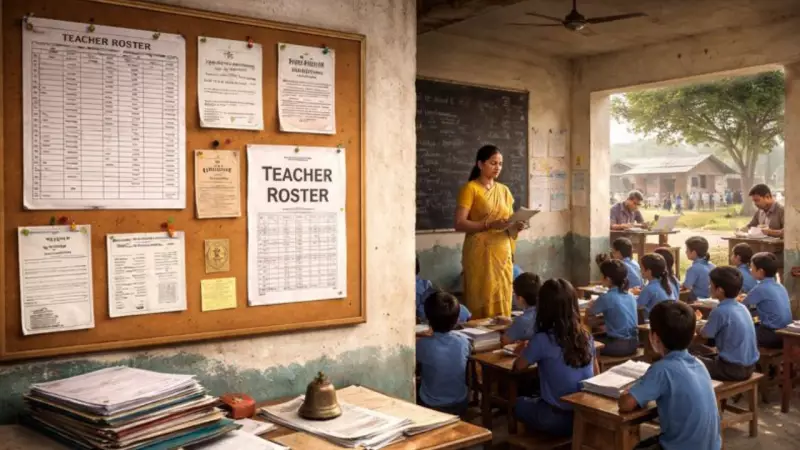
The Central Board of Secondary Education has issued a firm directive to all its affiliated schools. Schools must now upload and regularly update complete details about their teaching staff on their official websites. This information must appear under the Mandatory Public Disclosure section using a prescribed format. The deadline for compliance is 15 February 2026.
A Strict Warning Against Non-Compliance
This circular is not a gentle reminder. The CBSE has expressed clear dissatisfaction with schools' past performance. Many institutions have been lax and sloppy in maintaining their public disclosures. The Board warns that missing, incomplete, or incorrect information will not be tolerated.
Such failures could trigger formal action under the CBSE Affiliation Bye-laws. Staffing information is no longer just an internal administrative file. It is becoming a public, enforceable condition for a school's affiliation with the Board.

Transforming School Websites into Compliance Tools
The message from CBSE is unambiguous. School websites are being recast. They must now function as compliance documents, not merely as marketing brochures. The adequacy of a school's teaching staff will become visible, verifiable, and open to public scrutiny.
Once this staffing data is forced into the open, it raises critical questions. The focus shifts from system-wide averages to the actual, on-ground presence of teachers. It highlights where teachers are present and, more importantly, where they are absent.
Clear Staffing Ratios and Penalties for Fudging Data
The CBSE circular leaves no room for interpretation on key staffing norms. It explicitly states that the pupil-teacher ratio (PTR) must not exceed 30 students for every 1 teacher.
The Board introduces a second, stricter requirement to prevent creative averaging. Schools must maintain at least 1.5 teachers per classroom section. This count excludes the principal, physical education teacher, and counsellor. These teachers are specifically required "to teach various subjects."
Why the Hard Stance from CBSE?
The Board's records show a pattern of non-compliance. Despite repeated directions, many schools fail to update information regularly. Others upload incorrect details or invalid documents in the Mandatory Public Disclosure section.
Teacher details and qualifications are "invariably" missing from numerous school websites. The CBSE has grown tired of this neglect. The compliance clock is now explicit, with a firm deadline of 15 February 2026.
The circular ends with a strong warning. Non-compliance will be treated as a serious violation of Clause 12.2.3. This could lead to penalties under Chapter 12 of the Affiliation Bye-laws. Penalties may start with warnings but can escalate to restrictions and harsher measures for repeat or serious breaches.
The National PTR Picture: Averages vs. State-Level Reality
At the national level, India's pupil-teacher ratio seems comfortable. Recent government data presented to Parliament shows promising averages. For government schools, the PTR is 9:1 at the foundational stage, 14:1 at preparatory, 21:1 in middle school, and 20:1 at the secondary level.
These numbers, read in isolation, suggest progress beyond the era of severely overcrowded classrooms. However, the story changes when we examine state-wise data.
State-Wise Disparities Reveal a Distribution Crisis
The national average masks sharp disparities across states, especially at higher grade levels. At the secondary level, which requires more specialized staffing, several large states show concerning ratios.
Bihar records a PTR of 43, Jharkhand 46, and Madhya Pradesh 31. Uttar Pradesh and West Bengal stand at 29 and 30, respectively. Middle-school PTRs also spike in key states, with Delhi at 32, Jharkhand at 35, and West Bengal at 31.
The implication is clear. India's teacher shortage is no longer just about total numbers. It is a crisis of distribution. Teachers are concentrated in some areas and desperately thin on the ground in others, particularly in upper grades where subject expertise is crucial. National averages provide reassurance, but state-wise data reveals unsettling gaps. CBSE's new disclosure rule aims to expose this very problem.

The 1.5 Teacher Rule Exposes Hidden Gaps
CBSE's requirement of 1.5 teachers per classroom highlights a governance issue that PTR averages often hide: the problem of distribution. A system can report acceptable national ratios while individual schools suffer from severe understaffing.
The government has acknowledged this strain. Official data records over 104,000 single-teacher schools across the country. For these schools, the "1.5 teachers per classroom" target is not just difficult; it represents a completely different reality.
In single-teacher schools, one educator must handle multiple grades, cover various subjects, manage administrative registers, oversee mid-day meal logistics, and still provide quality instruction. It becomes less of a classroom and more of a survival unit for both teacher and students.
In such contexts, compliance with CBSE's rule is mathematically impossible and pedagogically fragile. The core issue shifts from the national stock of teachers to recruitment, deployment, and filling vacancies. These functions primarily fall under the jurisdiction of State and Union Territory governments.
The Stark Contradiction in Education Policy
A clear contradiction exists. National policy is built around achieving adequate teacher ratios. Yet, on the ground, distribution failures leave entire schools functionally understaffed. CBSE can demand staffing adequacy, but the distribution gap leaves too many schools stretched beyond their limits.
Viewed in this light, the 1.5-teacher rule is not mere bureaucratic fussiness. It is CBSE shining a light on the places where the comforting national average completely breaks down.
Transparency as a Trigger, Not a Solution
CBSE's push for disclosure is a significant and necessary correction. It transforms staffing from a private claim into a public, verifiable record. However, transparency alone cannot solve the underlying problems.
Uploading teacher data may expose gaps and deter creative accounting. Yet, it cannot magically fill vacancies, redistribute staff fairly, or repair subject-wise shortages. These solutions lie outside a school's website. They reside within the state's recruitment machinery and posting policies.
The real test will begin after the February 2026 deadline. Observers will watch to see if enforcement is steady and consequential. They will monitor whether state governments respond with time-bound teacher appointments and rational placement strategies.
In essence, transparency can make the staffing problem visible to all. Solving it, however, will still require the difficult, sustained work of governance and administrative reform.