CBSE Textbook Crisis: Class IX Students Nationwide Start Academic Year Without Books
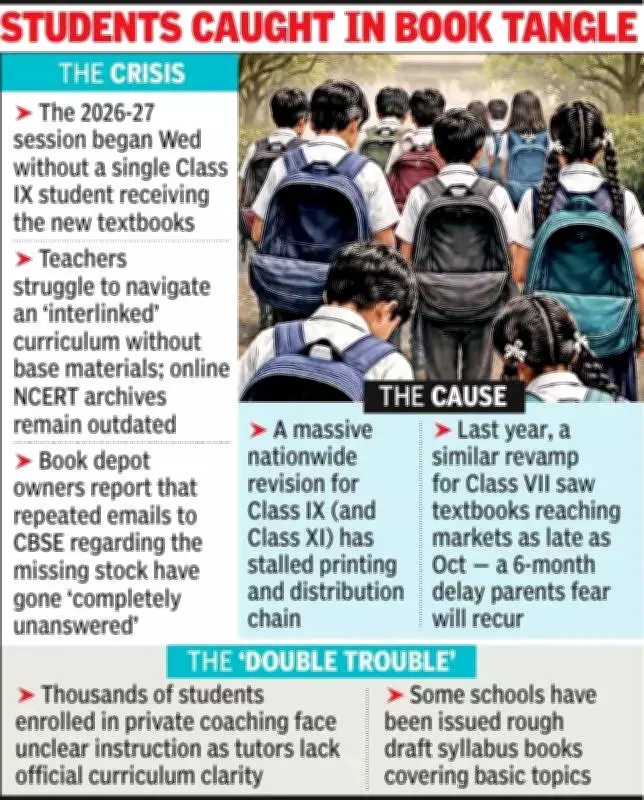
The commencement of the 2026-27 academic session by the Central Board of Secondary Education (CBSE) on Wednesday has been overshadowed by a nationwide crisis, with not a single Class IX student receiving their required textbooks. This unprecedented shortage has left classrooms across India in a state of paralysis, disrupting the beginning of the crucial academic year.
Physical Distribution and Online Resources Fail Simultaneously
Physical textbooks have yet to be issued by the board, creating a vacuum in educational institutions. Local booksellers report being inundated with inquiries from anxious parents but have no stock to offer. A book depot owner in Bhandup, Mumbai, revealed, "I have been emailing the board for months regarding the textbooks, but I have not even received a response from them."
Compounding the issue, the new textbooks are currently unavailable online. All materials hosted on the official NCERT website remain outdated versions from the previous curriculum, providing no relief to students or teachers seeking digital alternatives.

Educational Institutions Grapple with Classroom Chaos
The delay has created significant hurdles for educators attempting to maintain academic continuity. Rashmi Panagria, principal of Skyline School in Sausar, Madhya Pradesh, emphasized the critical nature of the problem: "You can't teach in isolation; chapters are interlinked. The lack of material disrupts the logical flow of subjects completely."
Echoing this sentiment, the principal of a CBSE school in Navi Mumbai noted that the absence of resources has made the start of the term nearly impossible to manage. "It is becoming quite difficult to conduct classes effectively without textbooks in students' hands," the principal stated, highlighting the practical challenges facing educational staff nationwide.
Administrative Silence and Temporary Measures
CBSE officials have maintained a concerning silence regarding the crisis. Pragya Singh, director of academics at CBSE, refused to comment when contacted about the situation. The board's spokesperson requested questions to be mailed but provided no response by the time of reporting, leaving stakeholders without official guidance or timelines for resolution.
While CBSE has issued rough draft syllabus books covering basic topics to a limited number of schools, this represents only a temporary fix. The root cause of the shortage lies in the massive syllabus revision currently underway for Class IX—a process that has also been applied to Class XI this academic year.
Historical Precedent and Compounding Challenges
This administrative bottleneck mirrors challenges faced during last year's curriculum revamp for Classes VII and VIII. A similar delay saw Class VII textbooks finally reaching markets as late as October, setting a worrying precedent for the current crisis.
Parents now face what many describe as "double trouble," as numerous families have already enrolled their children in coaching classes. However, without official textbooks or curriculum clarity, instruction at these centers remains speculative at best. This leaves the academic start for thousands of ninth graders effectively in limbo, with uncertain learning outcomes.
Broader Implications for Indian Education
The textbook shortage crisis raises serious questions about educational planning and resource distribution at the national level. As students begin a critical academic year without foundational materials, the situation threatens to widen existing educational disparities and undermine confidence in the system's ability to deliver consistent, quality education across regions.