Chandigarh Government Schools Violate CBSE Norms Amid Private School Crackdown
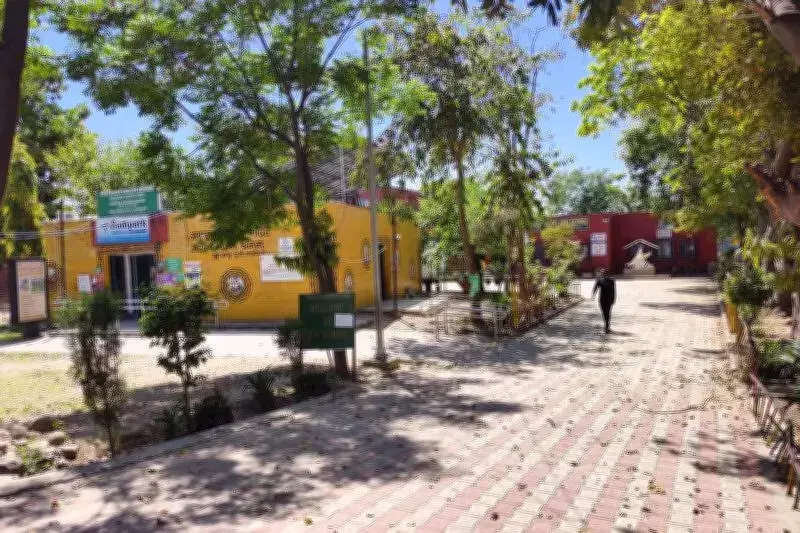
In a striking contrast to the administration's push for private school compliance, two government schools in Chandigarh are operating in conditions that blatantly violate Central Board of Secondary Education (CBSE) infrastructure and safety norms. Government Model High School Khuda Jasu and Government High School Dadumajra function from cramped campuses without playgrounds, with one sharing space with non-school facilities, raising serious concerns about student welfare.
Double Shifts and Shared Spaces Strain Limited Infrastructure
Both schools run in double shifts, exacerbating the strain on already inadequate infrastructure. At Khuda Jasu, the school is spread over a mere 0.94 acres, catering to approximately 550 students in the morning and 430 in the evening. The campus is not exclusively used for educational purposes; a Sampark Centre and an anganwadi centre operate from within the same premises. This shared usage reduces scarce open space and compromises controlled access, posing significant safety risks during school hours.
Staff reports indicate the school has around 33 teachers and 19 cramped classrooms. Seating arrangements reveal severe crowding, with about 17 benches per room and three students often squeezed onto each bench. Compounding these issues, the school has been without a headmaster since November 2025.

Absence of Playgrounds and Land Documentation Issues
There is no playground within the Khuda Jasu campus. A small patch behind the school, near a choe, is used for games like volleyball and kho-kho, but it lies outside the defined premises and fails to meet CBSE requirements. At Dadumajra, the school functions from congested residential lanes, serving around 800 students in two shifts with about 35 teachers. It similarly lacks a playground.
A land certificate document from the UT chief architect's office for Dadumajra school records that land details are "not available in the record of this office." Residents report persistent issues, including waterlogging during rains. A nearby shopkeeper, residing there for over 20 years, confirmed that flooding in the premises has been a recurring problem.
CBSE Norms Highlight Compliance Failures
Under CBSE affiliation bylaws, a school must operate on a single, clearly defined, and exclusively used campus with infrastructure dedicated solely to educational purposes. The norms require the land to be a contiguous unit under school control, with adequate facilities like classrooms, playgrounds, and activity areas proportionate to student strength.
- Campus Use & Safety: Schools must be on a single, contiguous plot with controlled access to ensure student safety. Infrastructure should not be compromised by shared, unrelated activities.
- Classrooms: Minimum size of 8 m × 6 m (~500 sq ft), at least 1 sq metre per student, and a cap of around 40 students per section.
- Playground: Mandatory within school premises, adequate for all students, with no external patches acceptable.
While CBSE does not explicitly mention anganwadis or service centres, the requirement for a dedicated campus with controlled access means the presence of unrelated public facilities raises compliance and safety concerns, especially in schools handling large student numbers in double shifts.
Administration's Focus on Private Schools Contrasts with Government School Gaps
These developments highlight a stark contrast as the UT administration moves to grant provisional approval to 12 of 78 unrecognised private schools. While pushing private institutions toward compliance, significant infrastructure gaps persist within the government school system itself.
Officials have not indicated whether relocation, expansion, or restructuring is being considered for these schools. For now, both Khuda Jasu and Dadumajra continue to function in conditions that question their alignment with CBSE norms on space, exclusivity of premises, and student safety.