Gujarat Educator Pioneers Color-Coded Learning System for Young Students
In a significant breakthrough for early childhood education, a government primary school principal in north Gujarat has developed an innovative teaching methodology that uses colors to help young students master writing numerals and alphabets with remarkable speed and confidence.
Breaking Down Learning Barriers Through Visual Engagement
B G Patel, principal of Sedav government primary school in Vav-Tharad district, has transformed traditional rote learning by implementing a color-based system that deconstructs numbers and letters into their fundamental components. This pedagogical innovation replaces mechanical memorization with visual understanding, addressing a critical challenge in elementary education.
"We noticed that this method helped children learn to write beautifully and confidently," Patel explained. "What typically takes one or two months with traditional methods can be taught much faster with this new approach."

The Science Behind the Colorful Methodology
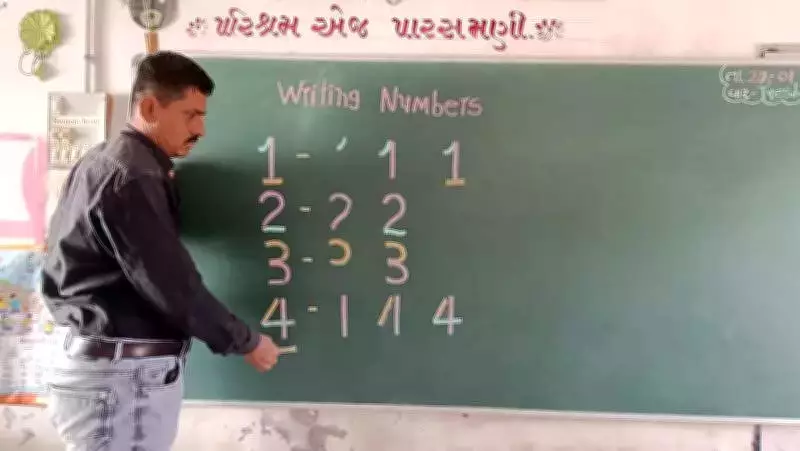
Patel's approach is grounded in established pedagogical principles and micro-teaching techniques. He designed comprehensive lesson plans that assign different colors to represent straight lines and curves within numerals and letters. These visual distinctions were first demonstrated on educational charts and then reinforced on classroom blackboards using colorful chalk.
The system specifically addresses challenges faced by slow learners, who often struggle with number shapes and sometimes write numerals in reverse during traditional instruction. "Repeated writing exercises often fail, particularly for slow learners, who take weeks to grasp number shapes," Patel noted, highlighting the limitations of conventional teaching methods.
Widespread Implementation and Positive Results
The color-based teaching method has already been implemented in several schools across the district, with educators reporting significant improvements in student outcomes. Teachers who have adopted the approach have observed quicker comprehension and enhanced handwriting quality among beginning learners.
Dinesh Soneta, a teacher at Vadana Primary School, confirmed the method's effectiveness: "The technique is simpler and more effective than traditional methods and could redefine how numerals and letters are taught at the elementary level."
Expert Endorsement and Government Consideration
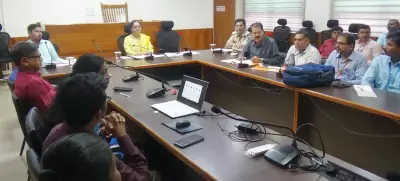
Educational experts have praised the innovation for its pedagogical soundness. Baldev Desai, a senior lecturer at the District Institute for Education and Training (DIET) in Mehsana, emphasized that this modified communication approach is both simpler and more engaging than conventional teaching methods.
"It should be adopted more widely in government schools for the early stages of reading and writing," Desai recommended, highlighting the method's potential for broader implementation.
Patel has formally presented his teaching model to the state government, proposing that wider adoption could optimize educational resources and improve teaching efficiency. "If the government adopts this approach, it could save time and resources, enabling fewer teachers to educate more students," he explained, outlining the systemic benefits of his methodology.
A Natural Alignment with Child Psychology
The success of the color-based approach stems from its alignment with fundamental child psychology principles. "Children are naturally drawn to colors," Patel observed. "When straight lines and curves are taught in different colors, students learn to write the numbers easily and beautifully."
This visual engagement strategy transforms what was once a challenging mechanical process into an intuitive, enjoyable learning experience that builds both competence and confidence in young learners.