Delhi High Court Grants Extension on Fee Committee Formation for Private Schools
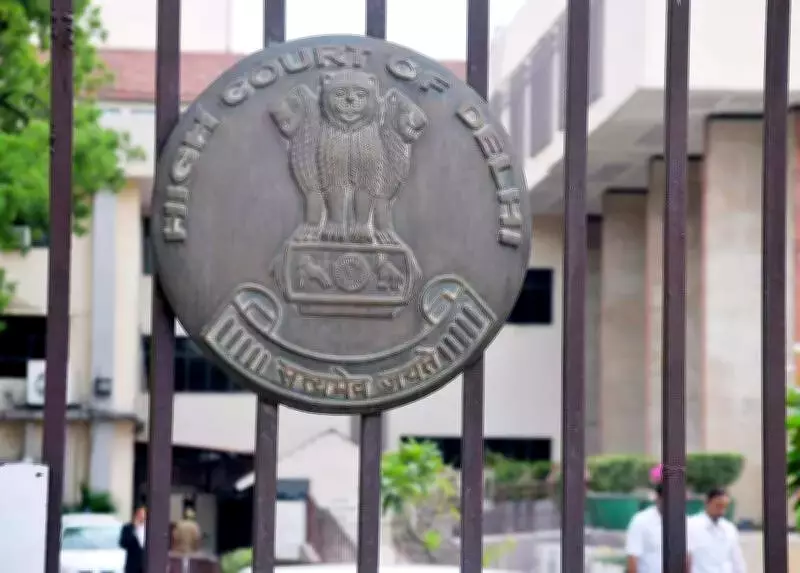
In a significant development, the Delhi High Court has intervened in the implementation of the capital's new school fee regulation framework. On Monday, a bench comprising Chief Justice D K Upadhyaya and Justice Tejas Karia directed the Delhi government to refrain from taking any punitive action against private schools that have failed to constitute the mandated School-Level Fee Regulation Committees (SLFRCs).
Deadline Extended Amid Changing Legal Landscape
The court specifically extended the previous February 10 deadline set by the Directorate of Education (DoE) to February 20, 2024. This extension comes as the High Court prepares to revisit the matter later this month. The bench explicitly noted that "circumstances have changed" since the original deadline was established, primarily due to subsequent developments at the Supreme Court level.
The judicial observation highlighted that no prejudice would be caused to any party if the Delhi government temporarily suspended its insistence on immediate SLFRC formation. This assessment was based on the understanding that the new fee law's implementation timeline has now shifted to commence from the next academic calendar, affecting fee structures for the 2026-2027 sessions rather than immediate implementation.

Legal Proceedings and Government Opposition
The court's decision followed petitions filed by multiple school associations challenging the Delhi government's February 1 notification. This notification had mandated that every private school in the capital constitute an SLFRC within ten days of the order's publication. The High Court has now issued formal notices to the Delhi government regarding these challenges.
Additional Solicitor General S V Raju, representing the Directorate of Education, strongly opposed the deadline extension during proceedings. He argued that any delay would disrupt the established timeline for determining school fees by March 27 for the upcoming academic year. Raju further contended that since the court had already granted an extension until January 20 while addressing petitions against the new fee regulation law, no further extensions should be permitted.
The bench, however, maintained that the previous extension occurred before the February 1 notification and that the legal circumstances had fundamentally evolved since that time.
Background of the Fee Regulation Framework
The February 1 notification was issued by the Delhi government to "smoothen" the implementation of the Delhi School Education (Transparency in Fixation and Regulation of Fees) Act. This move came after the Supreme Court raised serious questions about what it perceived as hurried implementation of the legislation.
Under the new regulatory framework, every private school must establish an SLFRC comprising:
- Representatives from school management
- The principal
- Three teachers
- Five parents
- A nominee from the Directorate of Education
Petitioners' Arguments and Legal Challenges
The High Court heard petitions from several educational bodies, including the Forum of Minority Schools, the Forum for Promotion of Quality Education For All, and the Action Committee of Unaided Recognised Private Schools. These organizations collectively challenged the February 1 notification as arbitrary and legally problematic.
The Forum of Minority Schools presented a particularly compelling argument, noting that under the Delhi School Education Act, 2025, SLFRCs must be constituted on or before July 15 of each academic year. To advance this deadline, the petitioners argued, would require legislative amendment rather than administrative notification, making the government's directive fundamentally flawed.
This legal development follows a broader pattern of challenges against the new fee regulation law, with multiple petitions from private schools currently pending before the High Court. The matter has gained additional complexity following the Supreme Court's involvement, where the Directorate of Education committed to deferring implementation of the new school fee law by one year.

The association of schools had initially approached the Supreme Court after the High Court declined to stay the provisions of the Delhi School Education Act. This judicial back-and-forth underscores the ongoing tension between regulatory oversight and institutional autonomy in Delhi's educational landscape.