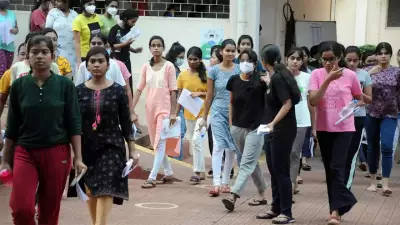
The Delhi High Court has delivered a significant ruling in the ongoing legal battle over school fee regulation in the national capital. On January 8, 2026, a Division Bench refused to grant a complete stay on the implementation of the Delhi School Education (Transparency in Fixation and Regulation of Fees) Act, 2025. The court, however, provided some relief to private schools by extending key compliance deadlines set by the Directorate of Education (DoE).
Court's Ruling and School Association's Disappointment
A Bench comprising Chief Justice Devendra Kumar Upadhyaya and Justice Tejas Karia heard the plea from the Public Schools on Private Land Society (PSPLS). The association, representing over 355 private unaided schools on private land, had sought an interim stay on the DoE's December 24 order. This order mandated the formation of School Level Fee Regulation Committees by January 10 and the submission of proposed fee structures by January 25.
The High Court declined to halt the process entirely but modified the timeline. The deadline for constituting the committees was extended to January 20, and the date for submitting fee proposals was pushed to February 5.

Dr. Chandrakant Singh, General Secretary of the PSPLS, expressed sharp disappointment with the outcome. He argued that the lack of a full stay and a mere 10-day extension would create operational chaos, especially during the critical final trimester of the academic year. "This is when school managements are busy with final preparation for the annual examination. Students and teachers will be disturbed," he stated. Dr. Singh confirmed the association's plan to approach the Supreme Court seeking a stay on the law's implementation.
Core Legal Challenges Against the 2025 Fee Act
The PSPLS's writ petition challenges the constitutional validity of the 2025 Act itself. The association contends that the law duplicates and clashes with the existing Delhi School Education Act (DSEA) of 1973, which already contains provisions for fee regulation. Advocate Shikha Sharma Bagga, representing the schools, argued, "There was no requirement for a new Act. The 1973 Act is adequate in all respects. The new Act will only create confusion."
The petition alleges that the new law violates several fundamental rights. It claims the Act is arbitrary and violates Article 14 (Equality before law) by allowing for uneven application. It also argues that the law's structure and penalties undermine Article 19(1)(c) (Freedom to form associations) and infringe upon Article 19(1)(g) (Right to practise an occupation) by excessively controlling the financial autonomy essential for running private schools.
Bagga emphasized that schools on private land operate charitably to provide quality education at affordable fees, often charging equal to or less than government school costs. She stated that applying the new law retrospectively creates an impossible situation where schools must navigate two conflicting regulatory frameworks.
Multi-Layered Regulation and the Autonomy Debate
The 2025 Act establishes a detailed regulatory framework. It requires schools to form a School Level Fee Regulation Committee to examine proposed fees. Disputes can be appealed to a District Fee Appellate Committee. Furthermore, the law grants the Director of Education suo motu powers to call for records and issue directives without a formal complaint.
The PSPLS argues that this multi-tiered mechanism goes beyond reasonable oversight and amounts to excessive control. It contends that routing all fee decisions through government-approved committees and facing potential suo motu intervention will steadily erode the administrative and financial autonomy of school managements, turning fee-setting into a bureaucratic approval process rather than an institutional decision.

The case now sits at a crucial juncture, testing the balance between regulatory accountability and institutional independence. While the DoE's order aims to make fee-setting transparent and give parents a formal voice, schools view it as a burdensome, multi-committee process that threatens their operational freedom. The High Court's refusal to freeze the law means the committee mechanism will proceed, albeit on a slightly delayed schedule, with all actions subject to the final outcome of the legal challenge. The impending appeal to the Supreme Court will likely determine how far the state can go in governing the financial affairs of private educational institutions.