Fazilka School Without Roof Exposes Education Revolution Claims as Hollow
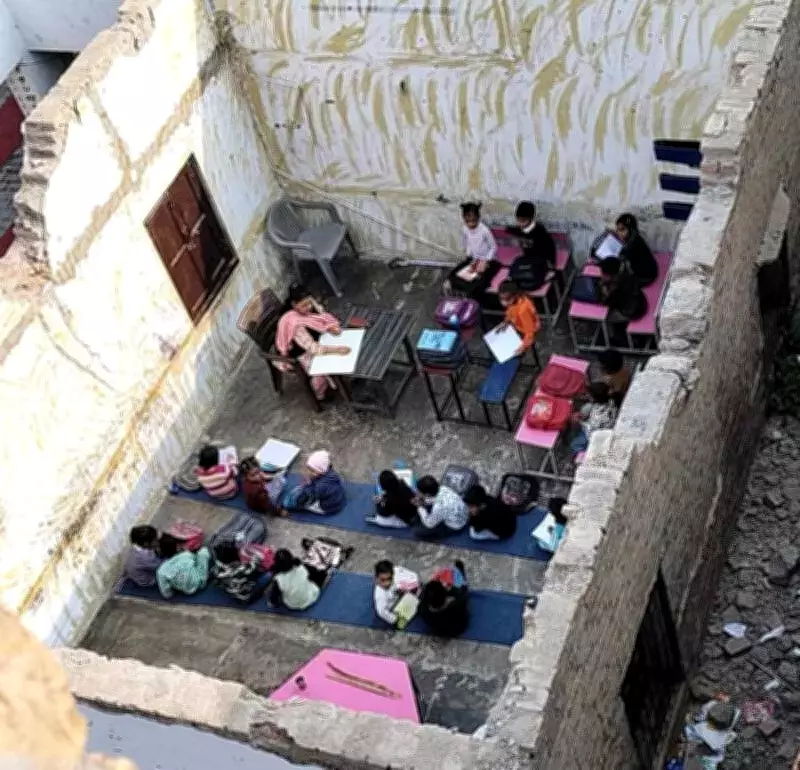
In a stark contradiction to the state government's proclaimed "education revolution," a government primary school in Fazilka district has been functioning without a proper roof for an extended period. This alarming situation forces young students to study in the open, protected only by four walls and exposed to the elements.
National Safety Concerns Amplified by Local Reality
The troubling conditions at this Fazilka school come against the backdrop of heightened nationwide concerns about school building safety. These fears were tragically underscored by last year's incident in Rajasthan where schoolchildren lost their lives when a roof collapsed. The current situation in Fazilka vividly illustrates why such concerns persist and demand urgent attention.
Multiple rooms within the school premises have deteriorated significantly, with some becoming completely unusable. As a result, children can frequently be observed conducting their studies outdoors, a direct consequence of the unsafe structural conditions that make indoor learning hazardous.

Staff Operating in Compromised Environment
The school continues to operate with its full complement of educational personnel despite the hazardous conditions. This includes regular teachers, two casual workers, two anganwadi workers, and three midday meal staff members. All these dedicated professionals are forced to function from the same compromised premises that fail to provide basic structural safety.
For the young students attending this institution, the physical toll of sitting in such inadequate conditions for extended periods is substantial. This challenging environment is negatively impacting both their physical health and their educational progress, creating barriers to effective learning that should not exist in a functioning educational system.
Historical School with Persistent Infrastructure Problems
Established in 1972, the Government Primary School in Basti Hazur Singh serves approximately 120 students up to Class V. The school faces additional infrastructure challenges beyond the missing roof. Four to five of its classrooms are constructed below ground level, leading to persistent waterlogging in the verandah area whenever rainfall occurs.
School authorities have repeatedly brought these critical issues to the attention of relevant officials through formal communications. Despite these multiple notifications and requests for intervention, no corrective action has been implemented to date, leaving students and staff in continued jeopardy.
Official Responses and Committee Findings
District Education Officer Satish Kumar initially stated that the matter had not come to his official notice. However, he subsequently assured that he would seek comprehensive details from the department to understand the full scope of the problem.
Suresh Thakral, a Junior Engineer in the education department, provided confirmation that a formal inspection had indeed taken place. A five-member committee comprising the District Education Officer (Primary), deputy DEO, Junior Engineer, Sub-Divisional Officer, and a Public Works Department JE examined the building structure.
This committee unanimously declared the building unsafe for continued use and issued an official certificate documenting their findings. This certification was formally forwarded to the relevant department for necessary action. Thakral indicated that renovation work would commence once the required financial grant receives official sanction.
Ministerial Perspective and Systemic Challenges
Education Minister Harjot Singh Bains addressed the broader context of school infrastructure maintenance. He revealed that he had recently issued show-cause notices to several officials and teachers concerning poor school upkeep standards. However, he clarified that fundamental structural issues like roofless buildings fall under the jurisdiction of the Public Works Department.

The minister explained that such significant infrastructure problems require substantial long-term capital investment rather than routine maintenance budgets. He emphasized that primary schools with critical structural deficiencies are being prioritized for comprehensive upgrades under a new governmental initiative aimed at addressing systemic infrastructure gaps in the education sector.