The Allahabad High Court has delivered a significant ruling, clarifying that students cannot demand re-evaluation of their answer sheets merely on the presumption that they deserve higher marks. The court emphasized that such a process is not provided for under the existing statutory framework of the Uttar Pradesh Intermediate Education Act, 1921.
Case Background: Student's Quest for Higher Marks
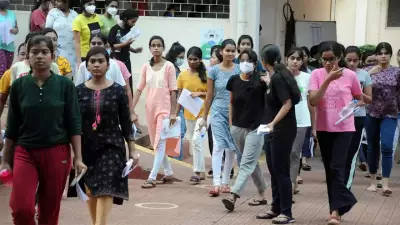
The case originated from a petition filed by a student, Faaiz Qamar, who had appeared for the Uttar Pradesh Intermediate examinations. Dissatisfied with her scores, she applied for scrutiny of her answer sheets in Hindi and Biology subjects. After inspecting the evaluated sheets, she became convinced that she deserved more marks and subsequently filed a representation before the Regional Secretary of the Madhyamik Shiksha Parishad at the Meerut regional office.
Her request was formally rejected by the authorities. The rejection was based on the specific provisions of Chapter 12 Rule 21 of the UP Intermediate Education Act, 1921, which does not permit re-evaluation under such circumstances. Challenging this rejection, Qamar approached the Allahabad High Court through a writ petition.

Legal Precedent and Court's Scrutiny
In its deliberation, the High Court bench led by Justice Vivek Saran referred to a crucial Supreme Court judgment in the case of Ran Vijay Singh and Others vs State of UP and Others. The apex court had previously held that while scrutiny and re-evaluation must be allowed if state regulations provide for it, courts can only intervene in rare and exceptional cases when no such provision exists. Importantly, the Supreme Court had also ruled that courts themselves lack the expertise to evaluate or re-evaluate answer sheets and must presume the answer key to be correct.
Applying this precedent, Justice Saran meticulously examined the relevant rule. The court observed that the statutory provision only allows for scrutiny, which involves checking for totaling errors or unmarked questions, but does not extend to a full re-evaluation of the academic judgment of the examiner.
The Final Verdict and Its Implications
In its order dated December 15, the High Court upheld the authority's decision to reject the student's representation. The court stated that the order challenged by the petitioner, dated September 9, 2025, could not be faulted.
The court explicitly held that no order for re-evaluation can be passed solely on the strength of a petitioner's presumption of having received lesser marks. This ruling reinforces the sanctity of the examination process as defined by the Act and limits judicial intervention in academic assessments unless a glaring procedural violation is demonstrated. The writ petition was consequently dismissed, setting a clear legal boundary for future similar appeals from students across Uttar Pradesh.