Survey Exposes Critical Gaps in Indian Astronomy Education Despite High Student Interest
A comprehensive nationwide survey has uncovered a striking paradox in Indian classrooms: while students demonstrate overwhelming enthusiasm for astronomy, they face severe limitations in access to fundamental learning tools and grasp of basic concepts. The study, conducted across ten states, highlights urgent needs in educational infrastructure and curriculum delivery.
Enthusiasm Versus Accessibility: A Troubling Disconnect
The survey, administered by the International Astronomical Union Office of Astronomy for Education India Centre, reached over 2000 secondary school students from 34 diverse institutions. Results revealed that an impressive 86 percent of respondents expressed genuine enjoyment of astronomy as a subject. However, this enthusiasm starkly contrasts with practical experience gaps.
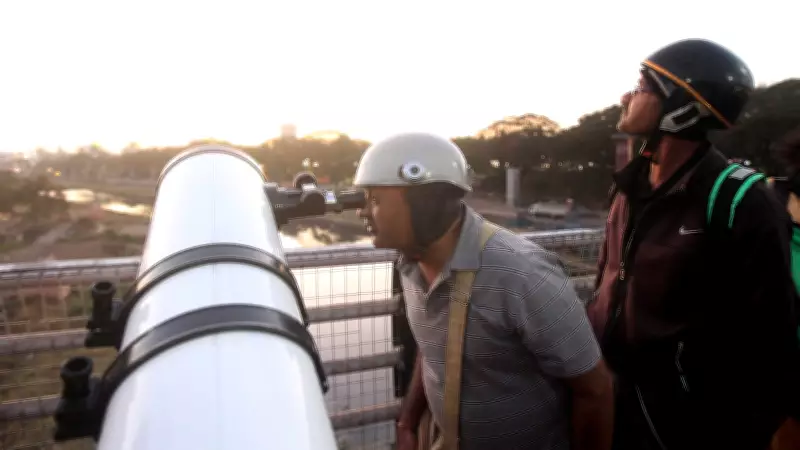
Only 26 percent of students had ever used a telescope, and merely 27 percent had visited a planetarium. These access limitations were particularly pronounced in resource-poor schools, creating an uneven educational landscape where theoretical interest rarely translates to hands-on learning opportunities.

Conceptual Understanding Falls Short
Beyond resource constraints, the study identified significant deficiencies in basic astronomical comprehension. Approximately one-third of students could correctly identify fundamental astronomical distance scales, with many failing to recognize that stars exist far beyond objects within our solar system.
Understanding of lunar phases proved especially weak, with a mere 7 percent of respondents able to correctly identify all major phases of the Moon. This suggests that current teaching methods may not effectively convey core astronomical principles, even as student curiosity remains high.
National Implications and Policy Responses
Published in the Astronomy Education Journal in 2026, this first large-scale assessment of astronomy education in India provides critical data for policymakers. The survey was jointly hosted by the Homi Bhabha Centre for Science Education in Mumbai and the Inter University Centre for Astronomy and Astrophysics in Pune, ensuring rigorous academic oversight.
Administered in ten languages across urban, semi-urban, and rural regions, the research examined multiple dimensions:
- Grasp of basic astronomy concepts
- Access to educational resources and facilities
- Cultural engagement with astronomical phenomena
- Interest in pursuing astronomy-related careers
According to Prof. Aniket Sule, manager of the IAU OAE India Centre, "These results show both an urgent need and valuable opportunity to strengthen astronomy education." Co-author Prof. Surhud More noted that insights from the study have already influenced astronomy content in new NCERT textbooks, demonstrating immediate policy impact.
Astronomy as a Gateway to Broader STEM Engagement
Researchers emphasized astronomy's unique potential as a "gateway science" capable of sparking wider interest in science, technology, engineering, and mathematics disciplines. By addressing the identified resource gaps and conceptual weaknesses, educators could leverage existing student enthusiasm to foster deeper scientific literacy across India's educational system.
The IAU OAE maintains that these findings provide essential ground-level insights needed to develop targeted interventions, from improved teacher training programs to enhanced access to observational equipment. As India continues to advance in space exploration and scientific research, strengthening astronomy education at the school level represents both an educational imperative and strategic national investment.