Jaipur Experts: Parents Must Lead by Example to Curb Kids' Screen Addiction
As parents in Jaipur increasingly report behavioral changes and temper tantrums in children associated with excessive gadget use, local experts are emphasizing that reducing screen time must begin at home, with parents setting the example. Many schools across the city have initiated regular counseling sessions for parents to raise awareness about limiting screen exposure and promoting healthier alternatives.
Counseling and Parental Leadership
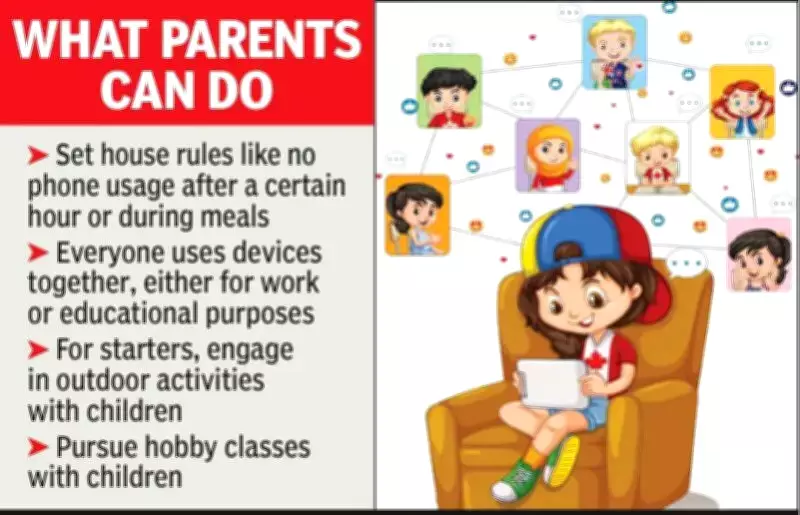
Educators are sharing short instructional videos with parents, focusing on increasing quality family time, restricting device usage, and reinforcing these messages through structured school programs. Before addressing a child's habits, counselors assess the family background and guide parents on how to act as leaders—by minimizing their own mobile use during meals, engaging in reading, or pursuing hobbies together with their children.
Lata Rawat, mentor of the Cambridge Court Group of Schools, explained, "I ask parents if they can imagine their child involved in activities like alcohol or smoking, to which the response is always a firm no. Similarly, with devices, the effects of regular usage manifest within weeks through changes in a child's temper or mood. This is where parental counseling becomes crucial, teaching them the basic necessity of learning to say no to their child."

Rawat added that parents should resist peer pressure from other children having gadgets and say no "with assertiveness, but not aggression." Experts advise parents to communicate with children to understand their desire for devices and offer alternatives such as hobby classes, outdoor sports, and indoor games.
Psychological Impacts and Real-Life Interventions
Dr. Vandana Bhati, a Jaipur-based psychologist and children's counselor, stated, "Screen time is a form of addiction, even for adults, making it imperative to shield children from it. For youngsters, it acts as a blockage to their thought process, halting cognitive development. Excessive screen time also disrupts biological chemical processing in children, adversely affecting their physical health."
Bhati recommended re-engaging children in real-life interactions by discussing daily experiences or interesting observations while the child is on a device. "Currently, children are conditioned to eat while watching screens, losing awareness of their food. This can be changed with interventions like associating meals with nature—such as bird sounds or showing the moon—to distract from screens. For primary students, parents can encourage activities like imagining scenarios and developing stories together," she added.
School Initiatives and Case Studies
Counselors are employing a "connect before correct" approach to help children understand the harms of excessive screen time. Schools are also conducting weekly mindfulness sessions to teach children to live in the present moment.
Kaushalya Pareek, a counselor at a city school, cited a post-pandemic case where a child began skipping school after developing an online gaming habit during closures. "We realized the child had formed a gaming habit during school closures and struggled to adjust post-reopening. By connecting first, we explained the consequences of missing school using age-appropriate comparisons," Pareek said.
Teachers encouraged regular attendance to keep pace with peers and promoted involvement in studies, sports, and school activities to divert time from digital devices. Experts also stressed that institutions should develop infrastructure for outdoor activities to provide alternatives to online games.
Institutional Support and Alternatives
Puneet Sharma, media advisor for Smart India Hackathon, noted, "Even during intense events like hackathons, students opt for outdoor activities such as badminton, basketball, or jogging when facilities are available in schools or colleges. This highlights the importance of institutional infrastructure in promoting physical engagement over digital consumption."

In summary, Jaipur's educational and psychological experts are advocating a holistic strategy involving parental modeling, school counseling, and enhanced recreational facilities to combat the growing issue of screen addiction among children, aiming to foster healthier developmental environments.