JEE Main 2026 Session 1 Results Officially Declared by National Testing Agency
The National Testing Agency (NTA) has officially announced the release of the Joint Entrance Examination (JEE) Main 2026 Session 1 results. Aspiring engineering students can now access their scores through the designated portal at jeemain.nta.ac.in. This marks a significant milestone in the annual academic calendar for millions of candidates across the nation.
Examination Structure and Administration
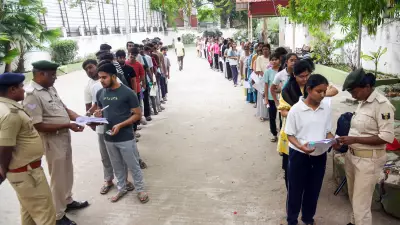
Adhering to its established annual protocol, JEE Main 2026 Session 1 was administered across numerous shifts at various examination centers throughout India, as well as in select international locations. The logistical scale of this operation is immense, involving hundreds of venues to accommodate the vast number of registrants. It is important for participants to note that Paper 2A, designated for Bachelor of Architecture (B.Arch.) aspirants, and Paper 2B, for Bachelor of Planning (B.Planning) hopefuls, are typically scheduled separately from Paper 1, which caters to Bachelor of Engineering and Technology (B.E./B.Tech.) candidates. Paper 1 itself spans multiple days to efficiently manage the enormous candidate turnout.
Decoding the Percentile System: The Foundation of JEE Main Ranking
A critical and often misunderstood component of the JEE Main evaluation is the percentile system. Many examinees mistakenly equate percentile with percentage, but these metrics are fundamentally distinct. While a percentage simply reflects the marks obtained relative to the total possible score, a percentile indicates a candidate's relative performance compared to all other test-takers in that session.

The calculation process involves several key steps:
- Raw Scores: Initially, candidates receive raw scores for each subject—Physics, Chemistry, and Mathematics. These scores are derived from correct answers, with deductions for incorrect responses as per the negative marking scheme.
- Total Raw Score: The subject-specific marks are aggregated to produce a total raw score, serving as the preliminary basis for assessment.
- Normalisation Process: Given that JEE Main is conducted in multiple shifts with varying question papers, differences in difficulty levels are inevitable. To ensure equity, the NTA implements a statistical normalisation procedure. This adjustment guarantees that no candidate is unfairly penalised for attempting a more challenging shift.
- Percentile Calculation: The final percentile is computed using the formula: Percentile = (Number of candidates who scored equal to or less than you / Total number of candidates) × 100. For instance, a percentile of 99 signifies that the candidate has outperformed 99% of the participants in that particular session.
Significance of Percentile in JEE Main 2026
For the 2026 examination cycle, percentile scores will be instrumental in determining several crucial outcomes:
- All India Rank (AIR) assignment
- Eligibility criteria for appearing in JEE Advanced
- Admission prospects to prestigious institutions such as National Institutes of Technology (NITs), Indian Institutes of Information Technology (IIITs), and other Government Funded Technical Institutes (GFTIs)
The merit list is exclusively compiled based on percentile rankings, not raw marks. At the higher echelons of performance, even marginal differences of a few decimal points in percentile can substantially alter a candidate's ranking and subsequent opportunities.
Percentile Versus Percentage: A Vital Distinction
Consider a scenario where a student achieves a score of 180 out of 300, translating to a 60% mark. While this might appear as an average performance in isolation, the actual percentile could vary dramatically based on factors like the overall difficulty of the shift and the collective performance of all candidates. In highly competitive arenas like JEE Main, relative standing ultimately defines success, making the percentile a more accurate barometer of achievement.

The Broader Context and Strategic Advice
Annually, JEE Main witnesses participation from over a million candidates vying for a limited number of seats in India's premier engineering colleges. The examination is conducted in multiple languages across a sprawling network of centers, underscoring its national scope and administrative intricacy.
For aspirants of JEE Main 2026, the key takeaways are emphatic: prioritise conceptual understanding, engage in rigorous practice under simulated exam conditions, and develop a thorough comprehension of the evaluation methodology. In a fiercely competitive landscape where lakhs compete and only a select few attain top percentiles, a well-devised strategy is equally as important as academic proficiency.