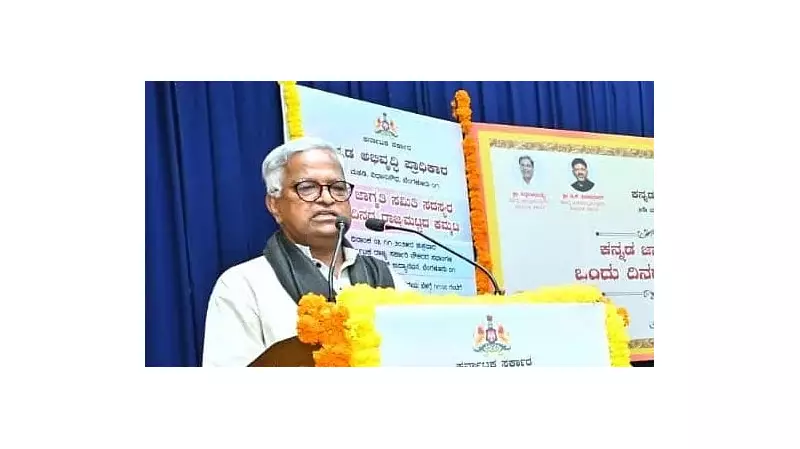
The chairman of the Kannada Development Authority has raised serious concerns about the Karnataka government's decision to lower pass marks for Kannada language subjects, calling the move potentially fatal for the survival of the state's primary language.
Controversial Educational Decision
T S Nagabharana, the prominent chairman of the Kannada Development Authority, has strongly criticized the state government's recent policy change that reduces minimum passing scores for Kannada subjects in educational institutions. The veteran filmmaker and language advocate described this decision as extremely damaging to efforts aimed at preserving and promoting Kannada.
Nagabharana expressed his dismay during a public address, emphasizing that such measures undermine the very foundation of language protection initiatives. He argued that when educational standards for Kannada are diluted, it sends a dangerous message about the language's importance in the state's academic and cultural landscape.

Specific Policy Changes and Their Impact
The controversial policy involves reducing the minimum passing marks required for Kannada language courses across various educational levels. According to Nagabharana, this approach fundamentally weakens the position of Kannada within the state's education system and could have long-term consequences for linguistic preservation.
The authority chairman highlighted that this decision comes at a particularly sensitive time when Kannada faces increasing competition from other languages in urban centers and educational institutions. He stressed that maintaining rigorous academic standards for the language is crucial for its survival and development.
Broader Implications for Kannada Preservation
Nagabharana's concerns extend beyond immediate educational outcomes. He warned that lowering academic expectations for Kannada proficiency could accelerate the language's decline among younger generations. The chairman emphasized that strong language skills developed through proper educational standards are essential for cultural continuity.
The Kannada Development Authority has been actively working on multiple fronts to strengthen the language's position in Karnataka. However, Nagabharana noted that government decisions like the pass mark reduction create significant obstacles to these preservation efforts. He called for immediate reconsideration of the policy to prevent what he termed as irreversible damage to Karnataka's linguistic heritage.
This development has sparked discussions among educators, linguists, and cultural activists across Karnataka about the balance between educational accessibility and language preservation requirements. Many share Nagabharana's concern that compromising on language standards might have far-reaching consequences for regional identity and cultural sustainability.