Karnataka Moves to Standardize Exams for Middle School Students
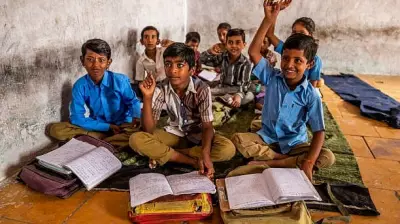
The Karnataka Department of School Education and Literacy is set to implement a significant change in the assessment system for state-syllabus government schools. Starting from the current academic year, the department proposes to introduce common question papers for classes 6, 7, 8, and 9. These papers will be prepared by the Karnataka School Examination and Assessment Board (KSEAB), marking a shift from the previous practice where schools individually designed question papers for summative assessment-2, also known as the term-2 exams.
Focus on Early Interventions and Reduced Pressure
A senior official from the department emphasized that this initiative aims to address academic challenges early in a student's journey. "Instead of focusing only on class 10 and 12, interventions must be made early. We'll attempt interventions from class 6 so that the pressure on the child eases by class 10," the official stated. This approach is designed to provide a gentle, supportive framework for learning, aligning with the Right to Education Act principles.
"This is a gentle exercise to ensure students are ready for adequate learning interventions. We'll follow Right to Education — there will be no coercion, punitive action or detention," the official further added. Under this new system, while the question papers will be standardized, valuation will remain at the school level, and no detentions will be based on the exam results, ensuring a non-punitive assessment environment.

Logistics and Implementation Details
The operational plan involves KSEAB dispatching the question papers to school logins on the morning of exam days. It will then be the responsibility of the school headmaster to print out the papers. This method is already in practice for class 10 and II PU preparatory exams, ensuring a streamlined and secure process.
However, this proposal currently applies only to government schools, with private schools having the option to voluntarily sign up. The department has expressed hope to extend the initiative to I PU students next year, indicating a broader vision for standardized assessments across secondary education.
Context and Challenges
This move comes after a previous attempt by the department to introduce similar exams for classes 5 and 8 in 2024, which included private schools. That proposal faced legal challenges, with private schools taking the matter to the Supreme Court, resulting in a stay on the exams. The current proposal, limited to government schools, aims to avoid such conflicts while still promoting standardization.
According to the Unified District Information System of Education 2024, Karnataka has approximately 27,000 schools offering classes 6-9, highlighting the scale of this initiative. A schoolteacher commented on the need for preparatory support, suggesting that the department should provide model papers and blueprints to help schools prepare students effectively for the final exams. "This will also bring in desired seriousness," she noted, underscoring the potential for enhanced academic rigor.
Future Prospects and Educational Impact
The introduction of standardized question papers is seen as a step towards improving educational outcomes by ensuring consistency in assessment across schools. By focusing on early classes, the department aims to build a stronger foundation for students, potentially reducing stress in higher grades and fostering a more equitable learning environment. As the plan rolls out, it will be closely monitored for its effectiveness in achieving these educational goals.