Nearly eight decades after India's independence, the dream of accessible education remains a daily battle for hundreds of children living along the banks of the Kosi river in Bihar's Khagaria district. Students from several riverine villages are forced to undertake perilous journeys just to attend middle school, highlighting a persistent failure in providing basic educational infrastructure.
A Perilous Daily Commute Across the River
The situation is stark in Bangaliya village, which falls under the Rohiyar panchayat in Chautham block. Despite having four government primary schools with adequate land, the area lacks a single government middle school. This gap forces children, after completing primary education, to travel 5 to 6 kilometers each way to neighboring villages like Balkunda or Rohiyar.
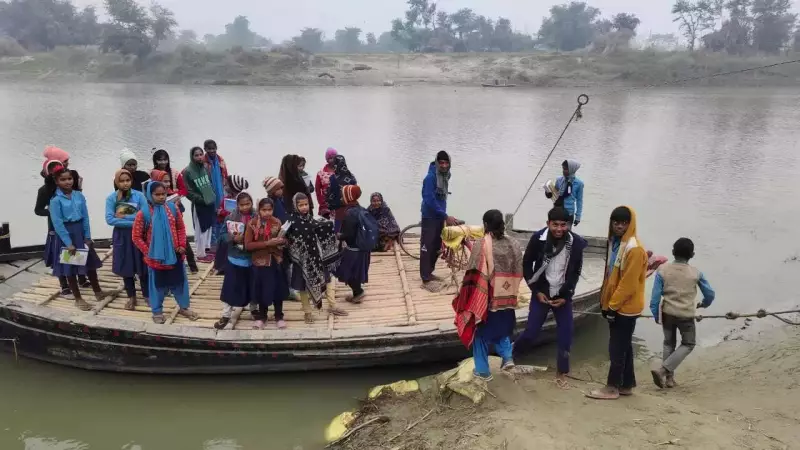
The core of the challenge is the Kosi river itself. To reach their schools, approximately 200 to 300 students must cross the river daily using country boats. This journey exposes them to significant safety risks, which are severely amplified during monsoon seasons and adverse weather conditions. The students leave home early in the morning and return late, with their daily routine centered around this hazardous crossing.

Official Acknowledgement and Unfulfilled Promises
District Education Officer Amrendra Kumar Gond confirmed the administration's awareness of the crisis. He stated that the Project Approval Board (PAB) of the central government would be urged to take necessary steps under the Sarva Shiksha Abhiyan in the coming financial year.
Local political activist Ratan Singh revealed that repeated efforts have been made to bring the issue to the notice of elected representatives. Singh claimed he had informed the local JD(U) MLA, Pannalal Singh Patel, about the students' difficulties. "The MLA had assured me that necessary steps would be taken in this regard," Singh said, but lamented that no concrete progress has been observed so far.
Consequences: Dropout Fears and Shattered Hopes
The absence of a local middle school, combined with poor connectivity and a lack of proper transport, makes regular attendance a major hurdle. This directly increases the risk of students dropping out, a concern that is particularly acute for girls. Parents in Bangaliya and surrounding areas express deep anxiety that continued official neglect will shatter their children's educational aspirations.
They fear that without a viable and safe schooling option, many young students may be compelled to discontinue their studies altogether. This threat perpetuates a cycle of deprivation and lost opportunity in these remote, riverine communities, 78 years after independence.