Karnataka Textbook Society Grants Extension for Advance Payment Deadline
The Karnataka Textbook Society (KTBS) has officially extended the deadline for private schools to make the mandatory 25% advance payment for textbooks for the upcoming academic year. The new cutoff date is now March 31, providing additional time for institutions that have yet to comply with the revised financial requirement.
Payment Statistics and Ongoing Process
According to KTBS officials, approximately 12,000 schools have already submitted their advance payments. However, a significant number—5,511 private schools—remain outstanding. Since the announcement of the extension, an additional 600 schools have completed their payments, indicating a gradual but ongoing compliance process.
"Schools can pay until the last date," stated a KTBS representative, emphasizing that the extension is intended to facilitate smoother transactions and ensure broader participation from educational institutions across the state.

Revised Payment Structure and Distribution Priorities
This academic year, KTBS has increased the advance payment from the previous 10% to 25%, a decision that has met with considerable resistance from private school administrators. The heightened financial burden has been cited as a primary reason for the delayed payments from many institutions.
In a recent circular, KTBS outlined a two-phase distribution plan based on payment timelines. Schools that made their advance payments during the initial phase will receive priority in textbook shipments. Those completing payments between March 17 and 31 will be included in the second distribution phase. The circular explicitly stated that "action will be taken to distribute the textbooks only to the schools that have paid the full amount," underscoring the non-negotiable nature of the payment requirement.
KTBS aims to complete textbook distribution to all schools by May 31, assuming timely payments from the remaining institutions.
Private School Opposition and Legal Concerns
The increased advance payment has sparked strong opposition from private school associations. Prabhakar Urs, General Secretary of Our Schools—an association representing private unaided institutions—voiced significant concerns regarding the policy's implementation.
"This decision is highly unjust, discriminatory, and violative of the principles of natural justice," Urs asserted. "The sudden imposition and enforcement of a 25% advance payment rule without transparent communication or stakeholder consultation has resulted in retrospective penalisation of compliant institutions."
Urs further warned that "delayed supply of textbooks to thousands of schools will directly affect students' academic progress, creating inequality in access to learning resources," highlighting the potential educational repercussions of the payment dispute.
Association Demands and Alternative Proposals
In response to the phased distribution plan, the private school association has demanded equal and simultaneous textbook supply to all schools that submitted their indents within the designated deadline. They argue that prioritization based on payment schedules unfairly disadvantages schools facing financial constraints, ultimately impacting student welfare.
The association's proposal seeks to decouple textbook distribution from payment timelines, ensuring that all schools receive materials concurrently, provided they met the initial indent submission deadlines.
Related Educational Development: SSLC Science Paper Watermark Issue
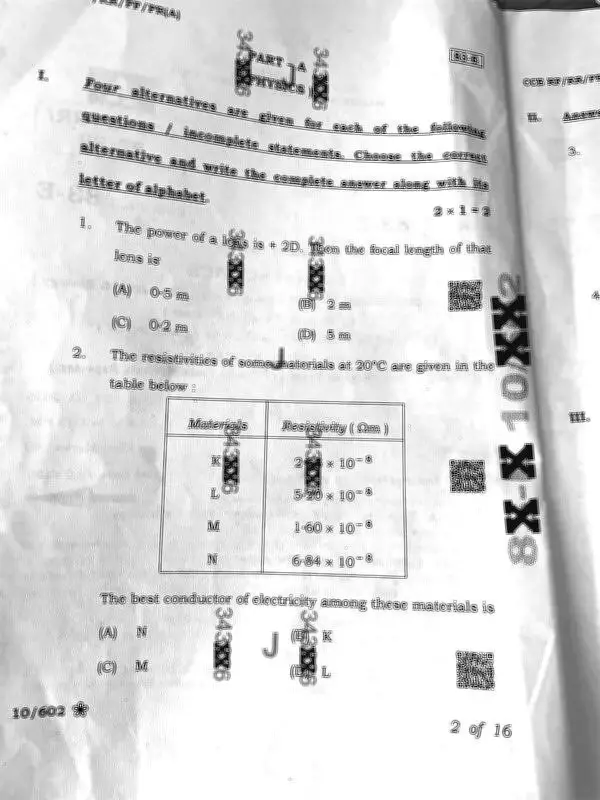
In a separate but related educational matter, the SSLC science examination paper presented unexpected challenges for students due to dark watermarks printed across the question sheets. While the paper's content was reportedly manageable, the pervasive watermarks—some overlapping with numerical figures—made reading and comprehending questions difficult for many examinees.

"The watermarks are so dark and all over the paper. Some of them are over the numerals, so one cannot even read the numbers properly," explained one student. "The paper was easy, but it was hard to read the questions because of the watermarks. It has been overwhelming and distracting."
The Karnataka School Examination and Assessment Board employs watermarks as an anti-malpractice measure, though this instance has raised concerns about their implementation and impact on exam-taker experience.