Nagpur NGO Transforms Tribal School with Modern Infrastructure for 200 Students
For years, the Zilla Parishad school in Nagazari—a tribal village in Hingna taluka on the outskirts of Nagpur—operated from an aging, unsafe structure that failed to meet basic educational needs. Families in this remote community, who rely on the school as their primary gateway to learning, long endured inadequate facilities where sturdy classrooms, clean washrooms, and proper play spaces seemed unattainable luxuries. This reality has dramatically shifted with the completion of a new school building spearheaded by Nagpur Round Table 83 (NRT-83), a volunteer-driven chapter of Round Table India.
From Dilapidation to Modern Learning Environment
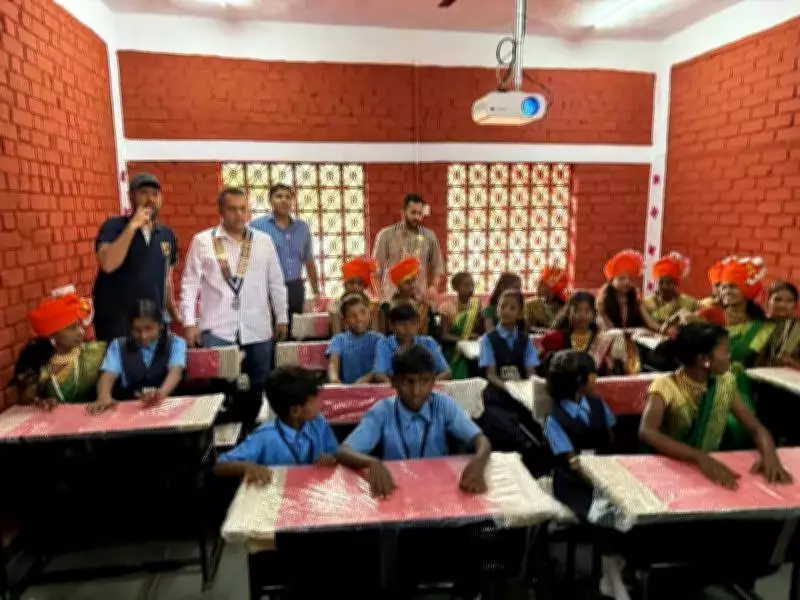
The old, hazardous building was completely demolished and replaced with a redesigned, safer facility that now serves nearly 200 students. This transformation brings a learning environment typically associated with well-resourced urban schools directly to the children of Nagazari, marking a significant upgrade in their educational journey.
The newly constructed infrastructure includes:

- Three well-furnished classrooms equipped with modern desks and optimized learning spaces
- Separate, sanitary washrooms for boys and girls within the school premises
- A dedicated play area developed specifically for children's recreation and development
The building design emphasizes natural ventilation, safety protocols, and enhanced learning conditions while allowing for future expansion as student enrollment grows. According to Prateek Minocha, chairman of NRT-83, this project embodies the broader vision of Round Table India.
"Ours is a non-political and non-sectarian organization of young professionals committed to service, fellowship, and goodwill. Education for underprivileged children remains our primary focus, and projects like Nagazari reaffirm our commitment to creating long-term impact," Minocha stated.
Volunteer-Driven Initiative with Broad Impact
NRT-83 operates primarily through volunteer efforts and has undertaken multiple rural school projects around Nagpur. The organization focuses on repairing deteriorating structures, rebuilding unsafe buildings, improving playground facilities, and organizing medical camps for students. Approximately 60 volunteers work across multiple teams that coordinate fundraising, planning, and on-ground execution.
Saurabh Taori, vice-chairman of the trust, revealed that the organization has already assisted around 20 government schools in rural areas surrounding Nagpur. "Many of these schools are located far from the city and often do not receive the attention or funding they require. When we get requests from such schools, we assess the situation and take up renovation or development work," explained treasurer Nischay Sinha.
Collaborative Approach and Funding Mechanisms
Projects are frequently executed in coordination with local administrative bodies including the Zilla Parishad and village gram panchayats. Sinha noted that such collaboration helps resolve logistical challenges and facilitates necessary approvals. Funding typically comes from a combination of community donations, crowdfunding campaigns, and contributions under corporate social responsibility initiatives.
"We are a registered trust, so people can donate to us. We also do crowdfunding and are eligible to receive CSR contributions," Sinha elaborated.
The organization also partners with educational foundations that conduct academic support programs. These include supplementary classes, teacher training sessions, and personality development activities aimed at improving overall learning outcomes. "One foundation associated with us focuses mainly on the educational side. They conduct classes, teacher training programmes, and personality development sessions for students," added secretary Dhruv Sharma.

Long-Term Planning and Future Expansion
Rebuilding schools often requires extensive planning and coordination. In Nagazari's case, the dilapidated structure needed complete demolition before a new building could be designed and constructed. "Our mandate is clear—to build infrastructure where it is needed. In this project, we demolished the old building and constructed a new school building with a redesigned structure. The entire process took around two years," Sharma explained.
Following the successful completion of the Nagazari school, NRT-83 has begun surveying nearby villages to identify other government schools requiring urgent infrastructure upgrades. Discussions with local authorities are underway to explore future collaborations that could extend similar modern facilities to more rural students across the region.