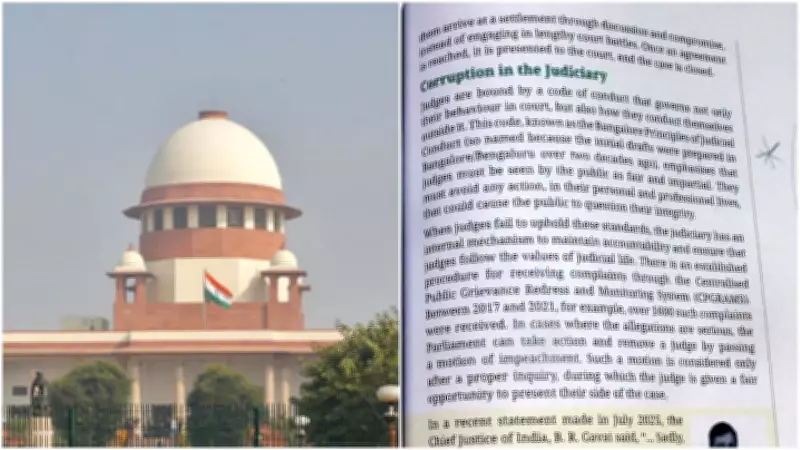
NCERT Restructures Curriculum Committee in Response to Supreme Court Criticism
The National Council of Educational Research and Training (NCERT) has undertaken a significant overhaul of its curriculum committee, a move prompted by recent criticism from the Supreme Court of India. The apex court had raised concerns over the content in a Class 8 textbook, deeming it outdated and not in line with current educational standards. This restructuring aims to address these issues and ensure that the curriculum development process is more robust and responsive to modern needs.
Supreme Court's Intervention and Its Impact
In a recent hearing, the Supreme Court expressed strong disapproval of certain sections in the NCERT's Class 8 textbook, highlighting that the material contained obsolete information that could mislead students. The court emphasized the importance of providing accurate and up-to-date educational content to foster a better learning environment. This judicial rap has served as a catalyst for the NCERT to reevaluate its curriculum framework and make necessary adjustments to avoid such pitfalls in the future.
The revamped curriculum committee is now tasked with reviewing and updating all textbooks to align with contemporary knowledge and pedagogical practices. This includes incorporating recent developments in various subjects, ensuring that the content is relevant and engaging for students. The committee will also focus on enhancing the overall quality of education by integrating innovative teaching methods and resources.

Objectives of the Restructured Committee
The newly formed committee comprises experts from diverse fields, including educationists, subject matter specialists, and child psychologists. Their primary objectives include:
- Content Accuracy: Ensuring that all textbook materials are factually correct and reflect current research and data.
- Curriculum Relevance: Updating the syllabus to include modern topics and exclude outdated concepts.
- Pedagogical Improvements: Introducing interactive and student-centric teaching methodologies to improve learning outcomes.
- Compliance with Standards: Adhering to national and international educational benchmarks to maintain high-quality education.
This initiative is part of a broader effort by the NCERT to reform the education system in India, making it more dynamic and responsive to the needs of the 21st century. By addressing the Supreme Court's concerns proactively, the council aims to restore confidence in its educational materials and processes.
Broader Implications for Indian Education
The restructuring of the curriculum committee is expected to have far-reaching effects on the Indian education landscape. It underscores the importance of judicial oversight in maintaining educational standards and highlights the need for continuous improvement in curriculum design. Parents, teachers, and students can look forward to more reliable and contemporary textbooks that better prepare learners for future challenges.
Moreover, this move may set a precedent for other educational bodies in India to regularly review and update their curricula, ensuring that the nation's education system remains competitive and effective. The NCERT's proactive approach in responding to the Supreme Court's feedback demonstrates a commitment to excellence and accountability in education.