NCERT Suspends Sales of Class 8 Social Science Textbook Amid Controversy
The National Council of Educational Research and Training (NCERT) has officially halted the sale of a Class 8 Social Science textbook after a section addressing corruption in the judiciary sparked significant public and political debate. This decision comes in response to mounting criticism over the content, which some argue could undermine public trust in judicial institutions.
Controversial Section on Judiciary Corruption
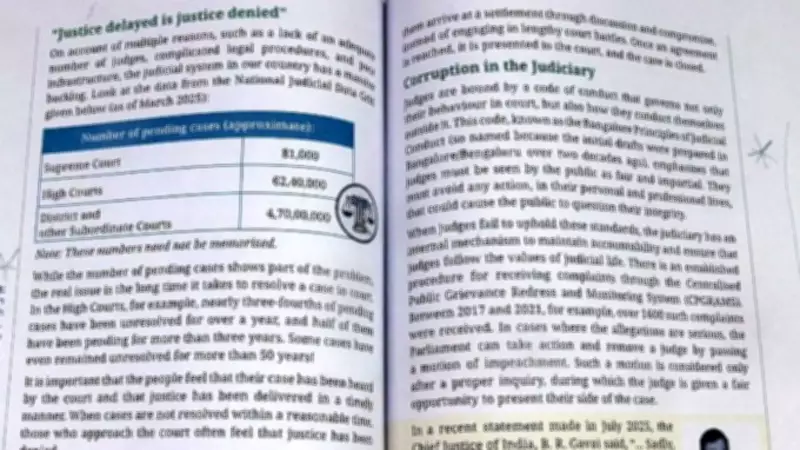
The textbook, part of the standard curriculum for middle school students across India, included a detailed discussion on corruption within the judiciary. The section aimed to educate students about transparency and accountability in governance, but it quickly became a focal point for controversy. Critics, including certain political groups and educational experts, expressed concerns that the material might be inappropriate for young learners and could potentially misrepresent the integrity of the judicial system.
NCERT's Response and Immediate Actions

In light of the backlash, NCERT has taken swift action by stopping the distribution and sale of the textbook. The council has initiated a review process to assess the content and determine whether revisions are necessary. Officials from NCERT stated that the decision was made to ensure that educational materials align with national values and do not inadvertently promote negative perceptions among students.
Broader Implications for Educational Content
This incident highlights ongoing challenges in balancing factual education with sensitivity in curriculum development. It raises questions about how topics like corruption should be presented in school textbooks, especially for younger audiences. The controversy has ignited discussions among educators, parents, and policymakers about the role of NCERT in shaping curricula that are both informative and respectful of institutional integrity.
Public and Political Reactions
Reactions to the textbook section have been mixed. Some argue that discussing corruption is essential for fostering critical thinking and awareness among students, while others believe it should be approached with caution to avoid undermining public confidence. Political figures have weighed in, with calls for greater oversight in textbook content to prevent similar issues in the future.
Next Steps and Future Considerations
NCERT is expected to conduct a thorough evaluation of the textbook and may consider modifying or removing the contentious section. The council has emphasized its commitment to providing high-quality educational resources that support holistic learning without causing unintended controversy. This event may prompt broader reforms in how sensitive topics are integrated into school curricula across India.
In summary, the suspension of the Class 8 Social Science textbook sale underscores the delicate balance required in educational content creation. As NCERT reviews the material, the outcome will likely influence future approaches to teaching complex social issues in Indian classrooms.