NCERT Textbook Row Escalates as Supreme Court Imposes Blanket Ban Over Judicial Corruption Reference
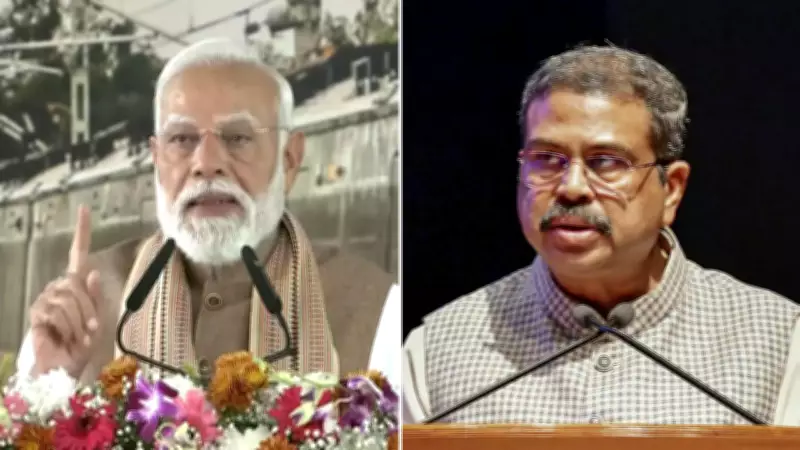
Union Education Minister Dharmendra Pradhan on Thursday pledged decisive action against those responsible for a controversial reference to judicial corruption in an NCERT textbook, following indications of Prime Minister Narendra Modi's profound displeasure over what he views as a serious lapse in educational material.
Prime Minister Modi's Direct Intervention in Cabinet Meeting
Prime Minister Narendra Modi is understood to have personally flagged the contentious inclusion of corruption among judiciaries during Tuesday's Union Cabinet meeting. The reference appeared in a chapter addressing challenges facing the administration of justice in the new NCERT Class VIII social science textbook. "What are we teaching Class VIII children about judicial corruption?" sources quoted the Prime Minister as saying during the high-level discussion, highlighting the gravity of the oversight.
Supreme Court's Stern Response and Immediate Consequences
The controversy reached a critical point on Thursday when the Supreme Court observed what appeared to be a "well-orchestrated conspiracy" to defame the judiciary and imposed a comprehensive "blanket ban" on the NCERT textbook. The apex court ordered the seizure of all physical and digital copies, demanding immediate compliance from educational authorities.

As NCERT scrambled to contain the fallout from the Supreme Court's strong reaction, the organization removed the e-version from its official website and initiated efforts to retrieve the limited number of hard copies already distributed. Education Minister Dharmendra Pradhan offered an unconditional apology while affirming the government's unwavering respect for the judiciary and promising to establish accountability for those involved in drafting the problematic content.
The Controversial Chapter and Its Content
The controversy centers specifically on Chapter 4 titled "Role of the Judiciary in Our Society" in the new social science textbook (Part 2) published by the National Council of Educational Research and Training. Edited by Michel Danino and Alok Prasanna, the chapter listed three primary challenges facing the judicial system:
- Corruption within judicial institutions
- Massive case pendency and backlog
- Critical shortage of judges across courts
While these issues have been discussed in academic and policy circles, their inclusion in a Class VIII textbook without proper context and framing triggered the current controversy.
NCERT's Response and Damage Control Measures
When questioned about the textbook's availability, NCERT officials stated that the e-version was "not uploaded online" despite earlier accessibility. Regarding physical copies, only thirty-two books had been sold before distribution was halted completely—a figure confirmed by the solicitor general during court proceedings.
A senior NCERT official explained the recall process: "As all the books have been sold through NCERT depots, they were tracked and the majority of them have been already recalled." The organization has committed to rewriting the controversial chapter in consultation with appropriate authorities, with the revised version scheduled for availability beginning with the 2026–27 academic session.
Education Minister's Assurance and Government's Position
Responding to the Supreme Court's observations, Education Minister Dharmendra Pradhan expressed being "deeply saddened by what had happened" while emphasizing that "there was no intention to insult the judiciary." He announced that "an inquiry would be conducted to identify those responsible" for the controversial content.
Pradhan further clarified that circulation of the textbooks was immediately suspended once the issue came to light and assured that the government would fully comply with all directions issued by the Supreme Court regarding this matter.

Broader Implications and Future Safeguards
Following the Supreme Court's stern remarks that it would not permit "anyone on earth" to tarnish the judiciary's integrity, NCERT formally pulled the textbook from its digital platforms. The council issued an apology on Wednesday for the "inappropriate content" and confirmed the chapter would be completely rewritten with proper consultation before any reissue.
Officials have indicated that tighter review mechanisms for future textbooks are now under active examination to prevent similar incidents. This episode has highlighted the delicate balance between educational content development and institutional respect, prompting broader discussions about textbook review processes and content approval mechanisms within India's educational framework.