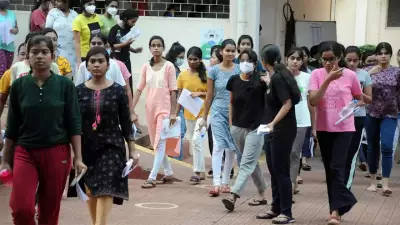
Across countless homes in New York City, a common, frustrating scene unfolds nightly. A child stares blankly at a math worksheet, while a parent attempting to help soon realizes they are both just guessing. The anxiety has shifted. It is no longer a simple fear of poor grades; it is a profound worry that children are not truly grasping what they are being taught.
Survey Quantifies Widespread Parental Concern
A recent survey conducted by EdTrust–New York has put a stark number to this unease. It found that forty-three percent of New York parents express concern about their children's progress in mathematics. This concern lingers stubbornly even as official state test scores indicate a slight improvement. For many families, these marginal gains feel fragile and insufficient, failing to bridge the learning gap that widened during the pandemic and has never fully closed.
This creates a paradox of small gains but big doubts. While data suggests incremental progress, parents remain unconvinced. Math scores have inched upward but are still below pre-pandemic benchmarks. More critically, families perceive a deep disconnect between test performance and genuine comprehension of concepts.

Systemic Response and Deep-Rooted Problems
In response to these challenges, New York City has launched initiatives like NYC Solves, a program aimed at standardizing math instruction in public schools. This pedagogical shift moves away from rote memorization of formulas toward a focus on understanding underlying principles. For parents witnessing daily homework struggles, such reform feels necessary but long overdue.
Experts warn, however, that the problem is systemic and predates the COVID-19 disruption. The erosion of foundational skills starts much earlier than high school. Data from the National Assessment of Educational Progress (NAEP) shows that eighth-grade students are losing ground in science. Alarmingly, the achievement gap between top and bottom performers has reached a record high, indicating that educational inequality is widening.
The NAEP assessment also highlighted a troubling reversal in gender progress. It found that girls experienced steeper declines in science scores than boys, reopening gaps that had been narrowing for years. Compounding this issue, fewer students reported regular exposure to inquiry-based learning, a method considered crucial for developing scientific and mathematical reasoning.
Beyond the Pandemic: A Crisis of Academic Stamina
While the pandemic was a massive shock to the education system, academics argue it is not the sole cause. The decline in core academic abilities had begun well before 2020. Researchers point to deeper trends: increased screen time, a reduction in rigorous reading assignments, and diminishing academic endurance.
Children today are reading less and are less inclined to persist through challenging problems. The essential skill of grappling with a difficult task—a cornerstone of mathematical thinking—is eroding. This decline in perseverance is creating a generation that moves forward without a solid foundation.
Behind all the surveys, statistics, and policy debates lies a simple, powerful fear. Parents are worried their children are advancing through school without truly understanding the material. Mathematics, once viewed as a ladder to opportunity, now feels like a significant hurdle. As national data confirms what families sense in their living rooms, the anxiety filling New York homes is clearly not misplaced.