Odisha Announces Major Pre-School Education Reform Under NEP 2020
In a significant move to strengthen early childhood education, Odisha Chief Minister Mohan Charan Majhi has announced that pre-school classes currently conducted at anganwadi centres will be gradually integrated with Sishu Vatikas operating within government schools. This strategic alignment with the National Education Policy (NEP) 2020 aims to create a seamless educational foundation for young learners across the state.
Phased Integration of Early Education Systems
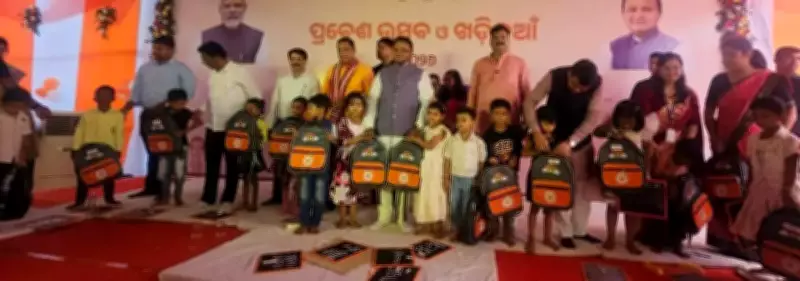
The Chief Minister made this announcement while inaugurating the state-level Khadi Chhuan Divas ceremony at Raj Bhawan Upper Primary School in Bhubaneswar. This traditional ceremony marks the formal beginning of a child's educational journey in Odia culture. Currently, children complete their first two years of education at anganwadi centres before transitioning to Sishu Vatikas in government schools, which were established for children aged five and six starting from the 2025-26 academic session.
Under Odisha's implementation of NEP 2020's three-year pre-school programme, Sishu Vatikas operate in three distinct stages to prepare government school students for Class 1. "Currently, the students of Sishu Vatika 1 and 2 are studying in anganwadi centres and Sishu Vatika 3 has been functioning in schools. In a phased manner, Sishu Vatika 1 and 2 will be also be integrated into the schooling system," explained CM Majhi. He emphasized that this integration will significantly strengthen the educational foundation for primary, upper primary, secondary, and higher secondary education throughout the state.

Expansion of Educational Infrastructure
The state government has already made substantial progress in implementing the new education framework. During the previous academic year, Sishu Vatika 3 was successfully launched in 45,042 government schools across Odisha, enrolling children aged five. This represents a major expansion of early childhood education infrastructure at the government school level.
Simultaneously, the Chief Minister revealed that construction work has commenced on the Godabarish Mishra primary schools, following the virtual foundation stone laying ceremony conducted in January. "These model primary schools will come up at gram panchayat level. Each school will be established over an area of five acres with all amenities for students and teachers," Majhi stated.
The comprehensive development plan for these schools includes:
- Focus on overall student development through holistic educational approaches
- Implementation of all necessary measures for comprehensive student growth
- Budget allocation of Rs 6 crore to Rs 7 crore for each school
Cultural Integration and Educational Inclusion
The Chief Minister also highlighted the cultural significance of Khadi Chhuan, describing it as a sacred tradition in Odia culture that has been implemented at government schools since last year. This year's ceremony saw an unprecedented scale of participation, with five lakh invitations extended at both school and individual levels to ensure maximum student inclusion in the ritual.
"Efforts are being made in schools to create interest and respect for learning among children rather than fear," Majhi emphasized, underscoring the government's commitment to making education both accessible and engaging for all children. The expanded invitation system specifically aims to ensure that no child is left out of either the cultural ceremony or the educational opportunities it represents.
This comprehensive educational reform represents Odisha's determined implementation of NEP 2020 guidelines while respecting and incorporating local cultural traditions. The phased integration of anganwadi centres with school-based Sishu Vatikas, combined with the development of model primary schools at the gram panchayat level, demonstrates a multi-pronged approach to strengthening the state's educational foundation from the earliest years through to higher secondary education.