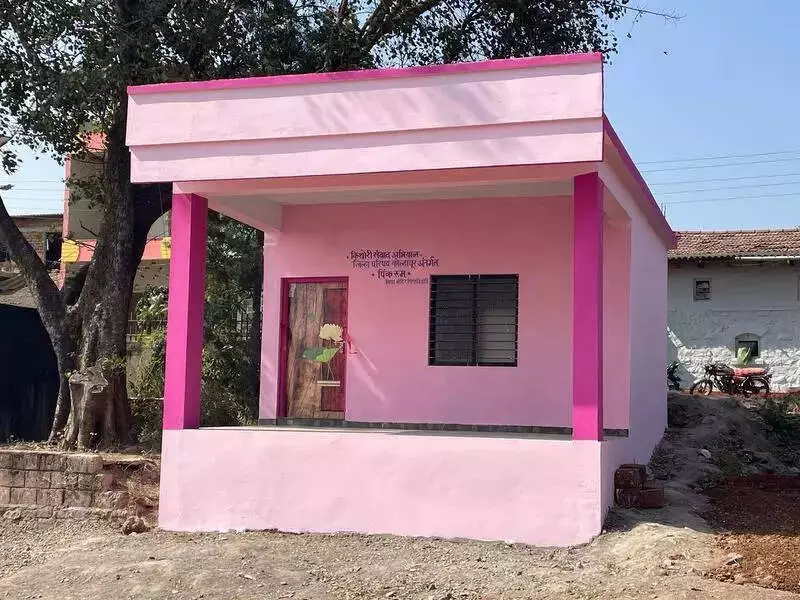
In a significant move to support adolescent girls, rural schools in Maharashtra's Kolhapur district have launched dedicated 'Pink Rooms'. These safe spaces provide privacy and essential facilities for girls during their menstrual days, addressing a key cause of absenteeism and dropout rates.
What is Inside a Pink Room?
The initiative transforms a standard classroom into a sanctuary painted pink. Each room is equipped with several essential amenities designed for comfort and education. A bed, a sanitary pad vending machine, and a disposal unit are provided for immediate needs. The facility also includes a wash basin, water, and proper lighting.
Crucially, an educational screen plays informative content about menstrual health and hygiene, helping to dispel myths and spread awareness. The room is not just for menstrual days; girls can use it to change for yoga, sports, or other cultural activities, making it a versatile daily resource.

Widespread Adoption and Community Support
The program has seen rapid acceptance across the district. Of the 842 Zilla Parishad (ZP) secondary schools in Kolhapur, 483 already have a Pink Room, with 326 more set to get one soon. This means nearly 60% of ZP-run secondary schools are already covered.
Some proactive gram panchayats, like Pirachiwadi in Kagal tehsil, have independently funded and built these rooms. Sarpanch Kalpana Bhosale explained that the concept provides a secure resting place. "Medicines are available, as are jaggery and ground nuts for the girls to eat as per traditional practice for rejuvenation and to bridge nutritional deficiencies. The room is open throughout the year," she stated.
Driving Change and Tackling Dropout Rates
The inspiration for Kolhapur's initiative came from similar projects in Japanese schools and other parts of India, as noted by Kolhapur ZP's CEO, S Karthikeyan. He emphasized that the room's purpose is dual: to ensure girls don't miss school and to provide them with a private space.
This addresses a critical issue highlighted by data. The Unified District Information System for Education Plus report for 2024-25 shows the school dropout rate for girls at the secondary stage in Maharashtra stands at 7%, with absenteeism notably high during menstrual days.
Women teachers from the schools are primarily responsible for managing the facilities. If unavailable, a teacher from any ZP school within a five-kilometer radius is assigned the duty. Anganwadi and Asha workers also contribute to the effort.
Expert Opinion on Breaking Stigma
Psychiatrist Snehal Todkar from Ratnagiri stressed the importance of such safe environments. "The girls and families need to be educated about menstrual hygiene, use of sanitary pads, and taking care of their health to lower infection," she said. Todkar also highlighted the need to sensitize boys to create a more understanding school environment.
Education officer Meena Shendkar reinforced that the Pink Rooms help girls "feel at home," which is vital for their continued education and well-being. The initiative aligns with the global 'period-friendly schools' concept promoted by UN-Water and UNICEF, which identifies lack of private sanitation as a leading cause of girls' absenteeism in developing nations.
In India, similar efforts, like those by techie Anthony Sajeeth in Karnataka's Kolar and Kurugal districts, have shown the way. Kolhapur's Pink Room project now stands as a promising model, combining community effort, government support, and a clear focus on adolescent health to keep girls in school.