

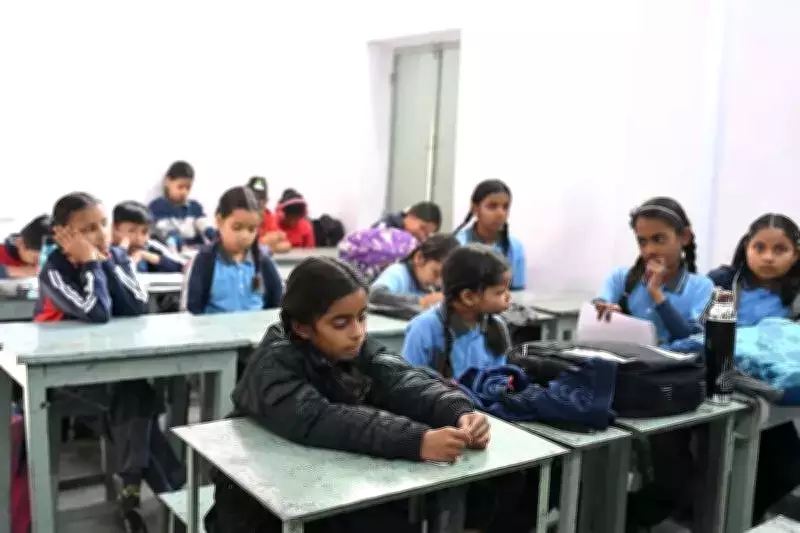
Rajasthan Education Department Initiates Comprehensive Review of Low-Enrollment Schools
The Rajasthan state education department has launched a significant initiative to assess and address the issue of schools with critically low student numbers. In a directive issued on March 17 by Sita Ram Jat, Director of Secondary Education, all district education officers have been instructed to compile and submit detailed reports on primary schools with fewer than 15 students and upper primary schools with fewer than 25 students. The deadline for this submission is set for May 23, marking a crucial step in the state's educational planning.
Data Collection and Analysis for Strategic School Management
According to the official order, district education officers are required to provide not only individual school data but also identify the nearest schools with similar enrollment figures. This comprehensive approach aims to facilitate informed decisions regarding potential mergers or demergers based on local requirements. However, it is important to note that senior secondary schools with enrollments ranging from zero to 39 students will be excluded from this review process, focusing the effort on primary and upper primary levels.
Senior officials from the education department are expected to convene a key meeting in Jaipur to discuss the findings and determine the future course of action. This meeting will likely center on optimizing educational infrastructure and resources across the state.

Historical Context and Recent Mergers
Over the past two years, Rajasthan has already merged approximately 450 schools that had zero or very low student enrollment. This ongoing effort reflects the state's commitment to streamlining educational institutions to enhance efficiency and improve learning outcomes. The merging process typically involves transferring students to nearby institutions and reassigning staff to schools where they are most needed.
Mahendra Pandey, State Chief General Secretary of the Rajasthan Primary and Secondary Teachers' Association, commented on the procedure, stating, "Merging schools with zero or low enrolment into nearby institutions, transferring the students to the new school and reassigning the staff to schools where they are needed has become a standard procedure."
Challenges and Teacher Concerns
Despite the established procedure, government school teachers have raised concerns about the implementation of school mergers. A significant issue highlighted is the lack of a designated timeframe and calendar for the transfer of teachers following mergers. This often results in situations where teachers are left without students to teach, or conversely, students are left without adequate teaching staff, disrupting the educational process.
Vipin Prakash Sharma, State President of the Rajasthan Primary and Secondary Teachers' Association, emphasized the need for a more structured approach. He advocated for a permanent decision-making framework to identify schools with zero or low enrollment, designate the nearest schools for merger, and efficiently adjust surplus staff. "The whole process should ideally be completed within one month immediately after school mergers are announced," Sharma stated.
Timing and Academic Session Considerations
Sharma also pointed out the timing of the upcoming meeting, noting that it raises doubts as the new academic session is scheduled to commence on April 1. This session has the specific objective of boosting student enrollment in schools. The proximity of the meeting to the start of the academic year could impact planning and implementation, potentially affecting the enrollment drive.
The education department's initiative underscores a proactive effort to address enrollment challenges and optimize resource allocation in Rajasthan's school system. By gathering detailed data and engaging in strategic discussions, the state aims to enhance the quality and accessibility of education for all students.






