Rajasthan Teachers Step Up as Over Half of Government School Rooms Deemed Unsafe
In a stark revelation from the Rajasthan Assembly, a technical audit has exposed that more than 56% of all rooms in government schools across the state are either dilapidated, unusable, or require major repairs. This alarming statistic underscores a deepening infrastructure crisis in the education sector, with teachers and communities forced to take matters into their own hands to ensure learning continues.
A Tragic Catalyst: The Piplodi Village Incident
The urgency of this issue was tragically highlighted in July 2025, when the ceiling of a classroom collapsed in Piplodi village, Jhalawar district, killing seven students and injuring twenty others. This incident prompted widespread demolitions of unsafe school buildings by the district administration, leaving many institutions without proper facilities.
In response, the construction of a new school building in Piplodi began six months later, with victims' families laying the first bricks in a symbolic gesture of hope. Until completion, classes are being held in the home of villager Mor Singh, who generously offered his space, forcing his family to relocate to a thatched-roof shelter on their farm.

Teachers Fund Makeshift Solutions in Kheiadi Ka Pura
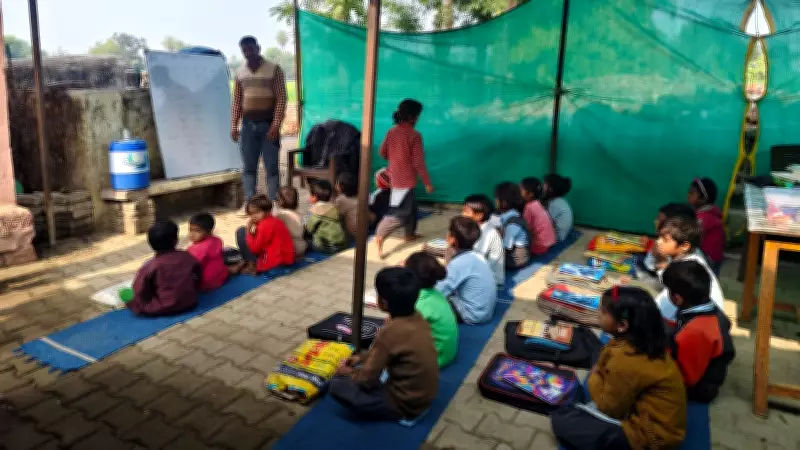
At the Kheiadi Ka Pura Government School in Manoharthana tehsil, Jhalawar district, the building was demolished due to safety concerns, with debris still uncleared. Rather than relocate students to a site 5 km away—an impractical distance for primary children—the two teachers, Jagdish Meena and Sanwariya Meena, took initiative.
They personally contributed funds to establish two makeshift classrooms on the same premises, ensuring education could proceed uninterrupted. "It was difficult during the rainy season, but we managed to raise two temporary rooms and have requested a permanent structure from the head office," Sanwariya explained.
Widespread Crisis Across Jhalawar District
This scenario is not isolated. Jhalawar Collector Ajay Rathore acknowledged that teachers across the district have been dipping into their own pockets to maintain classes in demolished or locked buildings. Financial approval has been granted for developing 20 such schools, with construction set to begin soon. Until then, temporary arrangements, including tents and rented village homes, are the norm.
At the Government Upper Primary School in Handotiya Lodhan, teachers have collected approximately Rs 10 lakh over five years for repairs. Headmaster Ram Singh Meena highlighted the dire need, noting that three rooms were locked post-Piplodi incident, and without repairs, managing 318 students would be impossible.
Broader Implications and Calls for Government Action
The situation extends beyond Jhalawar, with Narayan Sisodia of the Rajasthan Teachers' Union stating that teachers statewide are contributing as they cannot bear to see students suffer. "The government needs to really pull up its sleeves," he urged.
Former Congress Jhalawar district president Raghuraj Hada emphasized that a majority of government schools in the district urgently require repair or reconstruction, even within Jhalawar city. He criticized the sporadic government funding as insufficient, calling it a serious issue that demands immediate attention.
Emotional Toll and Community Resilience
The trauma from the Piplodi collapse lingers, with many students still emotionally scarred. Teachers report that some break down at loud sounds, and tears flowed during Republic Day celebrations as they remembered lost friends. Despite this, educators like Naresh Meena have gone door-to-door to reassure reluctant parents and continue lessons.
In a poignant effort to move forward, some affected families, such as Chotulal Rehda's, are attempting to reverse tubectomies in hopes of having children again, highlighting the profound personal impacts of this tragedy.
As Rajasthan grapples with this educational infrastructure emergency, the dedication of teachers and communities shines through, but the call for robust government intervention grows louder to prevent future tragedies and ensure safe learning environments for all students.