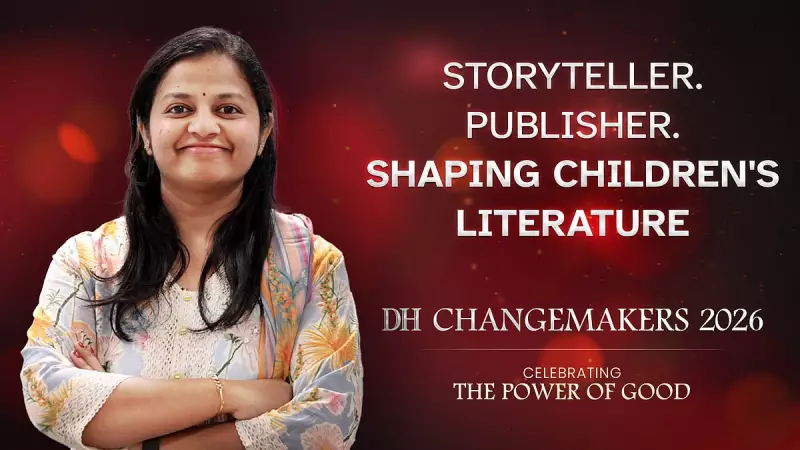
In a digital age dominated by screens and global content, a passionate writer and publisher from Karnataka is on a mission to reignite the love for reading in young minds through the magic of her mother tongue. Shwetha Sreenath, through her publishing house Chiranthana, is creating a vibrant collection of Kannada children's books that are fun, visually appealing, and deeply engaging, addressing a critical gap in regional language publishing.
Bridging the Gap in Kannada Children's Literature
The journey began from a place of personal frustration and parental concern. Shwetha, a mother herself, found a stark lack of contemporary, high-quality Kannada books for her young daughter. The available options often felt outdated, with poor paper quality, uninspiring illustrations, and stories that failed to connect with today's children. This discovery sparked a determination to create the change she wished to see. In 2019, she took the bold step of founding Chiranthana, a publishing house dedicated solely to producing captivating Kannada books for children.
Her approach is holistic and child-centric. Shwetha believes that for a book to be truly loved, it must appeal to a child's innate sense of wonder and curiosity. This philosophy translates into books that are a feast for the senses. She prioritizes thick, durable paper that little hands can't easily tear, eco-friendly inks, and most importantly, bold, colorful, and imaginative illustrations on every page. The narratives are carefully crafted to be relatable, often weaving in elements of local culture, environment, and everyday experiences of Indian children, making them more relevant than translated foreign stories.

The Creative Process and Community Impact
Shwetha wears multiple hats with ease. As a writer, she has authored several of Chiranthana's titles, including popular works like 'Kappu Kathegalu' and 'Namma Mane Dibbana'. As a publisher, she collaborates closely with a network of talented illustrators and other writers to bring diverse stories to life. Her catalog is thoughtfully curated, encompassing a wide range from board books for toddlers to chapter books for older children, ensuring there's something for every age group.
The impact of her work extends beyond just selling books. Shwetha actively engages with her community through storytelling sessions, workshops in schools, and interactive activities at book fairs. These events are not merely promotional; they are designed to create memorable experiences around Kannada literature, showing children and parents alike that reading in their native language can be a source of immense joy and discovery. Her efforts have successfully built a loyal community of young readers and supportive parents who were previously searching for such quality content.
Challenges and the Road Ahead for Regional Publishing
The path of an independent regional language publisher is not without significant hurdles. Shwetha highlights major challenges like higher production costs for quality materials, limited shelf space in large bookstores dominated by English titles, and the pervasive mindset that equates English books with superior education. Despite these obstacles, the positive reception to her books proves there is a strong and growing demand.
Chiranthana's success story is a powerful testament to the viability and importance of investing in mother-tongue publishing. Shwetha Sreenath's work demonstrates that when regional language books are created with care, creativity, and an understanding of modern childhood, they can successfully compete for a child's attention. Her initiative is more than a business; it's a cultural movement aimed at preserving the Kannada language by making it appealing to the next generation. It offers a replicable model for other Indian languages, showing that the future of regional literature is bright if it is nurtured with passion and innovation.

As Chiranthana continues to grow, adding new titles and reaching more children, it stands as a beacon for the revival of indigenous children's literature. Shwetha's journey underscores a crucial lesson: to foster a lifelong love for reading and one's linguistic heritage, the books must first be fun to hold, beautiful to look at, and exciting to explore.