Supreme Court Imposes Complete Ban on NCERT Textbook Over Judiciary Corruption Content
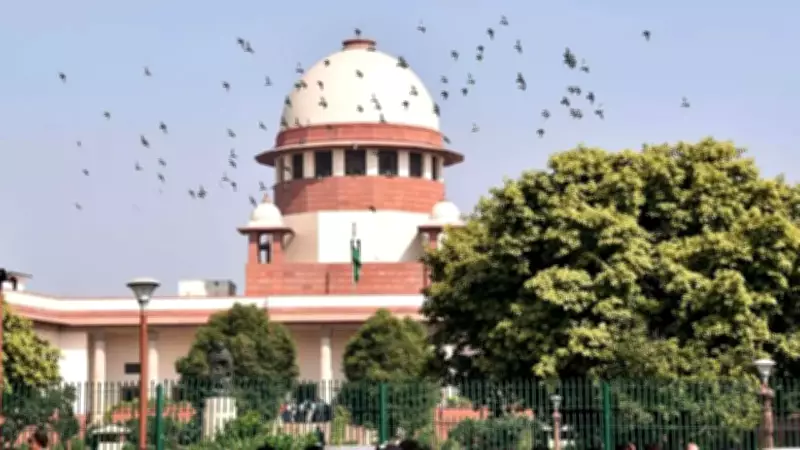
The Supreme Court of India took decisive action on Thursday by imposing a comprehensive ban on a Class 8 social science textbook that contained controversial content regarding corruption within the judiciary. The court prohibited all forms of circulation for the textbook and directed immediate seizure of existing copies.
Unconditional Apology Rejected as Court Demands Accountability
During the hearing, Solicitor General Tushar Mehta presented an unconditional and unqualified apology from the government, describing the inclusion of the judiciary corruption section as "an unpardonable mistake." The government revealed it had permanently barred the two authors responsible from any future textbook preparation involvement.
However, the Supreme Court bench, led by Chief Justice Surya Kant alongside Justices Joymalya Bagchi and Vipul M. Pancholi, refused to accept the apology at this stage. The court expressed serious concerns about whether there was "a deliberate and calculated design to denigrate the institution and harm its reputation."

Comprehensive Seizure Orders Issued Nationwide
The court issued sweeping directives for the immediate removal of all textbook copies from public access. The National Council of Educational Research and Training (NCERT) was ordered to coordinate with Union and state education departments to ensure complete seizure of both hard and soft copies currently in circulation.
"The NCERT in coordination with the Union and state education departments is directed to ensure that all copies of the book (hard or soft) currently in circulation, whether held in storage, retail outlets, or educational institutions, are seized and removed from public access," the bench ordered.
The court placed personal responsibility on NCERT directors and school principals to effectuate immediate seizure and sealing of all textbook copies within their premises. Compliance reports must be submitted, and principals were specifically instructed to ensure no instruction is imparted using the banned textbook.
Blanket Ban on Future Publication and Digital Dissemination
In what the court described as "an abundant precaution," a complete blanket ban was imposed on any further publication, reprinting, or digital dissemination of the controversial textbook. The order explicitly warned that any attempt to circumvent the ban through electronic means or altered titles would be viewed as direct interference and willful breach of court directions.
Chief Justice Surya Kant expressed grave concern about the textbook's content, stating, "A shot has been fired mindlessly and the judiciary is bleeding. The design was to defame the judiciary by telling students, their parents and teachers, the entire society, about corruption."
Court Demands Transparency and Investigation
The Supreme Court directed NCERT to reveal comprehensive details about the textbook preparation process, including:
- Names of persons entrusted with preparing the textbook
- Their professional credentials and qualifications
- Complete minutes of meetings where textbook contents were deliberated and finalized
The court specifically noted that the textbook's portrayal of judicial corruption created a deliberate impression that the judiciary had failed to act upon complaints against judges. The bench highlighted concerns about how pendency figures were quoted to suggest "justice delayed is justice denied," potentially teaching children that justice is systematically denied in India.
Legal Community Condemns Textbook Content
Senior advocates Kapil Sibal, A.M. Singhvi, and Vikas Singh characterized the textbook section as "scandalous, calculated and designed to selectively target judiciary to denigrate its image." Chief Justice Kant responded by emphasizing the judiciary's constitutional role, noting that while politicians, bureaucrats, and other professionals face regular convictions for various offenses, the judiciary has been "blatantly targeted" in this instance.

The Chief Justice elaborated on the judiciary's contributions, stating, "The authors forgot that judiciary has played a stellar role in protecting the Constitution, the fundamental rights of citizens and passed series of orders over the last 75 years to protect democracy, not to mention its stellar role in making it possible to provide free legal aid to poor and marginalised sections of the society."
Contempt Proceedings and Future Hearing
The court has asked the school education secretary and NCERT chairperson to show cause why contempt proceedings should not be initiated against them, despite the government's apology. The Supreme Court secretary general had sought clarification from the NCERT director immediately after news reports about the textbook content emerged.
NCERT has been given two weeks to file compliance reports regarding the seizure and removal of all textbook copies. The matter has been scheduled for further hearing on March 11, where the court will continue its examination of whether there was deliberate intent to undermine judicial integrity through the textbook content.