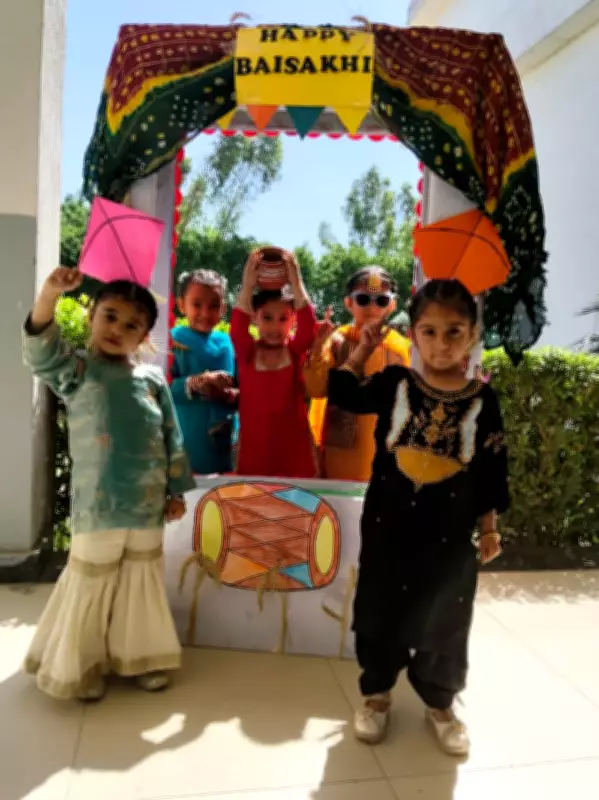
Students Across Schools Celebrate Baisakhi with Cultural Programs and Festivities
Students in numerous schools recently celebrated Baisakhi, a significant festival in Punjabi culture, with a series of vibrant cultural programs and educational activities. The festivities were organized to honor the harvest season and the cultural heritage associated with Baisakhi, which marks the beginning of the solar new year and the harvest of Rabi crops in the Punjab region.
Cultural Performances and Traditional Dances
During the celebrations, students participated in various cultural performances, including traditional Punjabi dances such as Bhangra and Gidda. These dances were performed with enthusiasm, showcasing the rich cultural traditions of Punjab. Many schools also featured folk music and songs that highlighted the agricultural significance of Baisakhi, with students dressed in colorful traditional attire to add to the festive atmosphere.
In addition to dances, some schools organized poetry recitations and storytelling sessions that focused on the historical and religious aspects of Baisakhi. These activities aimed to educate students about the festival's origins, including its association with the formation of the Khalsa Panth by Guru Gobind Singh in 1699, and its importance in Sikhism and Punjabi culture.

Educational Activities and Community Engagement
Beyond cultural performances, schools incorporated educational activities into the Baisakhi celebrations. Students engaged in art and craft sessions where they created decorations related to the festival, such as making kites and designing rangoli patterns. Some schools also held discussions and presentations on the agricultural practices linked to Baisakhi, emphasizing its role as a harvest festival and its impact on the local economy.
Community engagement was a key aspect, with many schools inviting parents and local community members to participate in the events. This fostered a sense of unity and cultural pride among students, while also promoting intergenerational learning about traditional customs. Food stalls offering traditional Punjabi dishes, such as langar and sweets, were set up in some schools, allowing students to experience the culinary delights associated with Baisakhi.
Significance and Impact on Students
The celebrations provided students with an opportunity to learn about and appreciate the cultural diversity of India, particularly the traditions of Punjab. By actively participating in these events, students developed a deeper understanding of Baisakhi's significance in promoting values such as community service, gratitude for the harvest, and cultural preservation. The festivities also encouraged creativity and teamwork among students, as they collaborated on performances and activities.
Overall, the Baisakhi celebrations in schools served as an enriching experience that combined education with cultural immersion, helping to instill a sense of pride and awareness about India's diverse festivals among the younger generation.