Supreme Court Intensifies Criticism of NCERT Over Controversial Textbook Chapter
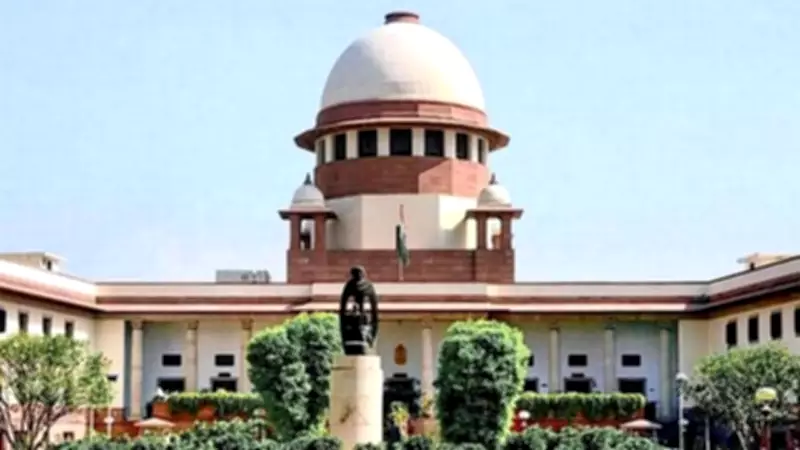
The Supreme Court of India continued its strong rebuke of the National Council of Educational Research and Training (NCERT) on Thursday, focusing on a newly introduced Class 8 social science textbook. Chief Justice of India Surya Kant led the criticism, targeting a chapter that discusses "corruption" and "backlogs" within the judiciary, which he described as a "deep-rooted and well-planned conspiracy."
CJI Surya Kant's Stern Remarks on Judicial Defamation
For the second consecutive day, CJI Surya Kant reprimanded NCERT, emphasizing the severity of the issue. "There appears to be a deep-rooted, well-planned conspiracy to defame the judiciary," he stated firmly. The Chief Justice underscored his commitment to accountability, declaring, "It is my duty to find out who is responsible; heads must roll," in reference to the ongoing NCERT book controversy.
Apology from Solicitor General and NCERT's Response
In response to the court's criticism, Solicitor General Tushar Mehta tendered an unconditional and unqualified apology on behalf of the education ministry. However, the Supreme Court noted that NCERT's own communication lacked any apology. Instead, the court observed, "There is not a single word of apology in NCERT's communication. Instead, they have sought to justify it." This discrepancy prompted the top court to call for a "deeper probe" into the matter, indicating a thorough investigation may follow.

Implications for Educational Content and Judicial Integrity
The controversy highlights significant concerns about the content of educational materials and their impact on public perception of institutions like the judiciary. The Supreme Court's sharp criticism underscores the importance of maintaining respect and accuracy in textbooks, especially when discussing sensitive topics such as corruption and judicial efficiency. This incident may lead to stricter oversight of curriculum development and a reevaluation of how critical issues are presented to young students.
As the situation unfolds, stakeholders in education and law will be closely monitoring the Supreme Court's next steps and any potential reforms to prevent similar controversies in the future. The call for accountability and a deeper probe suggests that this issue is far from resolved and could have lasting implications for NCERT and educational policy in India.