Pressure, Pretense or Mistaken Identity? The Alarming Trend of False UPSC Selection Claims
Rapturous celebrations, strings of felicitations, and emotional interviews – these are familiar scenes following success in India's prestigious civil services examination. However, in numerous recent cases, the protagonists have been exposed as fraudulent claimants. Following the announcement of UPSC results on March 6, a disturbing pattern emerged: most individuals making false claims of selection hail from Uttar Pradesh and Bihar.
A Pattern of Fabricated Success
Out of more than half a dozen such incidents documented this year, at least three originated from Uttar Pradesh and two from Bihar. These cases range from simple mistaken identity to deliberate deception, revealing complex social and psychological dynamics.
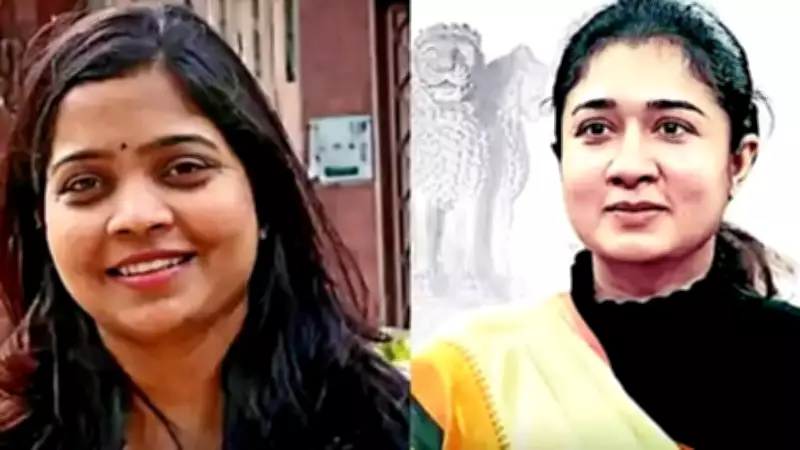
In Ghazipur, retired driver Neera Ram gave an emotionally charged interview claiming his daughter Priyanka Chaudhary had secured the 79th rank. The heartwarming story went viral across media platforms until the actual candidate – another Priyanka Chaudhary from Bikaner, Rajasthan, whose husband is an IAS officer in Himachal Pradesh – came forward to clarify the confusion.

In Bulandshahr, a woman named Shikha claimed she had secured the 113th rank, triggering family celebrations and village processions complete with drums and garlands. The celebration ended abruptly when the real Shikha – currently serving as a block development officer in Haryana – wrote to the UPSC about the confusion. A district-level probe confirmed the claimant had failed the mains examination.
Detailed Case Studies of Deception
Case 1: Shikha Rani | Bulandshahr and Delhi
An administrative inquiry revealed that Bulandshahr's Shikha Rani had not cleared the UPSC main examination and was never shortlisted for the personality test. Officials discovered she had kept her family unaware of the actual result, informing them of her supposed success when results were declared. Her grandfather broke down in tears of joy, villagers organized celebratory processions, and locals thronged her residence for selfies.
After the probe, Shikha admitted the mistake, attributing it to checking only her name in the PDF results file without verifying the roll number. Her father, Prem Chand, explained: "She saw her name and immediately informed us that she had cleared the examination. We believed her and shared the news."
Case 2: Akanksha Singh | Arrah & Ghazipur
A textbook case of identity confusion emerged when two candidates named Akanksha Singh – from Ghazipur, Uttar Pradesh, and Arrah, Bihar – both claimed All India Rank 301. The Bihar candidate presented a preliminary examination admit card with roll number 0856794, but scanning the QR code revealed a different number – 085659. The Ghazipur candidate's documents consistently reflected roll number 0856794, establishing her authentic claim. UPSC eventually issued an official clarification confirming the Ghazipur candidate's success.
Case 3: Yashvardhan Singh | Satna & Hamirpur
Yashvardhan Singh from Satna district in Madhya Pradesh claimed he had secured All India Rank 212, triggering celebrations in his locality. Verification revealed critical discrepancies: the candidate listed at rank 212 belonged to the OBC category, whereas Satna's Yashvardhan belonged to the General category. Further scrutiny showed he hadn't even cleared the preliminary examination. The actual successful candidate was Yashvardhan Singh from Hamirpur district in Uttar Pradesh.
Expert Analysis: Psychological and Social Drivers
Experts say these incidents highlight the immense prestige attached to UPSC success in India's heartland, particularly Uttar Pradesh and Bihar, where becoming an IAS officer is often viewed as the ultimate achievement.
Criminal psychologist Dhiresh Kumar explains: "Candidates who are unable to achieve a goal sometimes attempt to attain it through false claims. The social validation and admiration associated with prestigious positions like IAS become a strong psychological driver."

Delhi-based psychologist Raghav Madhurya points to narcissistic tendencies: "Such individuals develop an inflated sense of self and try to project superiority over others. They create an imagined identity around themselves." He highlights a more complex condition called pseudologia fantastica, where individuals begin to believe their own false narratives after repeated telling.
Systemic Issues and Proposed Reforms
Former Uttar Pradesh DGP Prakash Singh calls for simple procedural changes: "If two persons bear the same name, the Commission should devise a system to distinguish them – for instance, by assigning numerical identifiers. Confusion can be easily resolved with minor administrative adjustments in result presentation."
Former chief secretary Alok Ranjan advocates more radical reforms: "Faking selection in UPSC should be made a criminal offense." He raises concerns about excessive attempts and rising age limits: "Candidates are spending nearly a decade preparing for the exam. Many face severe stress, depression, and mental health issues after dedicating 8-10 years exclusively to UPSC preparation without success."
Ranjan suggests limiting serious attempts to three within a defined age bracket of 21 to 26 years, warning that repeated failures result in "a loss of valuable human capital for the country."
The Feudal Mindset and Changing Perceptions
Serving IPS officer Binod Singh, who hails from Bihar, attributes the craze for civil services to deep-rooted "batti culture" and feudal mindset: "The craze in UP and Bihar is largely due to the love for 'batti' – the symbol of power. From the beginning, we have been raised in a feudal mindset where authority and status are highly valued."
Banda superintendent of police Palash Bansal emphasizes: "Civil services must be about service, not status. Associating civil services with social prestige risks distorting the very purpose of governance. When societal approval begins to outweigh the core intention of serving the public, it creates a dangerous shift in priorities."
Former CRPF DG AP Maheshwari observes that traditional dominance of civil services is likely to decline as India's economy evolves: "With development, more professional verticals will take over governance space, and dominance of generalists will gradually get diluted. Governance itself is undergoing a shift toward facilitation rather than control."
These false claims, while individually concerning, collectively reveal deeper societal pressures, psychological vulnerabilities, and systemic issues that demand attention from policymakers, mental health professionals, and society at large.