UPSC Mains Answer Practice GS 1: Ideological Differences and Scientific Development
Are you preparing for the Civil Services Exam 2026? This week's UPSC Mains answer practice focuses on two critical topics from General Studies Paper 1: the ideological differences between Mahatma Gandhi and B. R. Ambedkar, and the influence of colonial rule on scientific development in India. These questions are designed to enhance your answer-writing skills and deepen your understanding of modern Indian history and social reform movements.
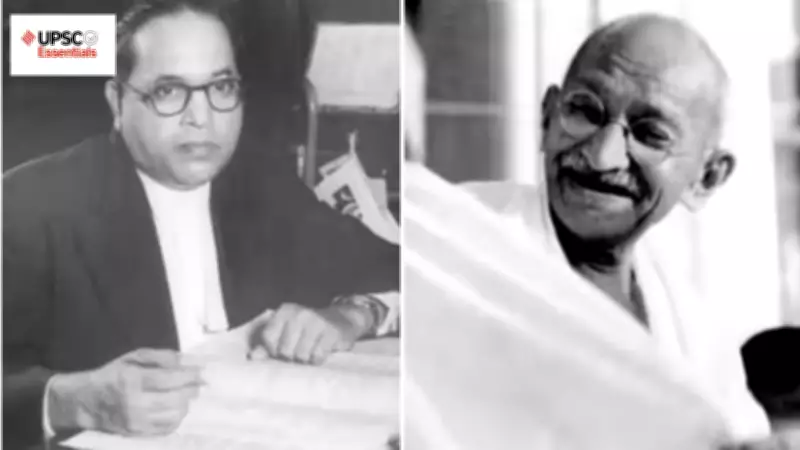
Question 1: Ideological Differences Between Gandhi and Ambedkar
Relevance: This question is integral to modern Indian history, covering social reform, caste dynamics, representation, and nationalism. The debate between Gandhi and Ambedkar highlights profound ideological tensions within India's freedom struggle, directly impacting the Poona Pact of 1932 and subsequent constitutional provisions for political reservation.
Introduction: The disagreement between Gandhi and Ambedkar was not merely a theoretical dispute but a clash representing distinct interest groups at the core of India's national movement. Their divergent views on social, economic, and political issues laid the groundwork for independent India and continue to influence parliamentary discussions today.

Body: Key points to incorporate in your answer include:
- Before the Second Round Table Conference in 1931, Gandhi and Ambedkar met in Bombay, where Gandhi questioned Ambedkar's criticism of the Congress, perceiving it as an attack on the nation.
- At the Second Round Table Conference in London, Gandhi publicly claimed to represent the Untouchables, leading to their first major confrontation. Ambedkar argued that only those sharing the identity of the Depressed Classes could advocate for their justice, emphasizing the need for separate electorates to protect political rights.
- In 1932, British Prime Minister Ramsay MacDonald granted separate electorates for Untouchables, prompting Gandhi, imprisoned in Yerawada Jail, to fast unto death in opposition. This standoff culminated in the Poona Pact, which replaced separate electorates with reserved seats in legislatures.
- Gandhi, influenced by Indian ethical traditions, viewed justice through moral equality and equi-mindedness, rejecting abstract legal frameworks. In contrast, Ambedkar advocated for institutional justice via laws, rights, and constitutional safeguards to restrain power and address injustices.
Points to Ponder: Why did Gandhi see separate electorates as a threat to national unity, while Ambedkar deemed them essential? How did the Poona Pact reshape political representation for marginalized communities? Related previous year questions include comparisons between Gandhi and Tagore on education and nationalism, and differences between Subhash Chandra Bose and Gandhi in the freedom struggle.
Question 2: Colonial Influence on Scientific Development
Relevance: This topic explores the history of science and technology, assessing colonialism's cultural and intellectual impact on Indian society. It evaluates nationalist responses, requiring analytical balance and awareness of historiography in dealing with issues like nationalism and science.
Introduction: Colonial rule dramatically altered India's scientific narrative by positioning Western science as the sole legitimate knowledge system and marginalizing indigenous practices as archaic. This led Indian intellectuals to seek cultural validation by tracing modern scientific concepts back to antiquity, fueling a compulsion to demonstrate civilizational superiority.
Body: Incorporate the following insights into your answer:

- Prafulla Chandra Ray, known as the Father of Indian Chemistry, exemplified this dual approach. While conducting experimental research in chemistry and publishing in European journals, he also delved into Sanskrit alchemical texts to reconstruct India's scientific legacy.
- Inspired by French chemist Marcelin Berthelot, Ray aimed to make Indian science visible through historical reconstruction, yet faced Eurocentric assumptions that Indian alchemy was derivative and experimental science was a European invention.
- British colonial intellectuals reinforced these notions, dismissing Indian scientific capabilities and using science as a tool for governance and control through surveys, censuses, and taxonomy.
- This pattern extended to reformers like Swami Dayananda, who reinterpreted the Vedas as scientific repositories, and scholars who excavated medieval texts to argue for India's advanced knowledge systems, linking scientific recovery to national regeneration.
Points to Ponder: Why did Indian intellectuals feel compelled to connect modern science to ancient India? How does cultural nationalism sometimes conflict with scientific temperament? A related previous year question discusses cultural elements of diversity in India and their role in national identity.
Conclusion: The ideological clash between Gandhi and Ambedkar and the colonial reshaping of scientific narratives are pivotal for UPSC aspirants. Engaging with these topics enhances critical thinking and answer-writing proficiency, essential for success in the Civil Services Exam. Practice these questions to refine your approach and deepen your historical and analytical insights.