UPSC Essentials: Daily Subject-Wise Quiz on Environment and Geography (Week 148)
Are you diligently preparing for the UPSC Civil Services Examination (CSE) Prelims scheduled for 2026? This comprehensive quiz is meticulously designed to help you assess your current progress and effectively revise crucial topics from the static syllabus of Environment and Geography. Authored by Nitendra Pal Singh, this 8-minute read offers a valuable opportunity to strengthen your grasp on key concepts.
Why This Quiz Matters for UPSC Aspirants
These subject-specific quizzes are an integral part of your revision strategy. They focus on important static topics that frequently appear in the Prelims, helping you build accuracy and speed. Today's edition features questions on diverse topics, including a notable question on the controversial practice of rat-hole mining.
Question 1: The Strategic Strait of Hormuz
Which of the following statements about the Strait of Hormuz is not correct?

- It is a critical region for international oil and gas supplies.
- It is a narrow waterway between Bahrain and Qatar.
- It connects the Persian Gulf with the Gulf of Oman and the Arabian Sea.
- Disruption of shipping in this strait can significantly affect global energy prices.
Relevance for UPSC: The Strait of Hormuz is a perennial topic in current affairs due to geopolitical tensions in West Asia, naval deployments, and its direct impact on global energy security. UPSC often tests candidates on map-based locations, understanding of strategic maritime chokepoints, and the interconnection between geography and contemporary issues.
Detailed Explanation: The Strait of Hormuz is undeniably one of the world's most vital maritime passages. It serves as the primary conduit for approximately 20% of the globe's oil and a significant portion of liquefied natural gas (LNG) from Persian Gulf nations. Contrary to option (b), this narrow waterway is situated between Iran and Oman, not Bahrain and Qatar. Its strategic importance means any disruption here can send shockwaves through global energy markets, influencing prices worldwide. Therefore, the incorrect statement is option (b).
Question 2: The Environmental Menace of Rat-Hole Mining
Rat-hole mining is prevalent in which of the following regions?
- East Jaintia Hills
- Mishmi hills
- Nallamala hills
- Shevaroy hills
Relevance for UPSC: Rat-hole mining has been frequently highlighted in news due to severe environmental degradation, groundwater contamination, tragic accidents, and interventions by the National Green Tribunal (NGT). Such questions evaluate a candidate's map-based awareness, ability to link static knowledge with current events, and skill in elimination—all essential for the Prelims.
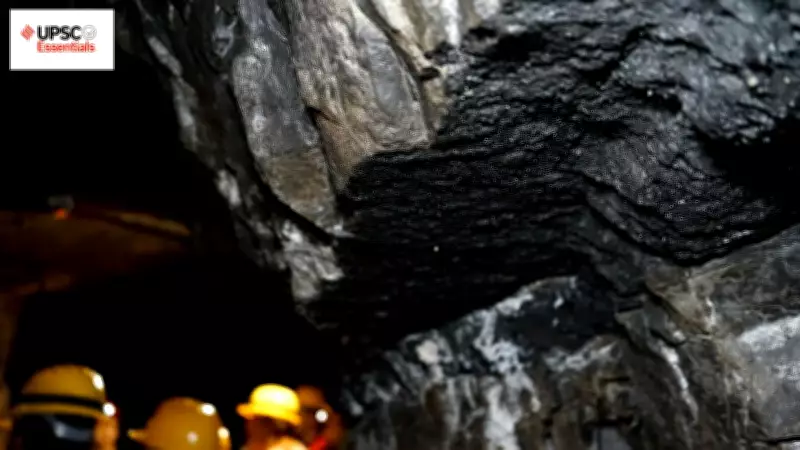
Detailed Explanation: Rat-hole mining is a hazardous, primitive method of coal extraction involving narrow, horizontal pits. It is predominantly practiced in the state of Meghalaya. The East Jaintia Hills district in Meghalaya has been a notorious hotspot for this illegal activity, often resulting in fatal incidents. The other hill ranges are located in different states: Mishmi hills in Arunachal Pradesh, Nallamala hills in Andhra Pradesh, and Shevaroy hills in Tamil Nadu. Hence, the correct answer is option (a).
Question 3: Veerangana Durgavati Tiger Reserve
With reference to the Veerangana Durgavati Tiger Reserve, consider the following statements:
- It is situated along the Byarma River and the Kopra River.
- This tiger reserve was carved out of the Barnawapara Wildlife Sanctuary.
- This tiger reserve was notified in 2025.
Which of the statements given above is/are correct?
Relevance for UPSC: New additions to India's protected area network, like tiger reserves, are regularly monitored by UPSC. Questions on them test the linkage between environment and current affairs, specific geographical locations, river systems, and source sanctuaries.

Detailed Explanation: The Veerangana Durgavati Tiger Reserve, located in Madhya Pradesh, was officially notified in 2023, not 2025. It spans approximately 2,339 square kilometers and was established from the Nauradehi Wildlife Sanctuary, not Barnawapara. The reserve is indeed situated along the Byarma and Kopra rivers. Therefore, only statement 1 is correct, making option (d) the right choice.
Question 4: Monazite – A Strategic Mineral
With reference to monazite, consider the following statements:
- It is a phosphate mineral containing Uranium and Thorium.
- The deposits of monazite are found only on the eastern coast of India.
Which of the statements given above is/are correct?
Relevance for UPSC: Monazite is crucial for India's nuclear energy program and is often in the news concerning strategic minerals, beach sand mining, and atomic energy policies. These questions assess knowledge of static geography, mineral distribution, and current affairs connections.
Detailed Explanation: Monazite is indeed a phosphate mineral that contains significant quantities of Uranium and Thorium, making it a key source for rare earth elements. However, its deposits in India are not confined solely to the eastern coast. They are extensively found in coastal beach sands and inland alluvium across multiple states including Odisha, Kerala, Andhra Pradesh, Tamil Nadu, West Bengal, Gujarat, Maharashtra, and Jharkhand. Thus, statement 1 is correct, while statement 2 is incorrect, leading to option (a) as the answer.
Question 5: Fascinating Facts About Elephants
With reference to elephants, consider the following statements:
- Elephants can communicate over long distances through vibrations.
- Just like humans are right or left-handed, elephants prefer one tusk over the other.
- The trunk of an elephant has more than 40,000 muscles.
How many of the statements given above are correct?
Relevance for UPSC: As a flagship species in India, elephants are frequently in the news due to human-elephant conflict, conservation initiatives like Project Elephant, habitat issues, and legal protections under the Wildlife (Protection) Act.
Detailed Explanation: All three statements are accurate. Elephants utilize low-frequency vibrations transmitted through the ground to communicate across vast distances. They exhibit a preference for using one tusk more frequently, similar to human handedness, which results in that tusk becoming more worn. Furthermore, an elephant's trunk is an extraordinary organ comprising over 40,000 muscles, granting it remarkable dexterity and strength. Therefore, all three statements are correct, making option (c) the answer.
Consistent practice with such quizzes is instrumental in building a strong foundation for the UPSC Prelims. Ensure you integrate current affairs with static syllabus topics for a comprehensive preparation strategy.