As students across India sharpen new pencils and set fresh goals for the academic year 2026, a powerful shift is redefining what true success means. Moving beyond the traditional chase for straight A's, leading educators are championing a deeper, more impactful predictor of a student's future: experiential learning. This approach, which prioritises hands-on experience over rote memorisation, is being hailed as the essential formula for building the character, creativity, and confidence needed to thrive in the modern world.
The New Definition of Success: More Than Just Grades
In an insightful conversation with the Times of India, Kushal Chakravorty, Founder and Managing Trustee at the Lotus Petal Foundation, emphasised this evolving paradigm. "Success today is about more than grades. It is about preparing students for life," he stated. Chakravorty argues that real learning is cemented through direct experience, which cultivates critical skills like collaboration, critical thinking, adaptability, creativity, and emotional intelligence.
He elaborated that teamwork teaches respect and constructive dialogue, critical thinking builds unshakeable confidence, and adaptability prepares young minds to navigate constant change. Furthermore, creativity becomes the engine for innovation, while emotional intelligence forms the bedrock for empathy and resilience. Experts assert that these values are best brought to life in educational settings that blend science with drama, incorporate performing arts, and are supported by dedicated teams of counsellors, health educators, and special educators.

Five Pillars of Experiential Learning in Action
Echoing this vision, Diwakar Chittora, CEO of Intellipaat, highlighted how modern classrooms have transformed. "Learning nowadays looks very different from what it used to be," he revealed. The focus has shifted from merely retaining information to confidently applying knowledge in real-life scenarios. Chittora outlined five key experiential learning strategies crucial for student development in 2026 and beyond.
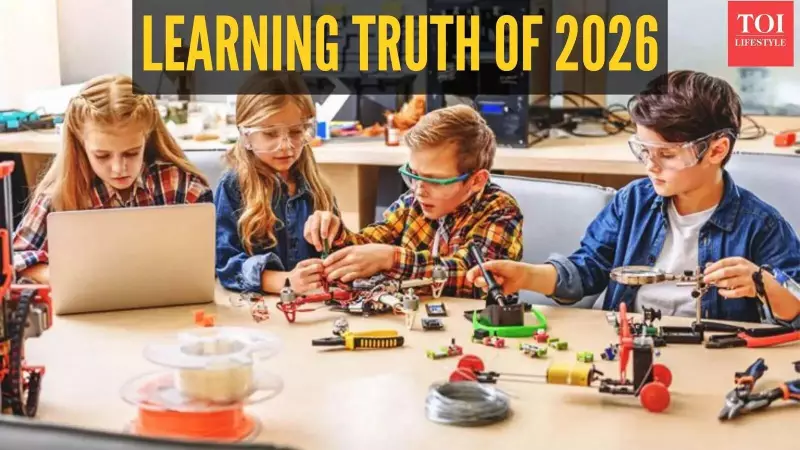
1. Learning by Doing: Active participation is key. Students grasp concepts far more effectively through hands-on projects, experiments, and live demonstrations, watching abstract ideas materialise in real time. This is backed by a 2014 study in the Proceedings of the National Academy of Sciences, which found that students in active learning settings outperformed those in traditional lectures on exams and showed superior critical thinking.
2. Industry Exposure: Powerful learning happens outside classroom walls. Internships, guest lectures from professionals, and tackling real-world business problems help students connect their academic knowledge to its practical application in the professional sphere.
3. Collaboration and Communication: Teamwork brings ideas to life. As students exchange thoughts, tackle group challenges, and practice active listening, they naturally build the confidence, empathy, and leadership skills vital for future careers. A 2014 study in the Journal of Educational Psychology supports this, showing collaborative learning significantly boosts student engagement, interpersonal skills, and comprehension.
4. Utilisation of Technology: Engaging with tools like data analytics, artificial intelligence (AI), and creative software provides students with a dynamic perspective. Staying open to technological advancements makes them agile and ready to adapt to a rapidly changing world.
5. Reflective Growth: True growth stems from iteration, not perfection. By reflecting on what succeeds and what fails, students extract valuable lessons. A 2017 study in Educational Psychology Review confirmed that structured reflection helps learners connect experience with theory, enhancing both academic performance and emotional resilience. This process builds patience, self-awareness, and adaptability.

The Bottom Line for 2026 and Beyond
The consensus among forward-thinking educators is clear. In 2026, academic success can no longer be narrowly defined by test scores and report cards. The most effective education prepares learners to think critically, create innovatively, collaborate seamlessly, adapt proactively, and reflect meaningfully. As we step into the new year, it is time to redefine achievement. The ultimate measure of success is not just what a student knows, but what they can authentically do with that knowledge in the complex, real world that awaits them.