The Kannada diaspora in the United Arab Emirates received an unexpected and monumental honor when Prime Minister Narendra Modi, in his recent Mann Ki Baat radio address, publicly appreciated their dedicated efforts to teach the Kannada language to children overseas. The recognition was directed at the volunteers behind Kannada Patha Shaale Dubai, an initiative run by the organisation Kannada Mitraru UAE.
A Surprise Call That Led to National Recognition
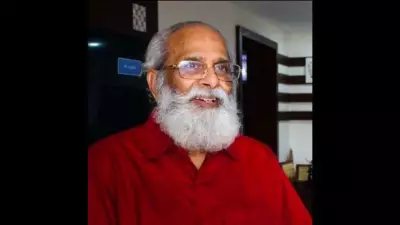
Shashidhar Nagarajappa, the president and convener of Kannada Patha Shaale Dubai, recounted the thrilling sequence of events. Three days before the broadcast, he received an urgent call from the Consul General of India in Dubai, Satish Kumar Sivan, seeking immediate details about their work. "He asked for data urgently but did not explain why," Shashidhar said. The reason became clear a day before the address when he was informed that the Prime Minister might mention their initiative.
"We have worked since 2014 and never imagined that the PM would acknowledge our efforts," expressed an elated Shashidhar. When the mention finally came, celebrations erupted across the community. "It felt as though the entire Dubai was congratulating us. No PM has spoken about Kannada initiatives outside India before. Our teachers were the happiest, and parents sent emotional messages," he added. The team promptly thanked PM Modi on social media.

The Humble Beginnings of a Cultural Mission
Shashidhar, who hails from Bharamasagara near Chitradurga and moved to Dubai in 2002, noticed a critical gap. While Kannadiga parents were passionate about their mother tongue, their children lacked exposure due to the absence of a formal learning environment. In 2014, a group of like-minded volunteers decided to act.
They approached Suttur Mutt Seer Shivaratri Deshikendra Swamiji in Dubai, who runs the JSS Private School in Al-Safa. Through the school's CEO, D.P. Shivakumar, they sought permission to start Kannada classes on the school premises. The swamiji agreed to provide space free of cost for this entirely voluntary initiative.
Registrations opened on October 2, 2014, and classes officially commenced on November 1, 2014, with 45 students. The core committee that steered this project includes Siddalingesh B.R. (vice-president), Sunil Gavaskar (general secretary), Shashidhar Mundaragi (joint secretary), and Nagaraj Rao (treasurer).
Growth, Pandemic Pivot, and Future Aspirations
The school offers a six-month course held on Fridays and Saturdays for students aged 6 to 16, across three levels: primary, secondary, and higher secondary. The initial curriculum was prepared with the support of the then-chairman of the Kannada Development Authority (KDA), T.S. Nagabharana. The programme's success saw it expand beyond Dubai to other parts of the Gulf and the UK, with interest from Kannadigas in Thailand and worldwide.
The Covid-19 pandemic forced a shift to online classes, a format that has continued and even expanded access. This year, 1,436 students are enrolled, attending classes across 40 virtual classrooms handled by 20 teachers, with over 50% enrolled in the basic course. The teaching team is led by Roopa H.G.
The organisation, supported by patrons Praveen Shetty and Mohan Narasimhamurthy and advisers Mohammad Ebrahim Mooluru and Dr. Frank Fernandes, also gives back. It annually honours a silent contributor to Kannada with the Kannada Mitra Award and supports government Kannada-medium schools in Karnataka by providing smart classroom equipment.
Looking ahead, the team has ambitious goals. After a recent visit to the Suvarna Vidhana Soudha in Belagavi, they urged the Karnataka government to establish an NRI ministry and demanded a Kannada Bhavana in Dubai. "With about 3.3 lakh Kannadigas in Dubai, there is a need for the state government to support the local Karnataka Association," Shashidhar asserted, highlighting the scale of the diaspora and its needs.