

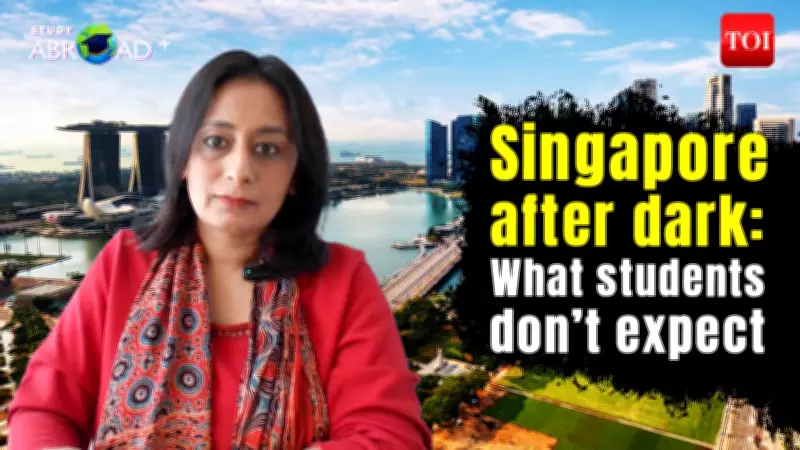
Singapore: The World's Safest Study Destination or a Masterpiece of Engineering?
Singapore is not merely ascending to the top of academic rankings; it is fundamentally redefining the very concept of student safety within a global education hub. According to Ms. Manisha Zaveri, Joint Managing Director of Career Mosaic, the city-state masterfully blends robust security measures with exceptional opportunity, creating an environment uniquely tailored for international scholars.
A Holistic Framework of Security and Support
The foundation of Singapore's appeal lies in its comprehensive, multi-layered approach to safety. This extends far beyond the classroom, encompassing every facet of a student's life.
- 24/7 Campus Surveillance and Emergency Technology: Educational institutions are equipped with state-of-the-art monitoring systems and rapid-response protocols, ensuring a secure learning environment at all hours.
- Exceptionally Safe Urban Environment: Singapore's streets are consistently ranked among the safest in the world for women at night, fostering a sense of freedom and security for all residents.
- Robust Legal and Institutional Support: International students benefit from clear, strong legal frameworks and dedicated support services, protecting their rights and well-being.
- World-Class Healthcare Access: Students have seamless access to top-tier medical facilities, providing peace of mind for health-related concerns.
- Globally Acclaimed Public Transport: The city's public transportation network is not only efficient but also renowned as one of the safest and most reliable systems worldwide.
The Singapore Difference: Systems, Culture, and Infrastructure
What truly distinguishes Singapore from other premier study destinations like the UK, USA, or Australia? The answer lies in the seamless integration of its engineered systems with a supportive societal culture.

This is not a coincidence but the result of deliberate urban planning and policy. The multicultural fabric of Singapore promotes inclusivity and respect, reducing social friction for students from diverse backgrounds. This cultural harmony, combined with the physical and digital security infrastructure, creates a ecosystem where students can thrive independently.
The outcome is a destination meticulously built for the modern, global student—one that prioritizes academic excellence without compromising on personal safety and quality of life. It raises a compelling question: Is Singapore the world's safest study hub because of its inherent qualities, or is it a brilliantly engineered environment designed to achieve that exact outcome?

