Allahabad University Unveils Comprehensive Examination and Academic Reforms
In a significant move aimed at enhancing accountability and transparency, Allahabad University (AU) has introduced a series of key reforms in its examination and academic systems. These changes are designed to ensure fair grading, provide better student support, and align with national educational standards.
New Rule for Practical Examination Grading
Under a newly implemented rule, teachers at Allahabad University must now provide written justification when awarding students either less than 50% or more than 90% marks in practical examinations. This measure is intended to ensure that extreme grades are backed by clear reasoning, promoting greater transparency in the assessment process.
Mandatory Remedial Classes for Low Performers
Alongside this grading accountability measure, the university has made remedial classes compulsory for students who receive low marks in practical assessments. These classes will offer guided academic support to help students improve their understanding and performance, addressing learning gaps effectively.

Broader Reforms in Line with National Education Policy 2020
These practical exam changes are part of a broader set of reforms being implemented by Allahabad University in accordance with the National Education Policy 2020. The policy has prompted significant modifications to examination and assessment systems across educational institutions in India.
One major change is the mandatory implementation of Continuous Internal Assessment (CIA), also referred to as sessional assessment, across all courses. This shift ensures continuous monitoring of students' academic progress throughout the semester, rather than relying solely on end-semester examinations.
Revised Undergraduate Academic Structure
At the undergraduate level, Allahabad University has revised its academic structure to provide both multidisciplinary exposure and deeper subject specialisation. Students will now study two major subjects and one minor subject during the first two years of their programme. The third year will be focused exclusively on major subjects, allowing for more concentrated study in chosen disciplines.
Student-Friendly Reappearance Policy
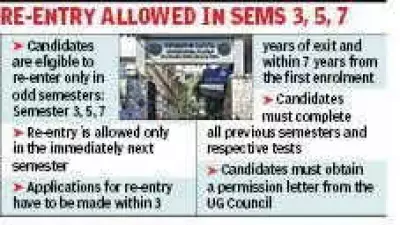
In another student-friendly measure, AU has introduced a flexible reappearance policy for students who fail in a subject or are unable to appear in an examination. Instead of requiring students to repeat the entire semester, they will now be allowed to reappear only in the failed subject while their previously secured internal assessment marks remain valid.
University officials believe this step will save students' time and effort, reduce academic stress, and make the overall system more flexible and supportive of student needs.
Implementation and Leadership
The decision to implement these reforms was taken at a recent meeting of AU's Executive Council, which was chaired by AU Vice-Chancellor Professor Sangita Srivastava. The comprehensive changes reflect the university's commitment to improving educational quality and student outcomes through systematic reforms.
These initiatives represent a significant shift in how Allahabad University approaches assessment and academic structure, with a clear focus on transparency, student support, and alignment with national educational priorities.